
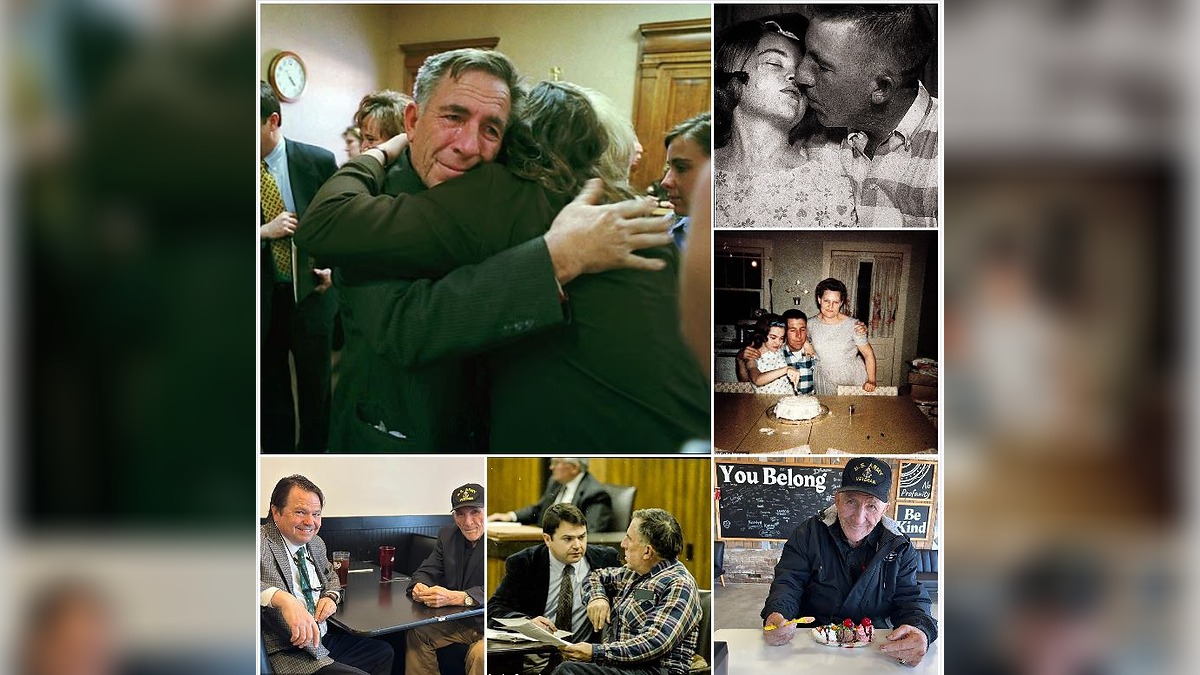
A Georgia television repairman who was accused of killing his wife after she spent three decades out of public view was acquitted of murder in 1999 following a defence that challenged the medical evidence surrounding her death.
Alvin Ridley, known locally in Ringgold as the “Zenith Man” because of his television repair business, became the focus of intense suspicion after his wife, Virginia Ridley, was found dead inside their home in October 1997.
Virginia had not been seen in public for approximately 30 years, and news of her death prompted allegations that Alvin had kept her confined against her will before killing her.
Prosecutors argued that bruising around her neck and haemorrhaging in her eyes were consistent with asphyxiation. However, attorney McCracken Poston, who represented Alvin during the murder trial, challenged the conclusion that she had been murdered.
Couple’s Relationship Had Raised Questions Since the 1960s
Alvin and Virginia married in the 1960s, but concerns about her whereabouts emerged soon afterwards.
Virginia’s family placed advertisements in a local newspaper reporting her missing. The notices prompted two visits from sheriff’s deputies, who found that she was not missing.
According to Poston, the newspaper reports nevertheless fuelled rumours and suspicion among residents.
Virginia’s parents later attempted to have the couple evicted from their home. Alvin insisted that the dispute be decided by a jury.
During the 1967 eviction proceedings, Virginia appeared in court and told the judge she wanted to remain at home with her husband. The judge dismissed the case.
That court appearance became the last time Virginia was seen publicly.
Poston said that when she died three decades later, some members of her family still believed Alvin had prevented her from leaving the home. He said those suspicions contributed to the allegations against him.
‘Zenith Man’ Became a Target of Town Rumours
Alvin was known in Ringgold for his television repair work, which he operated from an ageing, dilapidated building.
He also displayed typed messages containing conspiracy theories about the government, contributing to his reputation as an unusual and intimidating figure in the community.
Poston said the discovery that Alvin had a wife whom few residents knew about came as a surprise to the town.
The lawyer recalled that even Alvin had sometimes told people Virginia had left him years earlier, while the couple’s belief that her family was trying to trap her contributed to the secrecy surrounding their relationship.
Following Virginia’s death, her relatives’ suspicions and the community’s existing rumours helped fuel the claim that she had been held against her will.
Autopsy Comparison Helped Challenge Murder Allegations
Poston agreed to represent Alvin despite difficulties getting his client to cooperate with the defence.
The lawyer said Virginia’s autopsy had been poorly handled because investigators did not know much about her background and had already formed assumptions about the circumstances of her death.
Prosecutors relied on the presence of petechial haemorrhaging, or small areas of bleeding, to argue that Virginia had been asphyxiated.
Poston found a potential challenge to that interpretation when he obtained the autopsy report of Olympic track athlete Florence Griffith Joyner.




He said Griffith Joyner’s report documented more extensive haemorrhaging but attributed her death to a seizure.
Poston used the comparison to challenge the claim that the bleeding found in Virginia’s eyes necessarily meant she had been strangled.
He said the evidence provided an important breakthrough in his effort to establish that Virginia had died from natural causes.
Hundreds of Virginia’s Writings Found Inside Home
A further development came on Thanksgiving Day in 1998, when Alvin finally allowed Poston into the couple’s home after months of requests.
Inside, the lawyer discovered hundreds of writings Virginia had left behind, many expressing her love for Alvin and describing their relationship.
Poston said he had known very little about Virginia before finding the documents and was surprised by the material.
He wanted to use the writings as part of Alvin’s defence, but his client initially refused to allow them to be presented in court.
Alvin eventually agreed to bring two old suitcases containing the documents to the trial.
Poston recalled that cockroaches also emerged from the suitcases, causing such disruption that the judge ordered the proceedings moved to another courtroom.
The replacement courtroom was the same one where Virginia had appeared during the 1967 eviction hearing, the last occasion she was publicly seen.
Poston said the coincidence gave him renewed determination to present Virginia’s writings before the court.
Alvin Takes the Witness Stand After Claiming Jesus Appeared to Him
Another unexpected development occurred when Alvin told Poston that Jesus had physically appeared to him and instructed him to testify.
Alvin had been attending court wearing a neck brace, believing that the US Constitution meant he did not have to appear if he was sick or injured.
Poston said he carried a pocket-sized copy of the Constitution to explain that his client’s interpretation was incorrect.
The lawyer said he could not determine whether Alvin genuinely believed he had seen Jesus or had used the explanation to justify taking the stand.
Nevertheless, Alvin testified during the trial, and Poston described his performance as excellent.
Jury Acquits Alvin of All Murder Charges
In 1999, the jury found Alvin not guilty of all charges after hearing his testimony and the defence’s arguments.
Despite the acquittal, Poston said a significant portion of Ringgold’s residents continued to believe Alvin was responsible for Virginia’s death.
He said it took decades for the television repairman’s reputation to recover from the accusations.
Poston later documented the case and his relationship with Alvin in his book, Zenith Man: Death, Love, and Redemption in a Georgia Courtroom.
Autism Diagnosis Came Years After the Trial
Alvin was diagnosed with autism years after his acquittal, following a suggestion from one of the jurors who had moved to Alaska and worked as a nurse.
The former juror discussed the possibility of Alvin being autistic during a podcast appearance.
Poston said the suggestion immediately made sense to him because he had learned more about autism since the trial.
He believed the diagnosis helped Alvin understand himself better and made it easier for him to relax during the later years of his life.
Alvin died in 2024 at the age of 82.
Lawyer Warns About Misunderstandings Involving Undiagnosed Autism
Poston discussed the case during the Hamptons Whodunit festival in Savannah, where he spoke to the Daily Mail about the lasting impact of defending Alvin.
He said the experience had continued to affect him, particularly because Alvin’s autism had not been identified before the criminal proceedings.
Poston warned that people with undiagnosed autism could face misunderstandings during police investigations and court proceedings.
He also raised concerns that judges and jurors might misinterpret behaviour associated with autism, including avoiding eye contact.
The lawyer said greater awareness and training among legal professionals could help prevent people from being unfairly judged because of characteristics associated with an undiagnosed condition.
He said Alvin’s case remained an example of how a lack of understanding about autism could contribute to serious misjudgements within the criminal justice system.
