
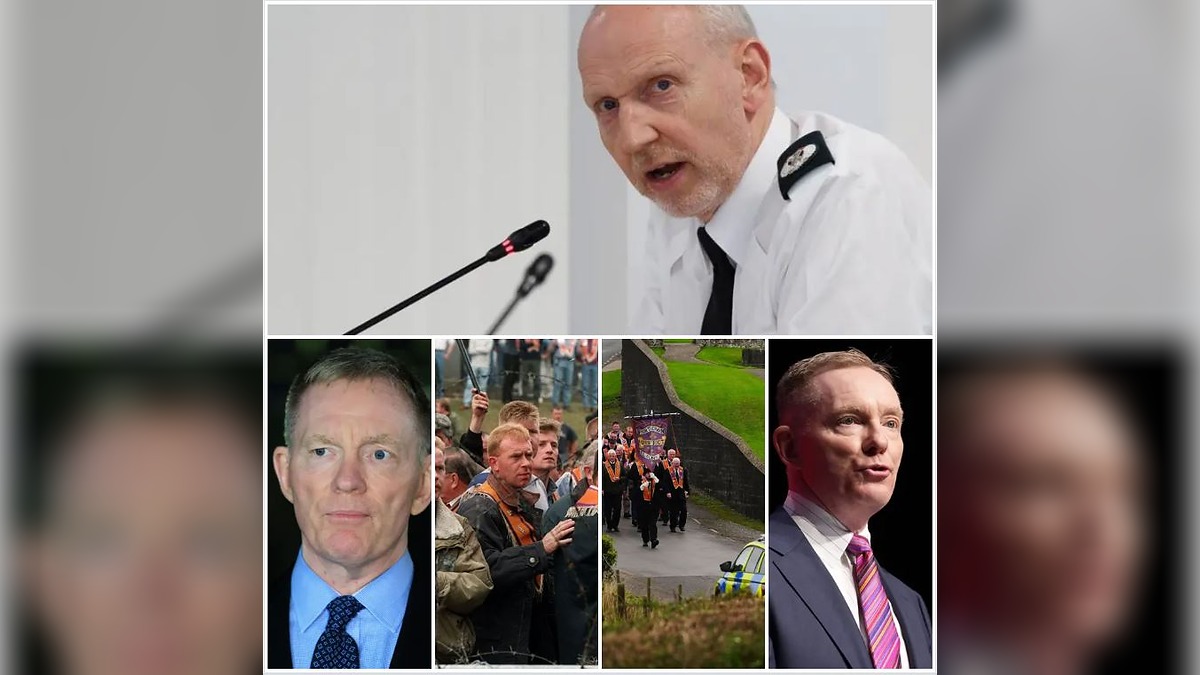
Northern Ireland Secretary of State Sir Chris Bryant has defended his decision to ban the Orange Order’s Drumcree march, saying the move was necessary to protect public safety and prevent further unrest.
Bryant announced the ban on Friday after negotiations between the Portadown District Lodge and residents of the Garvaghy Road in Portadown failed to produce an agreement. The dispute had triggered a prolonged stand-off between Orangemen and nationalist residents, with tensions remaining high for almost two weeks.
The secretary of state said advice from Police Service of Northern Ireland (PSNI) Chief Constable Jon Boutcher had raised serious concerns that allowing the procession to proceed could result in injuries, disorder and wider unrest across Northern Ireland.
Secretary of State Urges Political Leaders to Reduce Tensions
Bryant acknowledged that his intervention had attracted criticism from unionists who believe the decision undermined the rule of law.
Speaking to BBC News NI, he said his responsibility was to secure a peaceful outcome and insisted that he had not taken the decision lightly.
He also appealed to those involved in the dispute to cancel rallies and other gatherings that could escalate tensions.
“It’s easy to stir up a sectarian grievance, much more difficult to calm it down,” Bryant said, urging political and community figures to help restore calm.
He added that rebuilding trust would require a longer-term effort beyond the immediate dispute.
Two Proposed Compromises Failed to Resolve the Dispute
Bryant revealed that negotiators had considered two possible arrangements intended to break the deadlock between the Orange Order and residents.
The first proposal would have allowed the Orangemen to complete one final march along the Garvaghy Road, on the understanding that they would not apply to march along the route again.
A second option would have involved the lodge accepting that it had won the right to march while agreeing not to exercise that right.
Bryant said he had believed the negotiations were close to producing an agreement after a series of meetings at Hillsborough Castle.
“I thought we were very close to an agreement, but unfortunately that was tantalisingly difficult to achieve,” he told BBC Radio 4’s Today programme.
Neither proposal secured agreement from both sides, leaving the secretary of state to make a decision on whether the procession could safely proceed.
PSNI Chief Constable Warned of Serious Safety Risks
Bryant said Chief Constable Boutcher had formally requested his intervention under the Public Processions (Northern Ireland) Act 1998.
The police chief had warned that forcing the march through the contested route could have catastrophic consequences, despite the PSNI’s original objective of facilitating the Parades Commission’s determination.
Boutcher also raised concerns about the financial and operational pressure placed on the police service by the prolonged stand-off.
The PSNI estimated that policing the two-week dispute had cost approximately £5 million, warning that the total could rise further.




Around 140 officers from other parts of the United Kingdom had been deployed to support the operation under mutual aid arrangements. Those officers have since left Northern Ireland.
Bryant said he could not see how the procession could safely take place under the circumstances outlined by the chief constable.
Parades Commission Decision Became Central to the Conflict
The controversy intensified after the Parades Commission ruled that the Orange Order could march along the Garvaghy Road on Sunday, 27 September, subject to restrictions.
The decision followed a legal challenge that overturned an earlier determination preventing the procession.
Residents opposed to the march subsequently challenged the ruling, and the Court of Appeal is considering whether their challenge should proceed.
On the morning scheduled for the parade, up to 1,000 people, including Northern Ireland First Minister Michelle O’Neill, blocked the road, preventing the Orangemen from travelling from Drumcree Church towards the contested route.
Residents maintained a presence in the area as members of the lodge repeatedly approached police lines over the following days. Officers prevented the procession from proceeding.
Bryant said he considered the Parades Commission’s original determination legitimate, but argued that the public safety risks ultimately required government intervention.
Drumcree Dispute Revives Memories of Northern Ireland’s Violent Past
The latest confrontation has revived one of Northern Ireland’s most divisive parading disputes, which was associated with riots, roadblocks and killings during the mid-to-late 1990s.
The conflict centres on the Orange Order’s attempts to march along the Garvaghy Road, a predominantly nationalist area of Portadown. Residents have long opposed the procession, while supporters of the march have argued for their right to parade.
In July 1995, police prevented the Orange Order from proceeding along the route, triggering a tense stand-off that continued in subsequent years.
The Parades Commission began operating in 1998 to regulate contentious processions and help reduce tensions surrounding marches.
For many years, the Drumcree confrontation became a relatively contained dispute. The latest developments have returned it to the centre of public debate after the commission’s ruling reignited opposition and led to an extended police operation.
Bryant Says Northern Ireland’s Power-Sharing Institutions Have Held Firm
The secretary of state said the dispute had tested political relationships but had not resulted in the collapse of Northern Ireland’s power-sharing executive, despite concerns that the tensions could threaten the institutions established under the Good Friday Agreement.
Reflecting on his time in the role, Bryant acknowledged that securing compromise between opposing communities had been difficult.
He said he had encountered people willing to find common ground, while others had been less prepared to compromise.
“The institutions of the Good Friday Agreement are probably more resilient than people think,” he said.
His comments suggest that, despite the seriousness of the confrontation, the political structures governing Northern Ireland have continued to function through the crisis.
Police Investigation Adds Another Dimension to the Stand-Off
The dispute has also prompted a police investigation into alleged offences connected with protests surrounding Drumcree.
On Thursday, the PSNI confirmed it had begun issuing letters inviting people reasonably suspected of committing offences linked to the demonstrations to attend interviews.
First Minister Michelle O’Neill confirmed that she had received a letter from police in connection with the investigation.
The investigation is proceeding alongside the legal challenge to the Parades Commission’s decision and the continuing efforts to ease tensions between the opposing groups.
Long-Term Trust Remains a Major Challenge
Bryant’s decision has brought the immediate question of whether the procession can proceed to a head, but it has not resolved the underlying disagreement between the Orange Order and Garvaghy Road residents.
The secretary of state has called for restraint and urged those involved to avoid actions that could intensify sectarian tensions.
With legal proceedings continuing, police investigating protest-related offences and both sides maintaining deeply held positions, rebuilding confidence between the communities remains a significant challenge.
Bryant has defended the ban as necessary to prevent serious disorder. Whether the intervention creates space for a lasting agreement will depend on further dialogue and the willingness of both sides to consider a compromise.

