
The way cabbage is cut before it reaches the pan can have a significant effect on the finished dish.
The size and shape of each piece determine how quickly it heats up, how much moisture it releases and whether it remains crisp or eventually becomes soft. Rather than relying on one cutting method for every recipe, cooks can choose the shape that best suits the cooking technique.
Large Chunks Work Well for Long Cooking
When cabbage is being braised, roasted, pickled or used in a casserole, larger pieces can help it withstand extended cooking without falling apart too quickly.
One approach is to score the cabbage head in a circle while leaving the core intact. The resulting sections can then be sliced lengthwise and crosswise into relatively large chunks.
Keeping the pieces substantial gives them enough structure to survive longer exposure to heat.
Medium Pieces Help Preserve Texture
Medium-sized slices are particularly useful when cabbage is cooked alongside meat, mushrooms or other vegetables.
The pieces should be large enough to retain their shape but tender enough to be easily pierced with a fork. This allows them to absorb the flavours of the other ingredients while still providing a noticeable cabbage texture.
Small Cubes Are Ideal for Soups and Fillings
Smaller pieces are better suited to dishes where the cabbage needs to cook evenly and quickly.
Small cubes are commonly used in soups, ratatouille and fillings for buns, pierogi and vareniki. Their size helps the heat reach the centre of each piece before the outside becomes excessively soft.
Strips and Squares Suit Stews
For soups and stews, cabbage can also be cut into strips approximately two centimetres wide before being cross-cut into smaller squares.
This produces pieces that cook evenly while retaining enough structure to avoid turning into a puree. The method works particularly well when the cabbage needs to blend into a dish without completely disappearing into it.




Pickling Calls for Thicker Strips
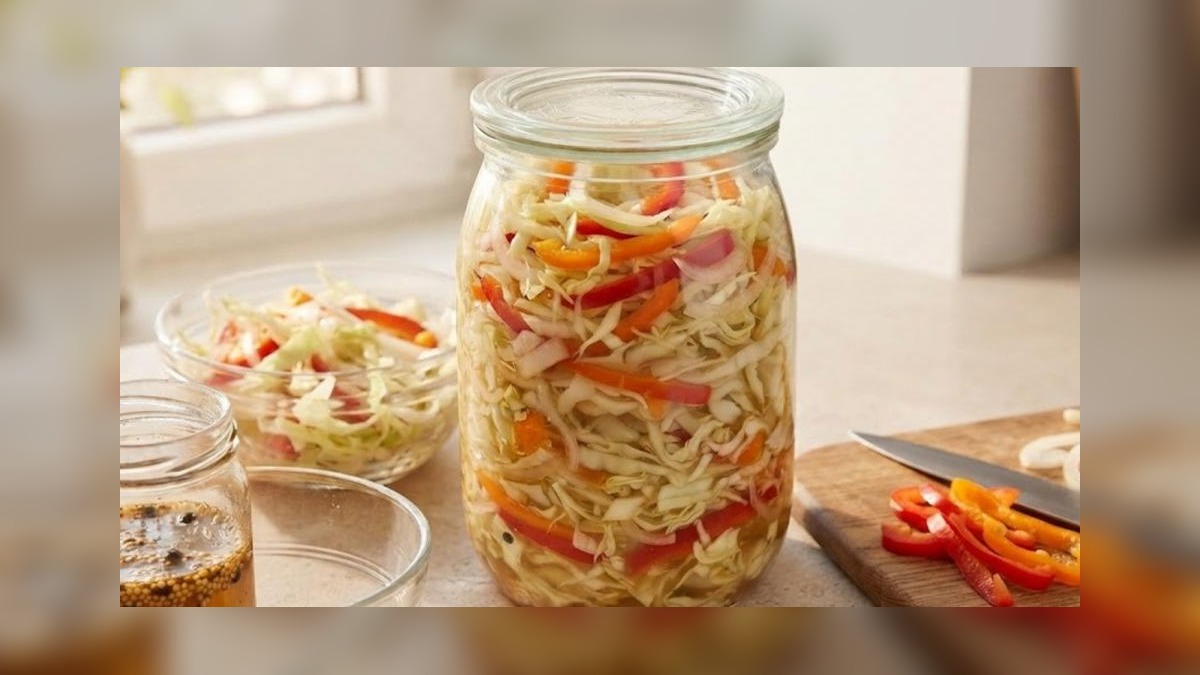
Pickled cabbage benefits from a different shape. Strips or “petals” around three centimetres thick can be cross-cut at similar intervals.
The broad surfaces created by this method allow the brine to reach more of the vegetable relatively quickly. At the same time, the pieces can retain the characteristic crunch associated with properly prepared pickled cabbage.
Thin Slices Are a Salad Staple
For salads, borscht and many side dishes, finely sliced cabbage remains one of the most useful preparations.
The cabbage should first be halved or quartered, with the tough core removed. A sharp knife can then be used to create thin shavings.
Because thin slices expose a greater surface area, they wilt more quickly and combine easily with other ingredients.
Shredding Provides Consistent Results
Shredding is closely related to julienne cutting but places greater emphasis on producing pieces of consistent size.
Uniform strips are particularly important for salads and fermentation because pieces of similar thickness tend to soften and develop texture at a more predictable rate.
Consistency can therefore be just as important as the overall size of the cabbage pieces.
Coarse Chopping Speeds Up Softening
A rough, uneven chop is useful when the aim is to make cabbage break down more quickly.
The more aggressively the vegetable is cut, the more of its internal structure is exposed to heat and liquid. This can encourage faster moisture release and produce a softer, more deeply flavoured result.
The technique is particularly useful for dishes where maintaining the original shape of the cabbage is not a priority.
Why Julienne Is Not Always the Best Choice
Julienne may be a familiar option for many cooks, but it is not necessarily the most suitable cut for every cooking method.
When cabbage is destined for braising, a coarser cut can produce a richer and softer result. Cutting the vegetable more roughly damages more of its cell structure before cooking, allowing moisture to escape more readily as heat is applied.
The result can be a tender, saturated cabbage texture that is quite different from what would be achieved with thin, uniform shavings.
Choose the Cut Before You Turn on the Heat
There is no single correct way to cut cabbage. The best technique depends largely on what the recipe is supposed to achieve.
Large pieces are better for preserving structure during long cooking, smaller cuts encourage even cooking, thin shavings work well in salads, while coarse chopping can speed up the breakdown process.
Matching the shape of the cabbage to the cooking method can therefore make a noticeable difference to the texture and flavour of the final dish.

