
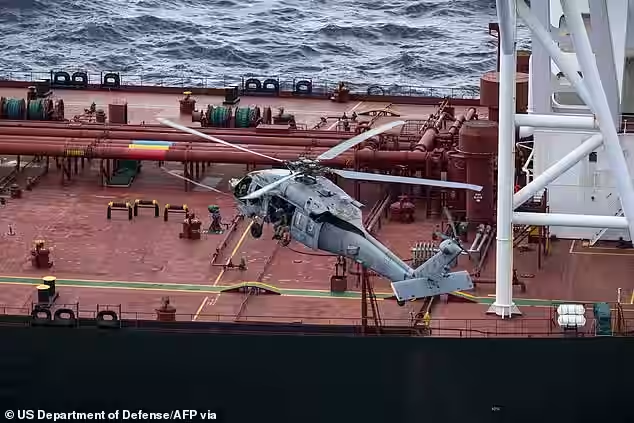
In a dramatic maritime move over the weekend, U.S. military forces boarded a sanctioned oil tanker called Veronica III far out in the Indian Ocean, after tracking it all the way from the Caribbean Sea.
The Pentagon described the operation as part of an ongoing effort to enforce sanctions against Venezuela’s oil trade, particularly targeting vessels that have tried to evade U.S. measures on crude exports.
The scene looked like something from a movie: armed personnel dropping in from helicopters, climbing onto the deck, and securing the ship.
Pentagon footage shared online shows this dramatic interception — and officials insisted the action unfolded without incident.
The Tanker’s Unusual Voyage
Veronica III, a large Panamanian‑flagged vessel, left Venezuelan waters on January 3, the very same day that Nicolás Maduro was captured during a U.S. operation.
According to mariners and tracking groups, the ship was carrying nearly 2 million barrels of crude and fuel oil, and before that had been involved in moving oil linked to Venezuela, Russia, and Iran for years.
The U.S. argues that such “shadow fleet” tankers have helped Caracas and allied partners sidestep sanctions, concealing ownership and destinations to keep illicit oil flowing.
Pentagon Sends a Clear Message
In a stern statement on the social platform X, the U.S. Department of Defense made its position clear: “International waters are not sanctuary,” and that it would pursue violators “by land, air, or sea.”
The post said Veronica III tried to defy a quarantine order that was issued last December under the Trump administration, which sought to pressure the Venezuelan government by blocking sanctioned tankers from moving freely.
The Pentagon’s version of events showed U.S. forces following the ship over thousands of miles — from the Caribbean across the Atlantic and Indian Ocean — before finally closing in and boarding.



Part of a Broader Strategy
This is not an isolated incident. The raid on Veronica III is the latest in a string of naval interdictions targeting tankers suspected of carrying illegal Venezuelan oil to global markets.
Last week, U.S. forces also boarded another ship, Aquila II, which was similarly fleeing enforcement actions.
These operations stem from a broader campaign sometimes referred to as Operation Southern Spear, under which the U.S. has been intercepting vessels linked to sanctioned crude exports since late 2025.
Analysts tracking these interventions say dozens of ships are involved in what is often called the “shadow fleet,” many flying false flags or operating with irregular documentation to hide their true activities.
Why This Matters
The U.S. says cracking down on these tankers is about upholding international sanctions and choking off rogue oil revenues that fund governments it considers hostile or destabilizing.
Venezuela’s crude exports, for instance, have been central to the country’s economy for decades, and efforts to limit those exports are meant to squeeze revenue streams tied to authoritarian leadership.
But critics argue that such military boardings raise tricky questions about maritime law and sovereignty.
Opponents have called some of these actions “piracy” and challenged whether the U.S. has the legal authority to seize foreign‑flagged ships in international waters.
What’s next?
-
Investigation and legal decisions — Authorities need to decide the legal fate of Veronica III: whether it will be seized, sold, or used as evidence in sanctions enforcement.
-
Further interceptions — The U.S. may continue tracking other “shadow fleet” vessels around the world to prevent similar departures.
-
Diplomatic reactions — Countries like Russia, China, and others might respond publicly to what they see as assertive U.S. naval enforcement.
Summary
U.S. military forces successfully boarded the sanctioned oil tanker Veronica III in the Indian Ocean after tracking it from the Caribbean, part of a broader campaign to enforce sanctions on Venezuelan oil exports and related shadow fleet vessels.
The tanker, carrying millions of barrels of crude linked to Venezuela, Russia, and Iran, was intercepted without incident.
This marks another high‑profile interception in ongoing efforts to limit illicit oil trade — actions that have strategic and legal implications on the international stage.

