
Oxfordshire could become the first area in England outside London to introduce a ban on pavement parking, following recommendations for county councillors to support preparatory work on the proposed restrictions.
Officials at Oxfordshire County Council have recommended that members vote in favour of taking the initial steps towards the controversial measures.
The authority agreed earlier this year to address parking on pavements, paths and verges. However, making the practice an enforceable offence would require further legislation from the Government.
A council spokesperson said residents had repeatedly raised concerns about drivers blocking pedestrian routes and restricting access.
The spokesperson added that a single solution would not be suitable across the entire county, making locally tailored measures necessary.
Wheelchair Users and Parents Among Those Affected
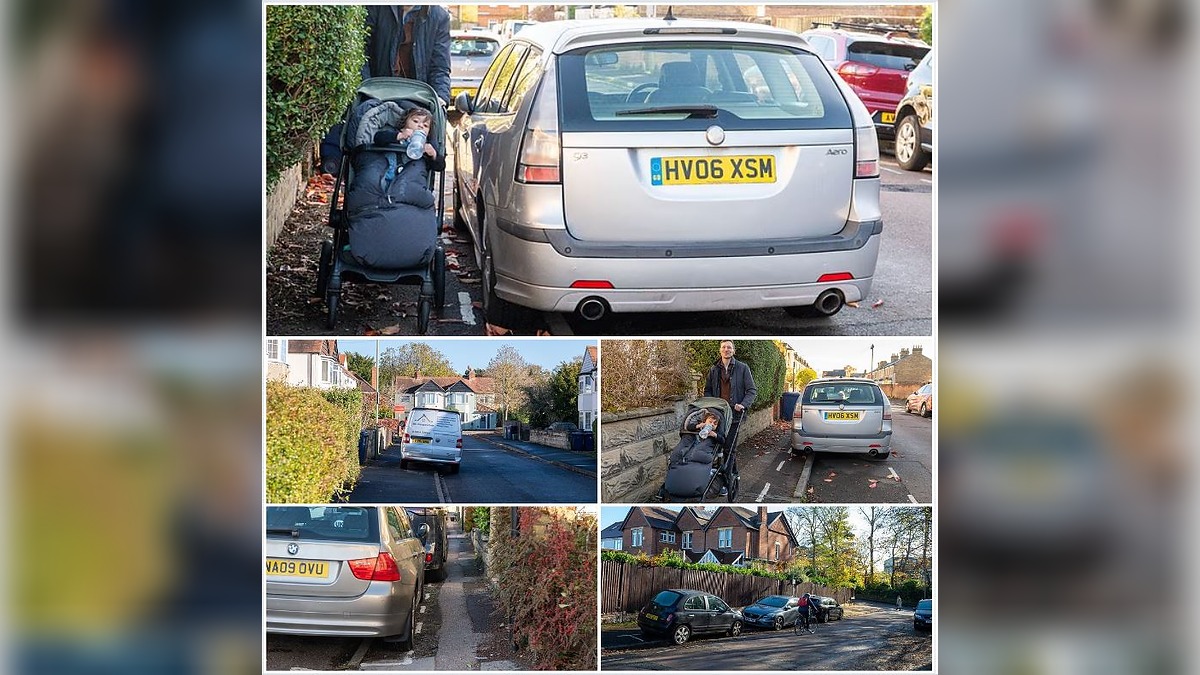
Parking with vehicles partly or entirely on pavements has caused difficulties for pedestrians, wheelchair users, parents pushing prams and people with visual impairments.
Conservative councillor for Hanborough and Hailey, Liam Walker, said pavements should remain accessible to everyone, including people who rely on wheelchairs and pushchairs.
However, he noted that many villages have narrow roads and properties without off-street parking.
Walker said the council’s report correctly recognised that individual streets would need to be assessed separately because measures suitable for urban roads might create difficulties in villages.
Oxford Resident Describes Dangers of Walking With a Pram
Aksel Sterri, 39, who visited Headington in Oxford with his young son in a pram, described the difficulties caused by vehicles obstructing pavements.




He said he sometimes had to walk in the road because there was not enough space to use the pavement safely.
Sterri said the situation was particularly difficult for parents with prams, adding that the restrictions on pedestrian movement created safety concerns.
He questioned why people using pavements were being forced onto the road and said trialling different approaches could help establish whether the proposed measures would work.
Residents Divided Over Proposed Restrictions
The pavement parking issue has also prompted debate among Oxfordshire residents on social media.
Some residents supported restrictions, arguing that vehicles parked on pavements can leave pedestrians with little or no space to pass.
One resident criticised the council’s approach towards motorists but said drivers who leave their vehicles obstructing pedestrian routes should be stopped. The resident also suggested that wider roads could provide additional parking space for people living in affected areas.
Another contributor rejected the suggestion that the proposed restrictions were anti-motorist, arguing that the issue was inconsiderate parking that could put pedestrians in danger.
London and Scotland Already Have Pavement Parking Bans
Pavement parking is prohibited across Greater London and throughout Scotland.
Edinburgh previously became the first Scottish city to introduce the ban, while Oxfordshire could become the first English area outside the capital to enforce similar restrictions.
The English Devolution and Community Empowerment Act has also expanded the powers available to local transport authorities to introduce local pavement parking bans.
Council Says Each Street Must Be Assessed Separately
In its report, Oxfordshire County Council acknowledged that some existing parking arrangements in the county were historically designed to include vehicles partly parked on footways.
The authority said any future expansion of pavement parking enforcement powers would therefore need to be introduced on a case-by-case basis.
This approach would allow officials to consider the specific circumstances of individual streets before deciding whether restrictions were appropriate.
Government Approval Needed Before Enforcement Can Begin
If the council’s cabinet supports the recommendation at its scheduled meeting on Tuesday, the authority will still need approval from the Government before it can proceed with enforceable restrictions.
A council spokesperson said the cabinet would discuss the proposals in detail, including how any future enforcement system could balance pedestrian accessibility, road safety, parking availability and traffic management.
The authority also confirmed that additional legislation would be required to make pavement parking an enforceable offence.
