
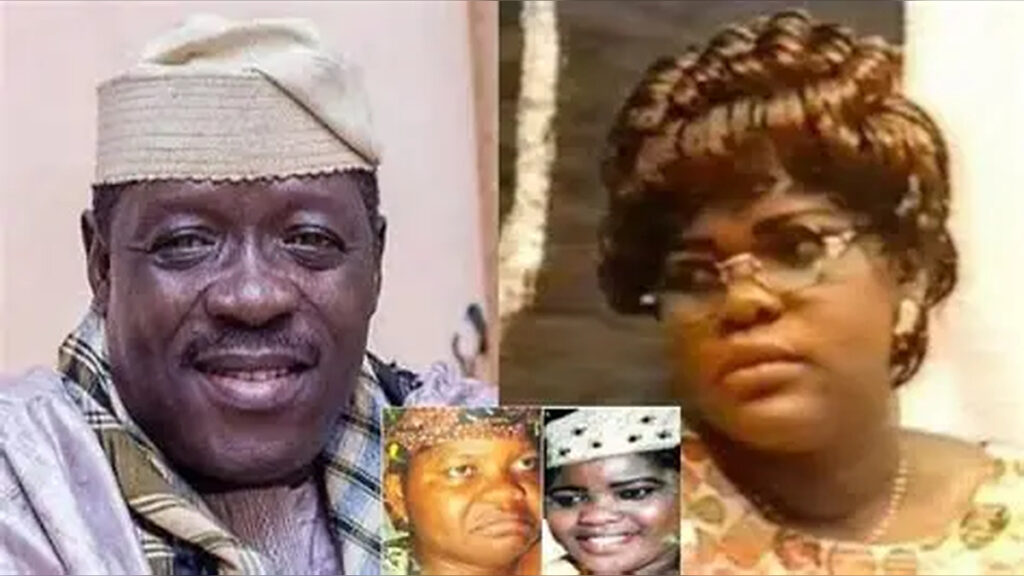
The death of veteran Yoruba actor Taiwo Hassan, widely known as Ogogo, has revived memories of one of the most recognizable acting partnerships of the 1990s.
Ogogo frequently appeared opposite the late Rebecca Adebimpe Adekola, popularly known as Ireti, with the two actors often portraying romantic partners in Yoruba-language home videos.
Their convincing chemistry became a defining feature of several productions and eventually prompted viewers to wonder whether the relationship extended beyond the screen.
Despite the persistent speculation, Ogogo maintained that their bond was entirely professional.
How Ireti Became a Familiar Face
Ireti was among the younger actresses who helped expand the popularity of Yoruba-language home videos during the 1990s.
Born in Abeokuta, Ogun State, she developed a reputation for versatility, moving comfortably between traditional characters, dramatic roles and romantic performances.
Her stage name became widely known after she portrayed a character named Ireti in Asiri Nla, a 1993 production by veteran actor Jide Kosoko.
The role proved so memorable that the character’s name became permanently associated with the actress.
The Odunfa Caucus Connection
Ireti’s development as an actress was closely linked to the Odunfa Caucus, one of the influential theatre groups that helped shape the Yoruba film industry.
The group was established in 1986 by veteran performers including Yinka Quadri, Ogogo and Razak Ajao, better known as Araosan, alongside filmmaker Abbey Lanre.
Over the years, a number of well-known actors became associated with the group, including Saheed Balogun, Faithia Balogun, Yomi Fabiyi, Sanni Alli, Funke Akindele, Aina Gold, Iyabo Ojo, Kemi Afolabi and Yomi Gold.
Ireti’s connection to the group helped place her in productions alongside established performers, including Ogogo.
Their Romance Roles Fueled Marriage Rumours
Because Ogogo and Ireti were repeatedly cast as lovers, their performances were convincing enough to blur the line between fiction and reality for some fans.
The speculation became particularly persistent because their characters frequently appeared as couples, leading some viewers to believe the two actors could eventually become husband and wife.
Rumours reportedly continued even after Ogogo married in 1994, with some people speculating that he and Ireti might have had a relationship away from the cameras.
Ogogo later rejected those claims.
Ogogo Explained Their Real Relationship
In an interview cited by Yes Ng in 2017, Ogogo described Ireti as someone he had personally helped develop professionally.
He explained that their repeated casting together was largely a result of the theatre structure they worked within and the roles each actor was capable of performing.




Ogogo described Ireti as his “girl,” “sister” and “baby,” emphasizing that he had nurtured her career.
He also dismissed the idea that their frequent portrayals of couples indicated a real-life romance.
According to the veteran actor, both performers understood why they were in the entertainment industry and had no intention of marrying each other.
Ogogo stressed that he was happily married and said there was nothing between them beyond their professional relationship.
Ireti’s Death Shocked the Industry
Ireti’s career was cut short in September 2002 when she died at a Lagos hospital following a brief illness.
She was still relatively young, and her death sent shockwaves through the Yoruba entertainment community.
Her passing was particularly painful for members of the Odunfa Caucus, where she had received training and built important professional relationships.
Among the productions associated with her career were Ike Owo, Agba Akin, 23/24 Loro Ile Aye, Edunjobi and Sikira Ereko.
She Left Behind a Young Son
At the time of her death, Ireti left behind her son, Tomiwa Adekola.
He was only a few months old when his mother died, adding a deeply personal dimension to the tragedy that followed her passing.
For colleagues and fans who had watched Ireti rise through the Yoruba entertainment scene, her death marked the loss of an actress whose career had shown considerable promise.
Ogogo Dies Nearly 24 Years Later
Ogogo’s death on August 23, 2026, at the age of 66 brought his long career back into focus and prompted renewed interest in the actors and productions that shaped his early years.
His death was announced by fellow veteran Jide Kosoko.
Following the announcement, his remains were taken to his hometown of Ilaro in Ogun State, where he was buried according to Islamic rites.
The funeral drew several prominent figures from the entertainment industry, including Yinka Quadri, Jide Kosoko, Femi Adebayo, Faithia Williams, Dele Odule and Bolaji Amusan, popularly known as Mr Latin.
A Career That Helped Shape Yoruba Nollywood
Ogogo began acting in the early 1980s and went on to become one of the major figures in Yoruba-language cinema.
His career extended beyond acting, with the veteran also working as a producer and filmmaker.
For decades, he remained an influential presence in the industry and became particularly associated with the development of Yoruba-language home videos.
His passing prompted tributes from colleagues and fans who remembered his contribution to the growth of Nigerian cinema.
Why Ogogo and Ireti Remain Memorable
The deaths of Ireti and Ogogo, separated by almost 24 years, have once again highlighted the enduring impact of their work together.
Their on-screen romance was convincing enough to generate years of speculation, but Ogogo’s own explanation was consistent: the relationship existed within the boundaries of their profession.
Their repeated appearances as lovers nevertheless became part of the visual identity of 1990s Yoruba home videos.
While Ireti’s promising career ended prematurely in 2002, Ogogo continued working for more than two decades afterward, leaving behind a body of work that cemented his place among Yoruba cinema’s veteran performers.
A Lasting Legacy From the 1990s
For many viewers who grew up watching Yoruba-language films during the home-video boom, Ogogo and Ireti represented a memorable screen pairing from an important period in Nigerian entertainment.
Their story also illustrates how successfully performed fictional relationships can become so convincing that audiences begin to assume the same connection exists away from the camera.
In reality, Ogogo said their partnership was built on mentorship, friendship and professional collaboration.
Following his death, memories of that partnership have returned, ensuring that both actors remain connected in the history of an era that helped lay the foundation for modern Yoruba Nollywood.

