
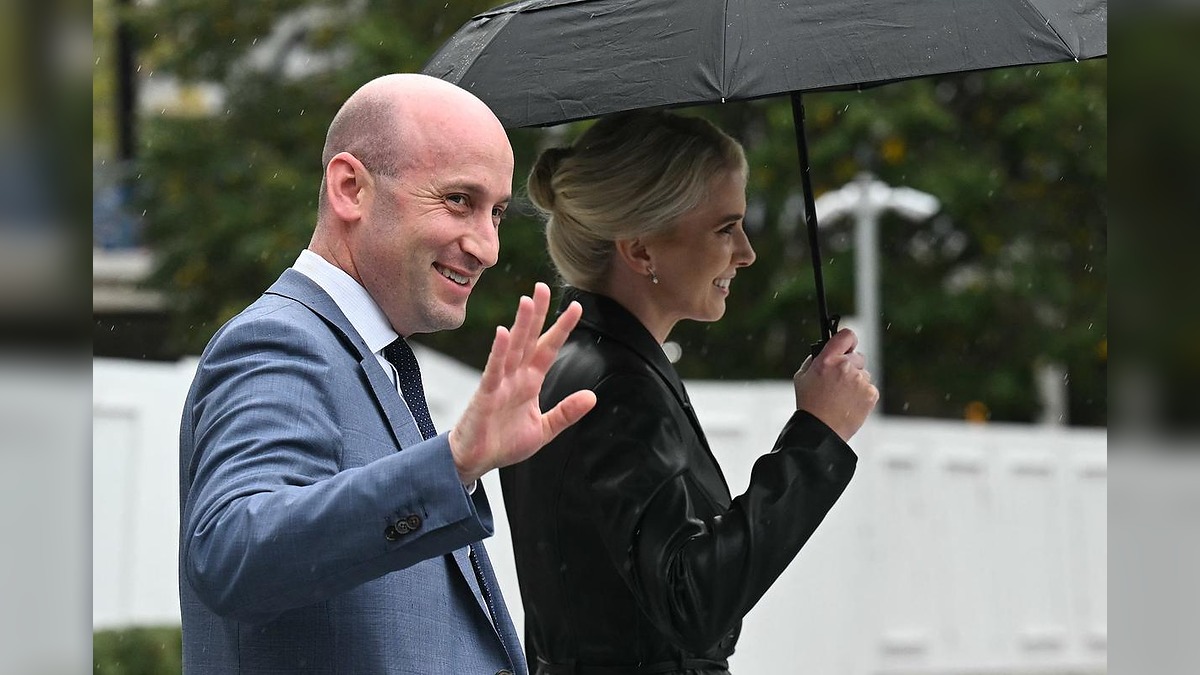
A leaked internal White House memo has revealed a significant shift in how President Donald Trump’s Cabinet members are expected to operate under new Chief of Staff Stephen Miller.
The document suggests Miller intends to give Cabinet secretaries greater freedom to communicate on behalf of their respective departments, moving away from the tightly controlled approach associated with his predecessor, Susie Wiles.
According to Fox News Digital, which reported on the memo on Thursday, the document was circulated this week after Miller officially assumed the chief of staff position on Monday.
A source familiar with the changes described the new approach as Miller “unleashing the Cabinet to be the captains of their own ship.”
Another source said the restructuring would make the Cabinet more effective in serving the President, adding that its previous operations had been too restricted.
White House Renames Cabinet Liaison Position
The memo also announced changes to the position responsible for coordinating communication between the President and Cabinet officials.
The role, previously known as White House Cabinet Secretary, will now be called Director of Cabinet Relations.
Meghan Bauer, who has occupied the position since November, is expected to leave before the end of the year as part of a wider shake-up following the midterm elections.
Her successor has not yet been announced.
According to the leaked document, the revised position will concentrate on supporting and strengthening Trump’s Cabinet secretaries.
The memo stated that each Cabinet leader should serve as the primary leader and communicator for their respective department.
It added that the new arrangement would ensure Cabinet members receive the resources and support needed to deliver results for Americans.




Sources Describe Wiles’ Leadership as Restrictive
The changes appear to mark a departure from the communication structure established under Wiles, who was regarded as a strict enforcer of the administration’s messaging.
A source told Fox News Digital that Wiles exercised considerable control over how officials communicated, leaving little room for Cabinet secretaries to independently represent their departments.
The source described Miller’s approach as a recognition that managing such a large administration through excessive supervision was ineffective.
They argued that allowing officials closest to particular policy issues to communicate directly, while providing them with adequate White House support, could improve the administration’s effectiveness.
The source also praised Miller and his team for making the changes clear through the internal communication.
Former Official Accuses Wiles of Seeking Complete Control
A former administration official offered a more critical assessment of Wiles’ time as chief of staff, alleging that her leadership style was excessively controlling.
The former official claimed Wiles wanted complete authority over the administration’s operations, relying on pressure to ensure officials followed her preferred approach.
According to the individual, Wiles had acknowledged that she could not control Trump but could exercise authority over everyone else within the administration.
The former official further alleged that Wiles warned Cabinet secretaries against making public comments that deviated from the administration’s messaging.
They claimed she suggested that officials could be held responsible for Republican losses in the midterm elections if they went off-script during media appearances.
Trump Has Previously Faced Challenges With Cabinet Members
The proposed changes come despite previous incidents involving Cabinet officials whose independent actions and public profiles attracted attention.
One notable example was former Homeland Security Secretary Kristi Noem, who was dismissed in May after spending $220 million in taxpayer funds on an advertising campaign that featured her prominently.
There have also been reports of disagreements between senior members of Trump’s Cabinet.
In February 2025, Commerce Secretary Howard Lutnick and Treasury Secretary Scott Bessent reportedly had a heated confrontation in the White House Situation Room.
The incident was detailed in Regime Change, a book by journalists Maggie Haberman and Jonathan Swan.
The two officials were also reported to have had another heated disagreement at the private Ned’s Club in April 2025.
However, representatives for both Lutnick and Bessent denied that a verbal altercation had taken place.
The latest White House memo signals a change in the administration’s approach to Cabinet communication, with Miller placing greater emphasis on allowing department leaders to represent their own agencies while receiving support from the White House.
