
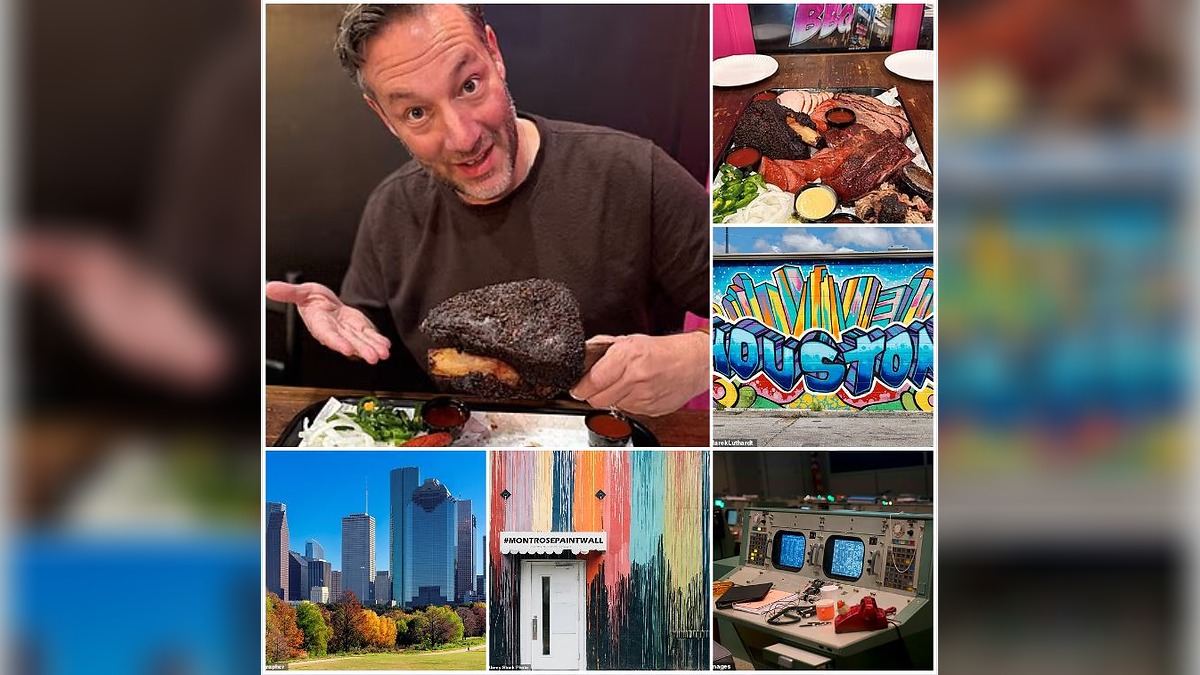
Houston is increasingly making a name for itself as a destination that combines space exploration, world-class museums, an expanding food scene and vibrant nightlife. Better known for its role in America’s space programme, the Texan metropolis is now attracting attention for much more than its historic connection to the Moon landings.
With rapid population growth, a diverse restaurant scene and a growing collection of boutique hotels, Houston is developing a distinctive identity that makes it an appealing option for travellers seeking an alternative to America’s more established tourist cities.
Inside NASA’s Historic Mission Control Room
One of Houston’s most remarkable attractions is hidden behind an unmarked door inside a weathered building at NASA’s Johnson Space Center.
The original Apollo Mission Control Room, located in Building 30, has undergone a sensitive £3.7 million restoration that has returned it to its historic appearance. The result offers visitors a rare opportunity to stand in the room where some of the defining moments of space exploration unfolded.
The facility witnessed both tragedy and triumph, including the Apollo 1 disaster in 1967 and the successful Apollo 11 Moon landing in 1969. It also played a central role in the response to the Apollo 13 emergency, when mission controllers worked to bring the astronauts safely home.
From the rotary dials and illuminated consoles to the period drinks cans and cigarette butts preserved in ashtrays, the restoration recreates the atmosphere of the era with striking attention to detail.
Space City’s Identity Goes Beyond the Apollo Missions
Houston has long embraced its association with space travel. The city’s official nickname, Space City, reflects its connection to NASA, while its sporting culture has also adopted the theme through teams such as the Houston Astros and Houston Rockets.
A familiar Texas joke assigns music to Austin, television to Dallas and problems to Houston, a reference to the famous Apollo 13 transmission. Yet the city’s modern appeal extends well beyond its place in spaceflight history.
Houston is experiencing significant expansion and is projected to overtake Chicago in population within the next decade, potentially becoming the third-largest city in the United States after New York and Los Angeles.
That growth is helping fuel a lively urban culture, particularly in its restaurants, bars and entertainment districts.
Houston’s Food Scene Draws International Attention
The city’s culinary diversity is a major part of its appeal, with more than 13,000 restaurants serving food influenced by over 70 countries.
Houston received particular recognition when the Michelin Guide expanded into Texas in 2024. While Dallas received one Michelin star, six were awarded to restaurants in Houston, highlighting the city’s growing reputation as a serious dining destination.
Among the establishments attracting attention is Tatemo, a Mexican restaurant tucked away behind an unmarked door in a shopping centre. Another is BCN Taste & Tradition, a Mediterranean restaurant housed in a converted mansion dating from the 1920s.
The recognition also extended to CorkScrew BBQ, a family-run smokehouse in Houston’s northern suburbs, demonstrating that the city’s culinary appeal is not limited to formal fine dining.
CorkScrew BBQ Serves Up Classic Texas Flavours
For visitors seeking traditional Texas barbecue, CorkScrew BBQ offers a different experience from Houston’s more polished restaurants.




Its menu includes large, tender ribs, brisket known for its buttery texture and peppery seasoning, and pulled pork with a spicy, juicy finish. The smokehouse has become a destination for diners willing to travel beyond the city centre in search of authentic barbecue.
The restaurant’s inclusion among Houston’s Michelin-recognised establishments also reflects the breadth of the city’s food culture, where family-run operations can attract attention alongside high-end dining rooms.
Montrose Combines Independent Dining With Contemporary Art
Montrose, a walkable neighbourhood on the western side of Midtown, offers a more relaxed way to experience Houston.
The area has developed a bohemian atmosphere, with cosy restaurants and casual dining spots including Leighton’s, The Sunrise House and Postino. Its appeal is strengthened by its proximity to the Menil Collection, a 30-acre art campus where visitors can explore collections and exhibitions without paying an admission fee.
Public art also contributes to the neighbourhood’s character. The Montrose Paint Wall, a prominent mural, has become part of an area increasingly associated with creative culture and independent businesses.
For travellers who prefer exploring on foot rather than moving between major attractions by car, Montrose provides a useful base for experiencing a different side of the city.
Boutique Hotels Raise Houston’s Hospitality Profile
Houston’s hotel scene is also evolving, with newer properties adding to the city’s appeal as a short-break destination.
Hotel Saint Augustine, which opened in 2025, is among the boutique establishments helping raise expectations for accommodation and dining. Its restaurant is a central part of the property’s offering, providing an additional attraction for visitors looking beyond traditional business hotels.
The development of such properties reflects Houston’s changing image, as the city seeks to cater not only to business travellers but also to tourists arriving for its food, art and cultural attractions.
Museum District Offers More Than 20 Major Institutions
South of Montrose, Houston’s Museum District provides another reason to extend a visit beyond NASA.
The district contains 21 major cultural institutions, including the Contemporary Arts Museum Houston and the Museum of Fine Arts, Houston. Together, they offer a wide range of artistic and cultural experiences, making the area an important destination for visitors interested in contemporary work as well as established collections.
The concentration of museums adds depth to Houston’s tourism offering and complements the city’s better-known scientific attractions.
Green Spaces Offer a Break From Houston’s Skyscrapers
Despite its sprawling urban footprint and dense concentration of high-rise buildings, Houston also has an extensive network of parks, gardens and nature reserves.
Greater Houston covers nearly 10,000 square miles, an area larger than the state of New Jersey. Within that vast region, green spaces provide opportunities to step away from the commercial districts and explore the city at a slower pace.
The contrast between its skyscrapers and natural areas helps give Houston a character that is not immediately apparent to visitors who associate it primarily with industry, business and space exploration.
Space Center Houston Looks Towards Future Missions
For anyone interested in space travel, Space Center Houston remains an essential stop.
The visitor attraction features a substantial collection of astronaut suits and Moon rocks, alongside a replica space shuttle that allows guests to get a closer look at the technology associated with human spaceflight.
Visitors can also learn about Artemis, NASA’s programme aimed at returning humans to the Moon and supporting future exploration. Houston’s role in directing human spaceflight operations means the city remains closely connected to the next chapter of space exploration.
The historic Mission Control Room is particularly compelling because it links those future ambitions with the achievements and challenges of earlier missions.
Houston’s Future May Be Its Biggest Attraction
NASA’s presence can sometimes dominate the way outsiders perceive Houston, but the city’s appeal is increasingly defined by a much broader collection of experiences.
From Michelin-recognised restaurants and traditional barbecue to contemporary art, boutique accommodation, museums and extensive green spaces, Houston offers a varied city break that reaches well beyond its spaceflight heritage.
Its population growth and expanding cultural scene suggest a city continuing to evolve. And with future NASA missions expected to be directed from the Johnson Space Center, Houston’s reputation as Space City is unlikely to fade.
For visitors willing to look beyond the Apollo story, the Texas metropolis offers a glimpse of a modern American city that is building its future while preserving the history that made it famous.

