
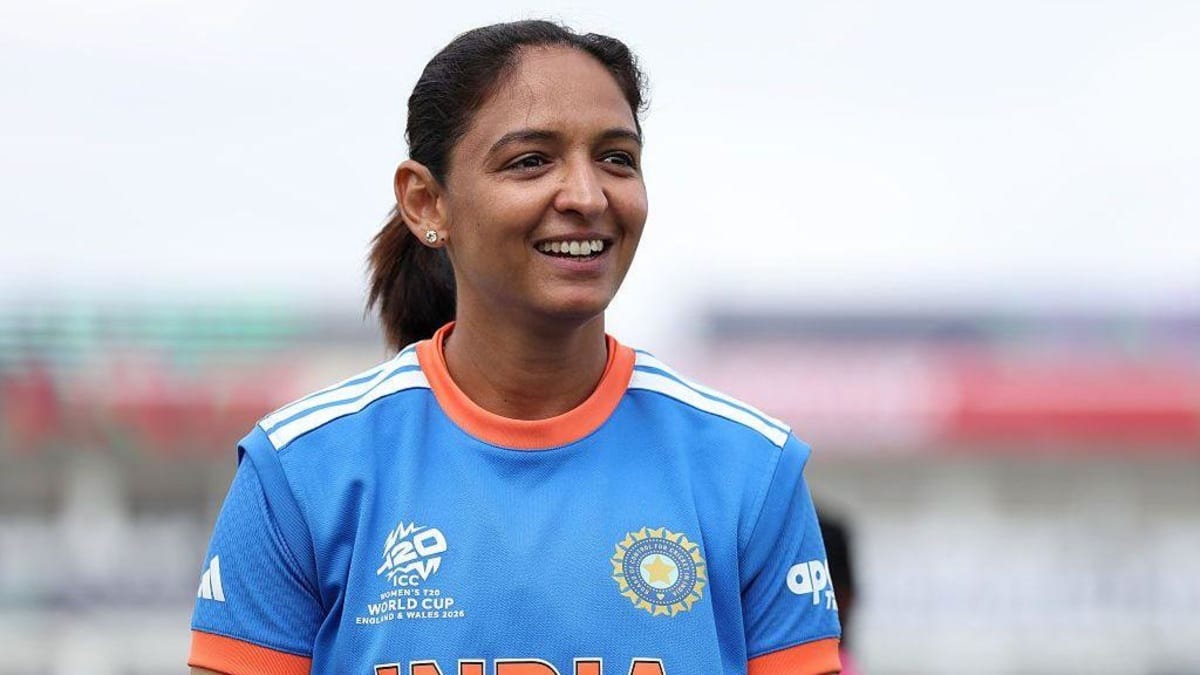
Harmanpreet Kaur has stepped down as India’s captain across formats, bringing an end to one of the longest and most eventful leadership eras in women’s international cricket.
The 37-year-old made the decision during a review meeting attended by BCCI secretary Devajit Saikia, head coach Amol Muzumdar, Harmanpreet and her long-time deputy Smriti Mandhana.
Mandhana, 30, has subsequently been appointed captain across all three formats.
Mandhana Takes Over From Long-Time Deputy
The change follows discussions about India’s leadership structure after a disappointing T20 World Cup campaign in England.
Harmanpreet was reportedly prepared to relinquish the T20 captaincy but wanted to remain in charge of the ODI and Test teams, believing her experience could continue to benefit a younger group of players.
The BCCI instead favoured a younger captain across formats, leading to Mandhana’s elevation.
The decision bears some similarity to the change in India’s men’s T20 leadership earlier this year, when Suryakumar Yadav was replaced as captain by Shreyas Iyer shortly after India’s World Cup triumph.
Captaincy Became a Subject of Debate
Questions surrounding Harmanpreet’s position intensified as her batting form declined and India struggled at the T20 World Cup.
Former India player Diana Edulji supported a leadership transition, arguing that Harmanpreet had already delivered what could reasonably have been expected of her.
Former captain Anjum Chopra took a different view, stressing the value of retaining her experience.
With the BCCI leaning towards a change, Harmanpreet chose to relinquish the role during the review process.
She later confirmed the decision in an emotional Instagram statement.
“I feel I have done my duty. I gave this team everything I had,” she wrote.
“Now, it is time for me to turn the page… Blood. Sweat. Sacrifice. Pride. I gave it all. Now, I’m ready to play for the love of the game again.




“Captaincy ends, the journey continues.”
A Career That Began in Punjab
Harmanpreet was born in Moga, Punjab, and developed an interest in cricket while growing up in a modest family.
Her family’s backing played an important role during her formative years before she joined the Railways, with Diana Edulji helping facilitate the move.
She subsequently relocated to Mumbai, where greater access to facilities and a more professional sporting environment supported her development.
She made her India debut in 2009 at the age of 20 and quickly established herself as an important member of the national side.
The Knock That Changed Her Career
For much of the early part of her international career, Harmanpreet contributed as an all-rounder, combining powerful middle-order batting with off-spin and athletic fielding.
Her defining early performance came at the 2017 Women’s ODI World Cup, when she produced an extraordinary century against Australia in the semi-final.
Harmanpreet’s unbeaten 171 helped India overcome Australia and reach the final against England.
India ultimately lost the title match, but the semi-final performance became one of the most memorable innings in the tournament’s history.
It also marked a major moment in Harmanpreet’s rise from established international player to one of the most recognisable figures in Indian women’s cricket.
From T20 Captain to All-Format Leader
Harmanpreet took over as India’s T20 captain from Mithali Raj in 2016 before eventually becoming the team’s captain across formats in 2022.
Her tenure was characterised by an aggressive approach to leadership and a willingness to pursue victories against the strongest teams in international cricket.
The most significant chapter of that leadership came at the 2025 ODI World Cup.
India faced Australia in the semi-final, eight years after Harmanpreet’s famous performance against the same opponents.
This time, she contributed 89 runs rather than a century, while Jemimah Rodrigues produced a century as India secured another memorable victory over Australia.
India’s Long-Awaited World Cup Triumph
The victory sent India into the final, where South Africa stood between them and their first Women’s ODI World Cup title.
India prevailed, finally securing the trophy that had remained out of reach since their runners-up finish in 2017.
Harmanpreet’s leadership during the tournament formed part of a career that had already included numerous milestones for Indian women’s cricket.
A New Chapter With Mandhana
Mandhana now inherits the captaincy after spending years as Harmanpreet’s deputy.
The appointment closes Harmanpreet’s nearly decade-long period as one of the central leadership figures in Indian women’s cricket, while her decision to continue playing means her international career is not yet over.
