
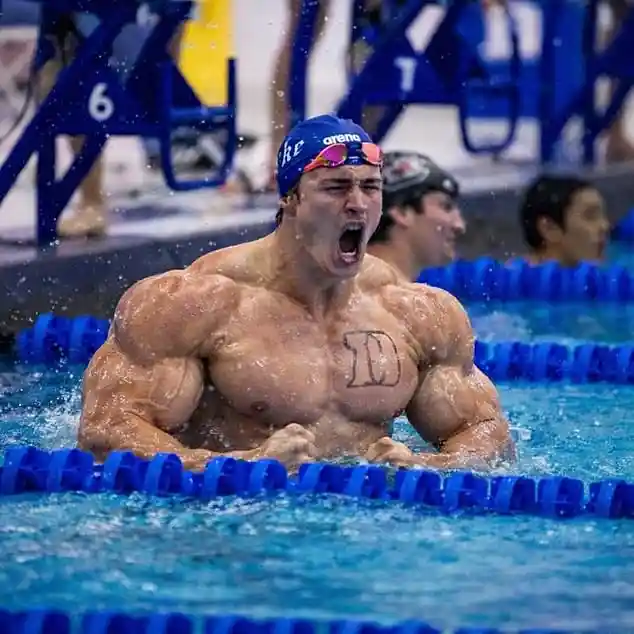
The Duke University men’s swim and dive team recently grabbed attention — but not for their performance in the pool.
Instead, a post on their official Instagram account showcased images of athletes with unbelievably chiseled physiques, sending social media into a frenzy just days before the Atlantic Coast Conference (ACC) championships.
AI or Reality? Fans Scramble to Tell
The photos displayed team members with massive shoulders, rock-hard abs, and other exaggerated features.
Some even showed small anomalies: one diver appeared to have six fingers on his left hand, while several athletes bore the same Duke “D” chest tattoo with questionable linework.
Observers quickly realized these images were artificially generated.
Despite the AI origins, fans couldn’t help but react.
Comments ranged from humorous to incredulous:
-
“Lifting coach needs a raise,” joked one Instagram user.
-
“So nice to see people achieve a solid beginner physique! Hopefully with more time in the gym they can really develop into their full potential!”
-
“Imagine actually trying to swim fly with traps that big!”
Suggested Readings (News continues below)




The post went viral, with many questioning whether such AI-generated hype is appropriate or misleading.
Some followers were fooled entirely, asking in the comments whether the pictures were real.
The Ethics of AI in Sports Promotion
The debate over AI in sports marketing has intensified.
Supporters argue that AI-generated images are just part of the fun and can engage fans in creative ways.
Critics, however, see them as potentially misleading, presenting unrealistic expectations for athletes and fans alike.
Sports media experts have noted that AI tools are increasingly being used for promotional content, but transparency is key.
Fans appreciate authenticity, and mixing AI-generated visuals with real athlete images could erode trust if not clearly disclosed.
The Team’s Response
The Duke swim program has not officially commented on the intent behind the post, but the viral reaction suggests that whether intentional or not, the AI images have succeeded in getting attention — albeit not for the reasons one might expect.
The ACC championships are still on the horizon, and the real performances in the pool will ultimately determine the team’s success, far beyond Instagram visuals.
What’s Next?
As AI tools become more accessible, sports organizations may continue experimenting with AI-generated content.
Fans and commentators will likely keep debating where the line should be drawn between creative marketing and misleading representation.
The Duke swim team’s viral post may serve as a cautionary tale — or a trendsetter — for other collegiate programs considering similar tactics.
Summary
The Duke University men’s swim and dive team posted AI-generated images of athletes with exaggerated physiques on Instagram, sparking a viral debate.
While the visuals showcased absurdly ripped bodies and anomalies like six fingers, reactions were mixed — some humorous, some critical, and some entirely fooled.
The incident highlights ongoing discussions about AI in sports marketing and raises questions about transparency, fan engagement, and ethical promotion ahead of the ACC championships.

