
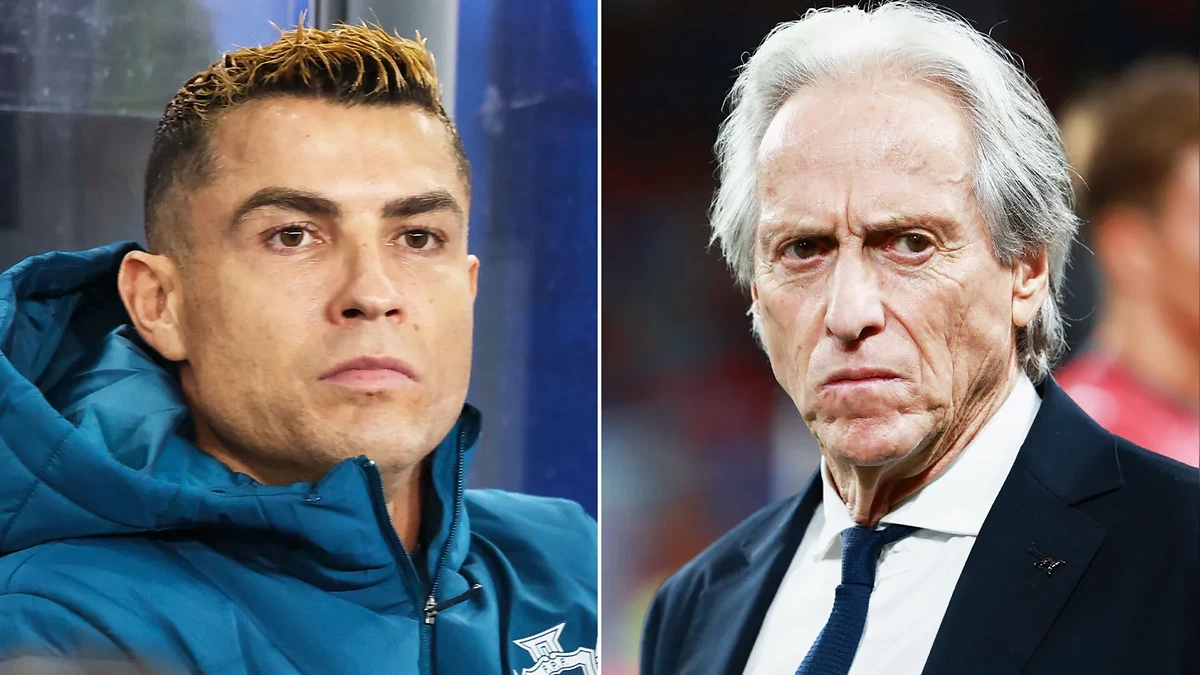
Portugal head coach Jorge Jesus has defended his handling of Cristiano Ronaldo after the veteran forward published an extraordinary 1,996-word statement accusing him of failing to honour an agreement over the striker’s treatment during the latest international break.
Ronaldo left Portugal’s training camp on a private jet after remaining an unused substitute during the Nations League match against Norway.
He later said he would publicly explain his version of events, leading to a detailed statement outlining his account of the dispute.
The 41-year-old claimed Jesus had agreed to address eight specific points at a press conference before Portugal’s subsequent fixture against Denmark.
Jesus did not fully follow the proposed script, instead maintaining that decisions surrounding Ronaldo’s involvement remained his responsibility as head coach.
Ronaldo’s Eight-Point Account
According to Ronaldo, he had held discussions with Jesus and Simao Coutinho, the sporting director of Al-Nassr, where both men have worked with the forward.
Ronaldo said an agreement was reached for Jesus to explain that he had personally proposed a sporting plan for the striker and that Ronaldo had accepted it without questioning the coach’s decisions.
The forward also wanted Jesus to acknowledge Ronaldo’s commitment to Portugal and recognise the influence he has had on the national team throughout his international career.
Another key point concerned the Norway match.
Ronaldo claimed Jesus had indicated he would play the final 30 minutes but ultimately left him on the bench after asking him to warm up.
Ronaldo also expected Jesus to concede that making a player of his stature warm up without subsequently entering the game was a mistake.
Jesus Accepts Part of the Criticism
Jesus did acknowledge that he had made an error in the way Ronaldo’s warm-up was handled.
The Portugal boss referred to the status of players such as Pelé and Diego Maradona while explaining why he believed the situation had been mishandled.
Jesus said he initially did not expect Ronaldo to feature in the two matches but changed his thinking during the Norway fixture and considered using him later in the game.
He explained that Ronaldo was instructed to begin warming up around half-time because Jesus believed he might eventually be required.
However, the coach later decided against introducing him.
Jesus admitted the timing of the warm-up was wrong, saying he should have waited longer before asking Ronaldo to prepare to enter the match.




Portugal Boss Stands by His Authority
Despite conceding that mistake, Jesus made it clear that Ronaldo’s status would not determine his tactical decisions.
The coach stressed that a player’s standing was a matter of respect for their career rather than an entitlement to selection or playing time.
Jesus said he remains responsible for deciding how matches are managed, regardless of a player’s reputation.
He explained that while he can discuss plans with players and make promises regarding their expected involvement, circumstances during a match can force him to change those intentions.
The Portugal boss was particularly emphatic that no player could dictate his final decisions once a match was underway.
Jesus Did Not Repeat Every Ronaldo Demand
Ronaldo had also asked Jesus to publicly state that he wanted the forward to remain part of the Portugal squad and that he wanted him “a lot”.
Jesus did not make that declaration during his subsequent media appearances.
He had previously described Ronaldo as a symbol of Portugal during a joint press conference at the beginning of the international break, but stopped short of repeating the specific wording Ronaldo said had been agreed.
Jesus also did not publicly reproduce Ronaldo’s broader assertion that the sporting plan had been accepted by both men in precisely the terms outlined in the forward’s statement.
Instead, the coach continued to emphasise that the final authority over team selection and match decisions rested with him.
Dispute Over the Norway Warm-Up
The disagreement largely centres on what happened during the Norway match.
Jesus said Ronaldo had initially been told that he would not feature in the two games, but the coach later considered bringing him on after assessing the circumstances of the match.
Ronaldo warmed up for a prolonged period but was ultimately not introduced.
Jesus acknowledged that such a situation would frustrate any player, particularly Ronaldo given his standing and career.
However, he maintained that the match itself ultimately influenced his decision and that he would not change a tactical decision simply because of a player’s reputation.
Ronaldo Says He Remains Available
In his statement, Ronaldo acknowledged that he could face punishment over his decision to leave the national team camp.
The striker nevertheless maintained that he remained available for Portugal if selected.
He also revealed that he had offered to retire from international football if that was what Jesus and the Portuguese Football Federation wanted.
According to Ronaldo, both instead reiterated that they wanted him to remain involved with the national team.
The dispute therefore centres not only on his absence against Norway but also on the disagreement over how his role and the events surrounding the match were communicated publicly.
Jesus Leaves Door Open for Ronaldo
Before Ronaldo’s lengthy statement, Jesus had indicated that the forward could still return to the Portugal squad.
The coach said Ronaldo would be able to make his own decision about his international future and suggested there was no lasting resentment from his side.
Jesus described the disagreement as a misunderstanding and said he believed it could be resolved through discussions between the two men.
He also acknowledged that Ronaldo’s status made the incident different from a routine situation involving another player.
Jesus said that if Ronaldo continued playing for Al-Nassr and wanted to represent Portugal, there would be no reason in principle for him not to be considered for the next squad.
The coach reiterated that Ronaldo himself would have a role in deciding whether he wanted to continue his international career.
