
Newly reported documents have raised questions about how Cornell University Police handled phone records during their investigation into an alleged sexual assault at the Chi Phi fraternity house in 2024.
According to documents obtained by CNN, Cornell police prepared letters to Verizon and T-Mobile seeking information connected to phone accounts that investigators believed could contain evidence relevant to the case.
The letters were dated November 15, 2024, roughly a week after a female student, identified in court filings as Jane Doe, reported that she had allegedly been sexually assaulted at the fraternity house.
Police Sought to Preserve Potential Evidence
The drafted correspondence told the telecommunications companies that police were investigating a sexual assault and believed the specified accounts could contain information relevant to the investigation.
Investigators reportedly said they would provide a signed warrant within 30 days and asked the companies to preserve available data associated with the accounts.
The requested material reportedly included text messages, emails, phone records, photographs and video messages.
However, it remains unclear whether the letters were ever sent or whether Cornell police subsequently obtained subpoenas or warrants for the records.
Prosecutors’ Knowledge Remains Unclear
Another unanswered question is whether Tompkins County District Attorney Matthew Van Houten was aware of the proposed requests for phone records.
Van Houten’s office initially investigated the allegations but ultimately declined to bring criminal charges against the accused men.
The case has since been reopened, adding significance to questions about what evidence investigators sought, obtained or shared during the original investigation.
Alleged Victim Says She Recorded Calls
Jane Doe’s attorney has told CNN that his client recorded several conversations with men accused in the case.
The recordings have become part of the wider scrutiny surrounding the allegations after Jane Doe filed a lawsuit last month against the accused men, Cornell University and other parties.
One of the recorded conversations involved Matthew Ingalls, whom Jane Doe says invited her to the fraternity house on October 19, 2024.
Ingalls was subsequently expelled from Cornell.
Phone Call Offers Conflicting Accounts
Records obtained by ABC News reportedly show that Ingalls disputed Jane Doe’s account of what happened that night.
He reportedly maintained that he was too intoxicated to consent to sexual activity and suggested during the conversation that Jane Doe may have assaulted him.




A recording obtained by Cornell University Police, however, captured Ingalls discussing details of the encounter with Jane Doe.
During the conversation, he reportedly told her that she had said she was sober.
Jane Doe disputed his account and alleged that she had been heavily intoxicated when the incident occurred.
Allegations of a Group Sexual Assault
According to the allegations detailed in the lawsuit, Jane Doe told investigators that she was sexually assaulted by multiple men while she was incapacitated and unable to consent.
In one communication with Ingalls, she reportedly warned that the conduct could be considered gang rape.
She also said she had required emergency medical treatment and therapy afterward, alleging that the incident had caused significant physical and psychological harm.
The allegations have not resulted in criminal charges against the men named in the lawsuit, and the defendants’ accounts and legal positions differ from Jane Doe’s allegations.
Ingalls Describes the Night
During the recorded conversation, Ingalls reportedly gave Jane Doe his account of how the evening unfolded.
He said they began dancing after she arrived and that he asked her about having sex, which he said she agreed to.
He then described finding another man at the fraternity house to join them before they went upstairs.
That man was identified as Jonathan Newell, who was also later expelled from Cornell.
The lawsuit alleges that Newell sent a Snapchat message to a group chat involving more than 50 fraternity members that referred to Jane Doe in sexually derogatory terms.
Cornell Disciplinary Actions
The university conducted its own disciplinary proceedings following the allegations, resulting in sanctions against several students.
Winston Lee was suspended for two years and later placed on disciplinary probation, according to disciplinary summaries reviewed by The New York Times.
Gillio Lopes received a three-semester suspension followed by two years of probation. Both men were also required to complete educational work relating to sexual harassment.
Diego Sarabia was accused by Jane Doe of forcibly kissing her. He was subsequently barred from campus for three years, with a persona non grata order issued after he had graduated.
Scott Norris and Scott Kretzschmar were ordered to have no contact with Jane Doe and were required to complete educational assignments involving sexual harassment, social media use and bystander intervention.
The Chi Phi fraternity chapter was ultimately banned from campus following Cornell’s investigation.
Campus Protests Intensify
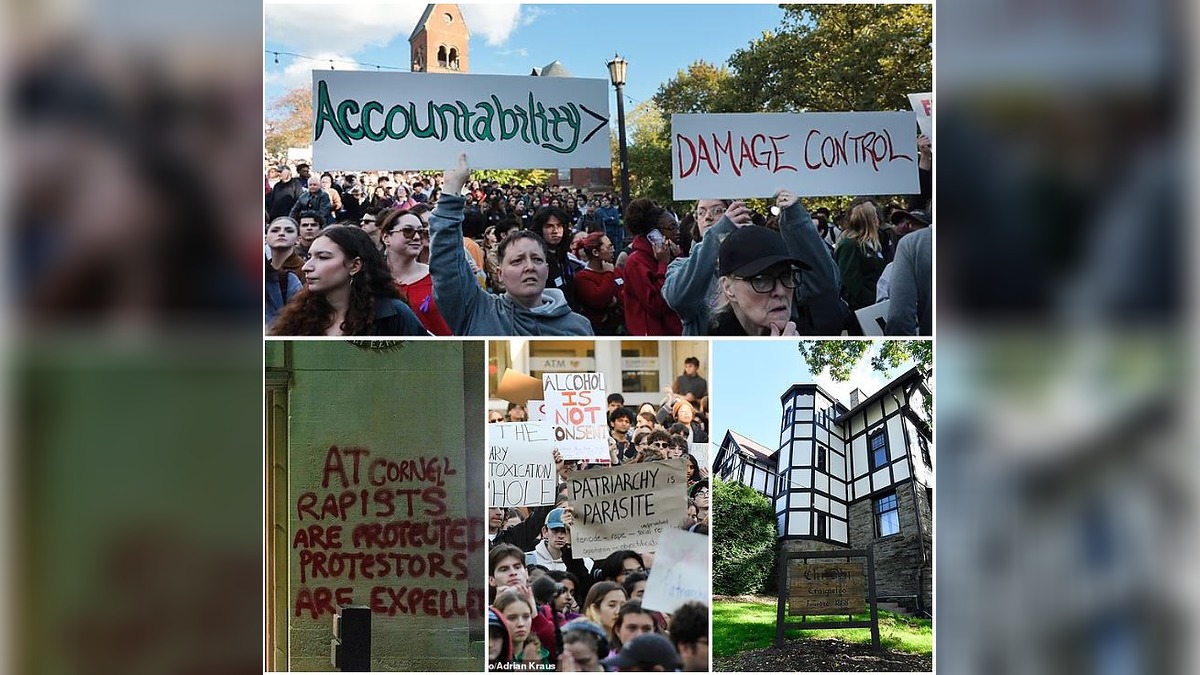
The controversy has triggered protests at Cornell since the allegations became public in September.
Demonstrators have criticised the university’s handling of sexual assault allegations and broader issues surrounding campus culture.
On Monday, activists reportedly smashed windows and vandalised buildings, using red-painted messages to condemn what they described as patriarchal attitudes and the university’s response to sexual assault.
The demonstrations have added pressure on Cornell as the allegations and the reopened criminal investigation continue to attract national attention.
Cornell Declines Further Comment
A Cornell University spokesperson told the Daily Mail that the university had no additional comment because the matter remains under active investigation.
Questions also remain for Cornell University Police, the Tompkins County District Attorney’s Office and the telecommunications companies involved over whether the proposed phone-record requests were ultimately executed and what evidence, if any, was obtained.
The renewed investigation could determine whether those records become significant to the next stage of the case.

