
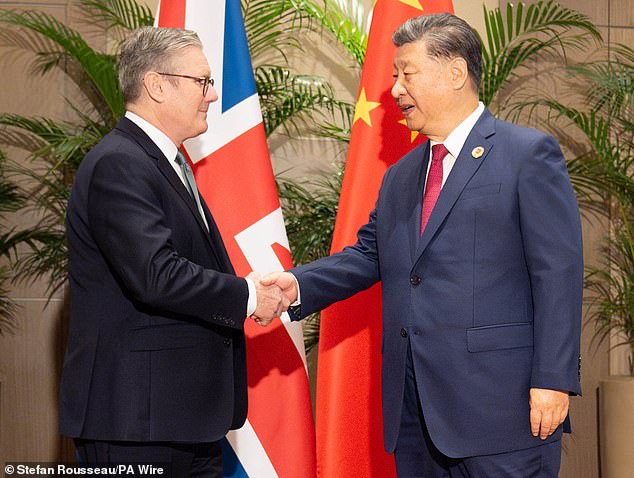
The British Embassy in Beijing has officially reopened its call for proposals under the Chevening China Financial Fellowship Programme, covering the period from 2027 to 2030. It’s essentially an open invitation to UK universities and specialist institutions to step forward and help shape the next phase of financial cooperation between the United Kingdom and China.
This isn’t just another academic exchange. It’s a carefully structured fellowship aimed at mid-career and senior Chinese professionals working in the financial sector — the kind of people who already influence policy, regulation and market direction back home.
What the Fellowship Is Really About
At its core, the Chevening China Financial Fellowship Programme is designed to deepen UK–China financial collaboration. The idea is to bring a small, select group of experienced Chinese financial leaders to the UK for a focused, three-month research fellowship each year.
These fellows are not entry-level participants. They are established professionals — decision-makers, regulators, senior managers — who are expected to return to China with fresh insights, expanded networks and a deeper understanding of British financial systems.
It also sits within the broader Chevening framework, which is globally recognised for promoting leadership, influence and long-term partnerships. Chevening alumni worldwide often go on to hold senior government and corporate positions, making the network a powerful diplomatic tool for the UK.
Areas of Expertise the Embassy Is Looking For
The Embassy is specifically calling for institutions with strength in key financial disciplines. Proposals should demonstrate academic and professional expertise in areas such as:
-
Financial regulation
-
Financial policymaking
-
Banking, capital markets and investment management
-
Sustainable finance
-
Insurance and risk management
The emphasis here is not just classroom teaching. The winning institution will need to design and deliver a bespoke curriculum tailored to between nine and twelve fellows over three years. That means thoughtful programme design, real-world exposure and meaningful engagement with UK practitioners and regulators.
Given the increasing global focus on ESG frameworks, climate finance and regulatory alignment, sustainable finance in particular is likely to be a major focal point over the coming years.



How the Programme Will Work
The selected UK university or institution will run a three-month research fellowship for at least three fellows per year. Over the three-year span, that adds up to a cohort of roughly nine to twelve participants.
Funding is capped at £180,000 in total across the full duration of the programme. Importantly, all spending must be activity-based. Institutions must clearly show how funds will be allocated to specific programme components rather than broad operational categories.
Payments will be made in arrears, split into three annual instalments. That means the implementing institution must have the financial capacity to front roughly one-third of the annual costs at any given time — a detail potential bidders will need to plan for carefully.
If approved, the selected institution will sign a Memorandum of Understanding with the British Embassy in Beijing.
What Will Decide the Winning Bid
Proposals will be judged across several clear criteria.
First, innovation and programme design. The Embassy wants more than lectures; they are looking for an integrated approach that genuinely engages fellows while they are in the UK. That could mean site visits, policy roundtables, regulatory simulations or structured networking with industry leaders.
Second, experience and delivery capability. Institutions must show a track record of working with mid-career professionals and demonstrate that they can monitor, evaluate and measure outcomes effectively.
Third, facilities and accommodation. Since these fellows are senior-level participants, executive-level comfort and convenience matter. Adequate housing and strong training infrastructure will be expected.
Finally, financial competitiveness. Institutions must justify their pricing, benchmark their fees and demonstrate value for money.
Why This Matters in the Bigger Picture
This programme is not happening in isolation. UK–China relations, particularly in trade and finance, have been under intense scrutiny in recent years. Despite political tensions in some areas, financial services remain one of the more stable and mutually beneficial sectors of cooperation.
The UK continues to position itself as a global financial hub, especially in areas like green finance and regulatory expertise. Meanwhile, China’s financial markets are evolving rapidly, with ongoing reforms in capital markets, insurance and risk governance.
Bringing Chinese financial professionals into the UK system for immersive training strengthens institutional familiarity on both sides. It also quietly reinforces soft power, which has long been one of Chevening’s strategic advantages.
Deadlines and Submission Details
Institutions interested in bidding must submit proposals by 23:59 GMT on Thursday, 30 April 2026. Late applications will not be considered.
Proposals must include a completed Activity Based Budget template and be submitted in English, with financial figures listed in GBP sterling. Submissions should be sent directly to the designated FCDO contact via email.
Supporting documents, including the full call for proposals and budget template, are available in OpenDocument format.
What’s Next?
Over the coming months, UK universities with strong finance departments will likely begin assembling consortium-style bids, combining academic expertise with industry partnerships.
Once the deadline closes, the Embassy will assess submissions against the outlined criteria. A decision on the selected institution is expected later in 2026, allowing sufficient time for curriculum design before the 2027 intake.
If the programme proceeds as planned, the first cohort of fellows could arrive in the UK in 2027, marking the start of a new chapter in UK–China financial engagement.
For institutions with the right expertise and infrastructure, this is not just a funding opportunity — it is a chance to shape international financial dialogue at a leadership level.
