
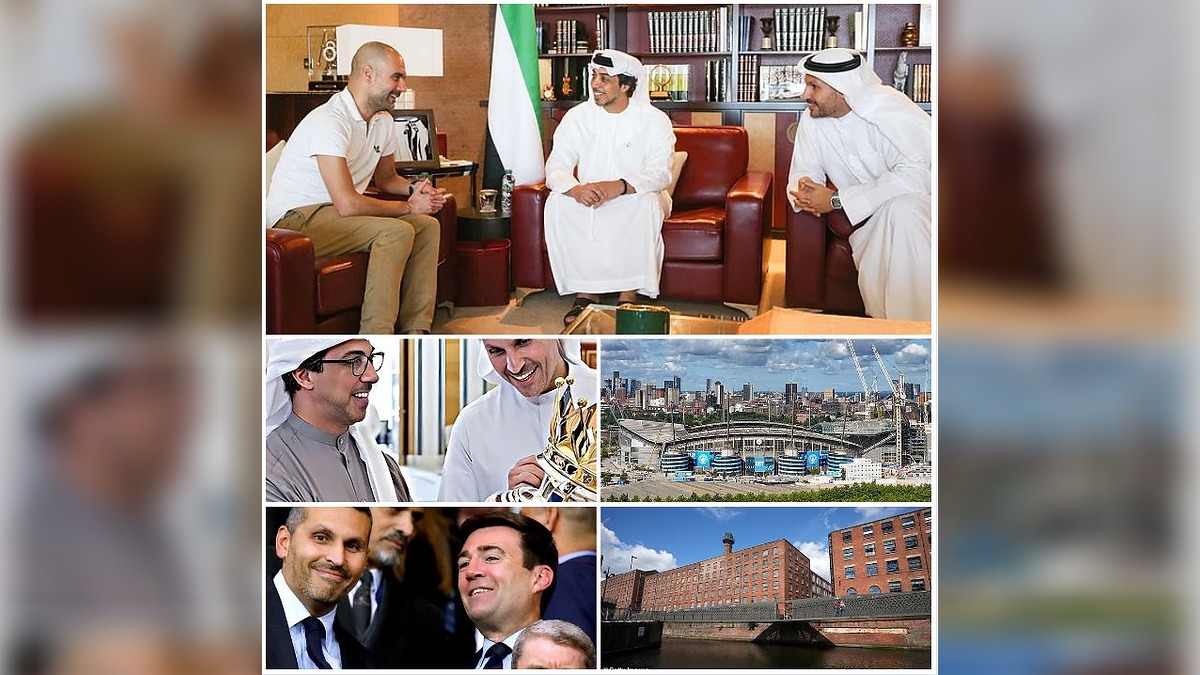
Prime Minister Andy Burnham is facing mounting questions over his past relationship with Manchester City, the club’s Abu Dhabi-linked ownership and tens of millions of pounds in taxpayer-funded loans approved during his time as Greater Manchester mayor.
The controversy has intensified following scrutiny of the club’s financial affairs and fresh questions about Burnham’s dealings with senior Manchester City executives. Critics are demanding greater transparency over meetings, hospitality, property agreements and decisions involving companies linked to the club’s owner, Sheikh Mansour bin Zayed Al Nahyan.
At the centre of the dispute are £55.7 million in loans approved for property developments associated with the Manchester Life regeneration project, alongside claims that the Prime Minister’s recent disclosure of his dealings with the club’s owners was incomplete.
Burnham has pledged to publish information about his interactions with Manchester City’s ownership, but opposition politicians have questioned whether the disclosure meets his commitment to transparency.
£55.7 Million in Taxpayer Loans Under Renewed Scrutiny
The controversy dates back to September 2017, when Burnham chaired a meeting of the Greater Manchester Combined Authority (GMCA).
During the meeting, the authority approved loans of £10.5 million and £20.7 million for two property companies, New Little Mill and Vesta Street. Both companies were reportedly owned through Jersey-based structures linked to Sheikh Mansour.
The funding was intended to support the development of upmarket residential properties in Ancoats, an area of Manchester known for its historic cotton mills and warehouses.
A month later, another GMCA meeting approved a further £24.5 million loan for Lampwick Developments Limited, a third company identified as ultimately belonging to Sheikh Mansour.
Together, the three loans amounted to £55.7 million.
The decisions are now attracting renewed attention because they were made while Burnham was mayor and had a relationship with senior figures at Manchester City.
Questions have been raised about why companies associated with one of the world’s wealthiest investors required public loans for property developments, and whether the arrangements provided sufficient protection for taxpayers.
Free Football Tickets and Hospitality Raise Conflict-of-Interest Questions
Burnham’s relationship with Manchester City executives has become a significant part of the political debate.
In August 2017, the then-mayor attended a Manchester City match after accepting hospitality from the club’s chairman, Khaldoon Al Mubarak. Burnham, an Everton supporter, reportedly watched his team play City in a 1-1 Premier League draw after dining with Al Mubarak in an executive box.
The value of the hospitality was reported to be approximately £330.
Around six weeks later, Burnham chaired the GMCA meeting at which the two property loans worth £31.2 million were approved.
He subsequently attended another dinner with Al Mubarak before a Manchester derby and received tickets to an Ed Sheeran concert at the Etihad Stadium.
These events have prompted questions about whether the mayor’s hospitality and his role in decisions involving companies linked to Sheikh Mansour created a conflict of interest that should have been declared.
The account of the 2017 meeting cited in the controversy says no such declaration appeared in the minutes.
The issue is not simply whether public funding was approved, but whether the decisions were made with adequate transparency and whether any relevant personal or professional relationships were properly disclosed.
Manchester’s Property Regeneration Deals Face Fresh Examination
The dispute extends beyond the loans to the wider Manchester Life regeneration project, a joint venture involving Manchester City Council and companies linked to Sheikh Mansour.
Launched in 2015, the project focused on transforming former industrial buildings and surrounding land in Ancoats and New Islington into thousands of residential flats.
Supporters of the regeneration approach have argued that investment was needed to revive areas affected by economic decline, particularly in the aftermath of the 2008 financial crisis.
However, questions have been raised about the terms under which public land was made available to private developers and whether Manchester received sufficient value in return.
One arrangement reportedly gave a Sheikh Mansour-linked property company a ten-year right of first refusal over substantial areas of land between the Etihad Stadium and Manchester city centre.
Critics argue that this limited the opportunity for land to be offered through an open and competitive process.
There have also been questions about planning decisions and affordable housing requirements, including claims that the usual expectation for developers to provide 20 per cent affordable housing was waived on certain projects.
Manchester City Council has maintained that measures were needed to attract investment into a deprived area. Nevertheless, the arrangements have come under increasing scrutiny as questions about the relationship between public authorities and private investors have grown.
University Report Questions Value Received by Manchester
A 2022 report from the University of Sheffield added to the debate over the financial benefits of the Manchester Life project.



The report criticised the transfer of public assets into private ownership, arguing that the arrangement was difficult to justify as a prudent use of public wealth.
It also examined the role of offshore holding companies registered in Jersey and the tax implications of the development structure.
According to the account of the report, the Manchester Life property portfolio grew to a valuation of approximately £350 million within a few years, while the council’s share of the profits amounted to around £3 million.
The findings have prompted renewed questions about whether the city secured an appropriate financial return from its partnership with Sheikh Mansour-linked companies.
The report’s conclusions do not, by themselves, establish wrongdoing by Burnham or other officials. However, they have strengthened calls for a closer examination of how the agreements were negotiated and how the public interest was protected.
Manchester City’s Financial Case Adds to Political Pressure
The controversy has gained further momentum following proceedings over Manchester City’s alleged breaches of Premier League financial regulations.
The supplied account states that an independent commission found the club had systematically breached financial rules on 114 occasions over a nine-year period between 2009 and 2018. It also alleges that contracts were used to channel approximately £830 million into football operations.
Manchester City has denied wrongdoing and has indicated that it intends to challenge the findings. The final sanctions and the outcome of any appeal remain important to the wider dispute.
The allegations have nevertheless intensified scrutiny of the club’s ownership and its relationships with political figures.
Burnham’s response has become a separate source of controversy. In television interviews following the emergence of the findings, he cautioned against rushing to conclusions and argued that Manchester City had made a substantial contribution to the development of modern Manchester.
He also expressed concern about the possibility of Sheikh Mansour’s ownership group leaving the club.
Critics have argued that the comments risked making the Prime Minister appear too closely aligned with the club at a time when its financial conduct was under examination.
The debate has therefore shifted beyond football, raising questions about how a serving Prime Minister should respond when a major institution with which he has longstanding connections faces serious allegations.
Downing Street Meetings Put Burnham’s Abu Dhabi Links in Focus
Further questions have emerged over contacts between Burnham and senior Emirati figures since he entered national government.
Khaldoon Al Mubarak visited Downing Street on 14 September, according to the account, and met Business Secretary Jonathan Reynolds. A meeting with Burnham was reportedly scheduled but cancelled following the death of Burnham’s father, Roy, that day.
The Prime Minister had also spoken by telephone with Abu Dhabi Crown Prince Sheikh Mohamed bin Zayed Al Nahyan in July, shortly after taking office.
An official record of the conversation reportedly stated that Burnham thanked the Emirati leader for his country’s investment in Manchester and its impact on the city.
Those contacts have attracted attention because of the questions now surrounding Manchester City’s ownership and the property investments associated with Sheikh Mansour.
Critics say the government must make clear which meetings took place, what was discussed and whether any decisions involving the club or its related businesses could create concerns about impartiality.
Burnham’s Transparency Statement Faces Criticism
In response to the growing controversy, Burnham told Parliament that he intended to publish details of his dealings with Manchester City’s owners.
A statement subsequently appeared on the GMCA website. It was reportedly only 136 words long and described a limited number of formal and informal contacts, including a meeting with Al Mubarak at a government summit in 2021.
It also acknowledged that Burnham had attended a small number of matches at the Etihad Stadium and referred to international visits to China and Japan involving staff.
However, the statement reportedly did not mention the earlier dinners with Al Mubarak or the GMCA loan approvals that followed one of those encounters.
It also omitted other meetings with senior Manchester City executives at the Co-op Live arena, according to the account. The Times separately reported meetings with chief executive Ferran Soriano in 2023 and former chief operating officer Roel de Vries in 2025.
Louie French, the Conservative shadow sports minister, questioned the limited disclosure, arguing that the meeting at which public loans were approved should count as a dealing with Manchester City’s owners.
Liberal Democrat sports spokesperson Anna Sabine also criticised the response, saying that the promise of full transparency had not been met.
The central dispute is now whether Burnham’s disclosure adequately captures the extent of his contacts with the club and its associated businesses.
Removal of Earlier Declarations of Interest Raises More Questions
The controversy has been compounded by reports that the GMCA recently removed Burnham’s declarations of interest from his first term as mayor from its website.
Those records had provided information about interests and hospitality that could help members of the public understand his relationships with outside organisations.
Their removal has made it more difficult to review details of the hospitality he received and other political donations during much of his time leading Greater Manchester.
The reason for the deletion remains unclear. The GMCA reportedly did not respond to requests for comment about the missing records or the discrepancies identified in its statement.
The absence of publicly accessible information has prompted further calls for the authority to restore the records and provide a fuller account of the decisions and relationships under scrutiny.
Opposition Parties Demand Full Disclosure
Political opponents have seized on the controversy as a test of Burnham’s commitment to accountability.
Conservative leader Kemi Badenoch has argued that carefully worded explanations will not be sufficient, while opposition figures have called for a complete account of the Prime Minister’s contacts with Manchester City’s ownership and related property companies.
The questions extend to meeting records, correspondence, hospitality declarations, property agreements and the process through which public money was allocated.
The issue has also raised broader concerns about Manchester’s long-running Labour administration and the scrutiny of major regeneration projects. Critics have argued that the city’s political environment has not always encouraged open debate about commercial arrangements with wealthy international investors.
Much of the information about controversial property deals has reportedly emerged through Freedom of Information requests, some of which produced heavily redacted documents.
Those disclosures have increased pressure on public authorities to explain how decisions were reached and whether competing interests were adequately considered.
The Political Fallout Remains Uncertain
The controversy presents Burnham with a difficult challenge: defending Manchester’s record of attracting international investment while addressing concerns about the terms under which public money and land were used.
The regeneration projects have helped transform parts of the city, but the financial arrangements behind them are now facing renewed scrutiny.
At the same time, the dispute over Manchester City’s financial conduct has brought Burnham’s past association with the club into the national political spotlight.
The Prime Minister’s promise to disclose his dealings has not ended the debate. Instead, questions about omitted meetings, hospitality and historical declarations have fuelled demands for more comprehensive information.
Whether the controversy develops into a wider political scandal will depend partly on what further records emerge, how the GMCA responds and whether Burnham provides the fuller disclosure his critics are demanding.

