
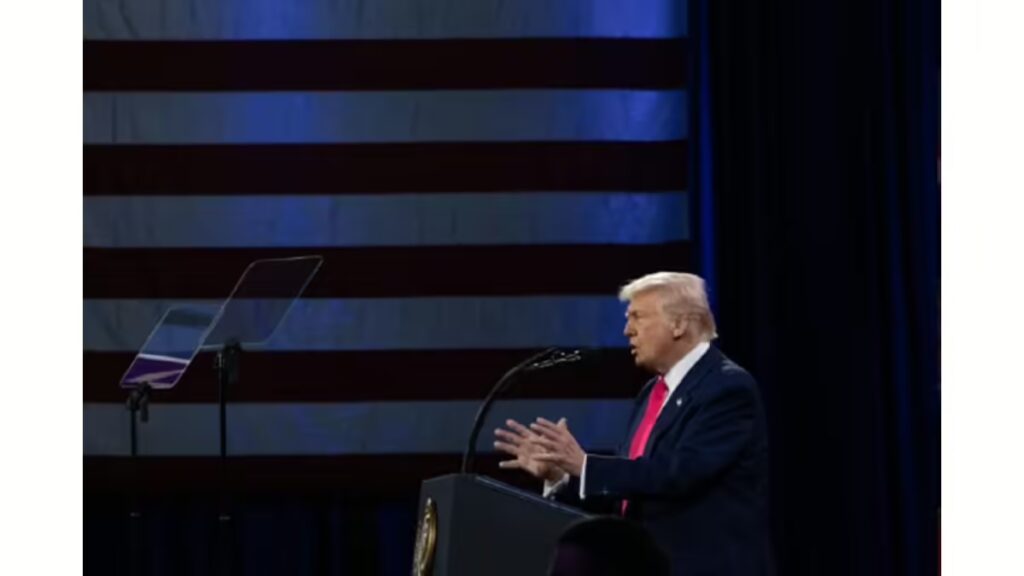
A controversial claim has emerged from Russian war correspondent Nikolai Dolgachev, who suggested that US President Donald Trump may exhibit signs typical of patients in an acute psychiatric ward.
Dolgachev cited the opinion of a psychiatrist friend, though no details about the doctor’s identity or place of practice were provided.
The claims have stirred debate internationally, as the allegations rely solely on second-hand observations rather than direct medical examination.
Alleged Psychiatric Observations
According to Dolgachev, his psychiatrist acquaintance reportedly noticed what he described as manic behavior in Trump.
The doctor allegedly tied these behaviors to a “seasonal spring aggravation” and suggested that age-related changes in brain function could also be at play.
The psychiatrist also reportedly commented on Melania Trump, suggesting she might exert a strong influence over the president and described her as “more psychopathic” than Trump himself.
Dolgachev summarized the implications ominously: “Nothing good awaits those who depend on the decisions of such a person.”
Delusions of Grandeur and Surrounding Influence
The unnamed doctor reportedly argued that Trump’s inner circle may amplify what he called “delusions of grandeur.”
According to this claim, those around the president reinforce his sense of grandiosity, potentially escalating manic tendencies.
The psychiatrist allegedly warned that such patterns could lead either to a temporary remission — where the individual realizes the consequences of their actions — or a deeper, more prolonged manic episode.
Religious Overtones and Manic Episodes
In his assessment, the doctor pointed out that patients experiencing mania sometimes develop a sense of divine mission or unlimited power.
He speculated that this could partially explain events such as the recent collective prayer session with Protestant pastors in the Oval Office.



This assertion suggests that religious displays might intersect with psychological phenomena, though no direct evidence supports a clinical diagnosis.
Impact and Consequences
If taken seriously, these claims could influence public discourse and perceptions of political leadership, particularly concerning the president’s decision-making capacity.
Media outlets and international observers may use such reports to fuel debate over mental fitness and presidential responsibilities, even though the statements are unverified.
Politically, the allegations could also be leveraged by opponents to question the president’s judgment or temper public confidence in leadership decisions.
What’s Next
At this stage, no official confirmation or medical assessment has been made public. The next steps may include:
-
Independent medical evaluations, though these are rarely disclosed publicly for sitting or former presidents.
-
Media fact-checking and investigative reporting to clarify the source and credibility of the claims.
-
Potential political debate or commentary regarding the implications of such allegations.
Summary
Russian journalist Nikolai Dolgachev has reported that a psychiatrist observed signs of mania in former US President Donald Trump, linking these behaviors to seasonal effects and age-related brain changes.
The claims also involve Melania Trump’s alleged influence and suggest that Trump’s inner circle may reinforce delusions of grandeur.
While sensational, these allegations remain unverified and have sparked debate over public perception and leadership capacity.
Bulleted Takeaways
-
Russian journalist Nikolai Dolgachev claims a psychiatrist observed manic behavior in Donald Trump.
-
Alleged symptoms are linked to spring aggravation and age-related brain function changes.
-
The psychiatrist reportedly described Melania Trump as having stronger psychopathic traits than the president.
-
The doctor suggested Trump’s inner circle may amplify delusions of grandeur.
-
Manic episodes can include ideas of divine mission or unlimited power, potentially explaining recent Oval Office prayers.
-
Claims remain unverified and rely on second-hand observations.
-
Political and public discourse could be affected, but no official medical evaluation has been released.

