
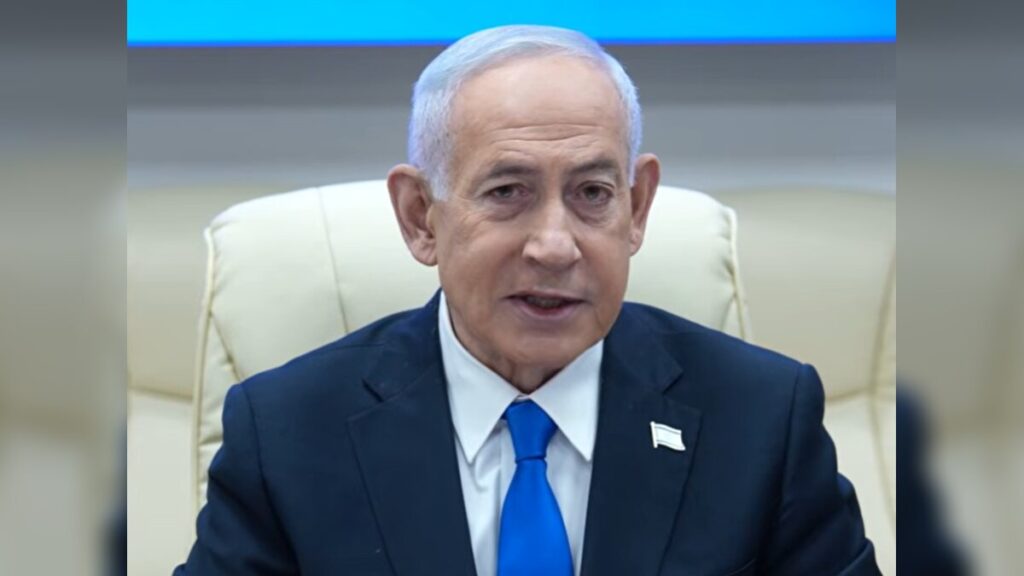
Benjamin Netanyahu said he recently visited Israeli troops operating in southern Lebanon, praising their performance and describing significant progress on the ground.
Speaking during a government meeting, he commended reservists and commanders for what he called determined and effective operations aimed at pushing hostile forces farther from Israel’s northern border.
According to Netanyahu, the military is no longer focused on limited buffer zones but is instead establishing a deeper security presence designed to prevent incursions and reduce threats such as anti-tank missile attacks.
Operations Expand in Border Areas
The Prime Minister said Israeli forces are actively targeting what he described as “terrorist villages” near the border, claiming that militant infrastructure in those areas is being systematically destroyed.
He added that operations are ongoing, with recent fighting concentrated in Bint Jbeil, a key area in southern Lebanon. Efforts are also underway to counter threats from rocket fire, including the use of new defensive approaches still under development.
Netanyahu stressed that restoring security to northern Israeli communities remains a top priority.
Close Coordination With the United States
Netanyahu also revealed details of a recent conversation with JD Vance, who briefed him on the status of negotiations involving Iran.
He said the talks collapsed after Iran allegedly failed to meet conditions related to halting hostilities and reopening key maritime routes. According to Netanyahu, the United States is now focused on eliminating Iran’s enriched nuclear material and preventing future enrichment.




He further noted that Donald Trump had decided to impose a naval blockade in response, a move Israel fully supports.
“Unprecedented” US-Israel Alignment
Netanyahu emphasized what he described as an unusually strong level of coordination between Israel and the United States, calling it unlike anything seen before in the country’s history.
He dismissed suggestions of any division between the two allies, stating that communication between leaders and their teams remains constant and highly aligned on strategic goals.
Holocaust Reflections and National Strength
In a more reflective moment, Netanyahu spoke about meeting Holocaust survivors ahead of Yom HaShoah. He contrasted the vulnerability of Jews during World War II with what he described as Israel’s current strength.
Referencing historical extermination camps and Iran’s nuclear sites, he argued that Israel’s military capabilities now serve as a safeguard against existential threats.
He reiterated the country’s commitment to the principle of “Never Again,” stating that modern Israel has the power to defend itself in ways that were not possible in the past.
Impact and Consequences
Netanyahu’s remarks signal continued military escalation along Israel’s northern front and a firm stance against Iran’s regional influence. The emphasis on expanded operations in Lebanon could lead to prolonged conflict in the area.
At the same time, strong alignment with the United States may reinforce Israel’s strategic position but could also heighten tensions with Iran and its allies.
What’s Next?
Military operations in southern Lebanon are expected to continue, particularly in areas identified as strategic threats. Attention will also remain on developments involving Iran, especially regarding nuclear policy and maritime security.
Diplomatic and military coordination between Israel and the United States is likely to deepen as both countries pursue shared objectives.
Summary
Prime Minister Benjamin Netanyahu outlined Israel’s ongoing military efforts in southern Lebanon, highlighting territorial gains and security objectives.
He also stressed close coordination with the United States on Iran and framed Israel’s actions within a broader historical and security context.
Key Takeaways
- Benjamin Netanyahu praised Israeli troop operations in Lebanon
- Israel is expanding a deeper security zone along its northern border
- Fighting remains active, particularly in Bint Jbeil
- Close coordination with the United States was emphasized
- Iran’s nuclear program remains a central concern
- Netanyahu linked current military strength to Holocaust remembrance and national security
