
Tensions in the Middle East have taken another sharp turn, with Iran warning the United States and Israel that future retaliation will be even more intense.
Officials in Tehran are no longer speaking cautiously—they’re openly threatening “broader and more destructive” responses as the conflict deepens.
At the center of this growing crisis is Ebrahim Zolfaqari, who made it clear that Iran’s rivals could face what he described as “permanent regret.”
It’s a statement that reflects just how far things have escalated since the conflict erupted earlier this year.
Trump’s Hardline Message
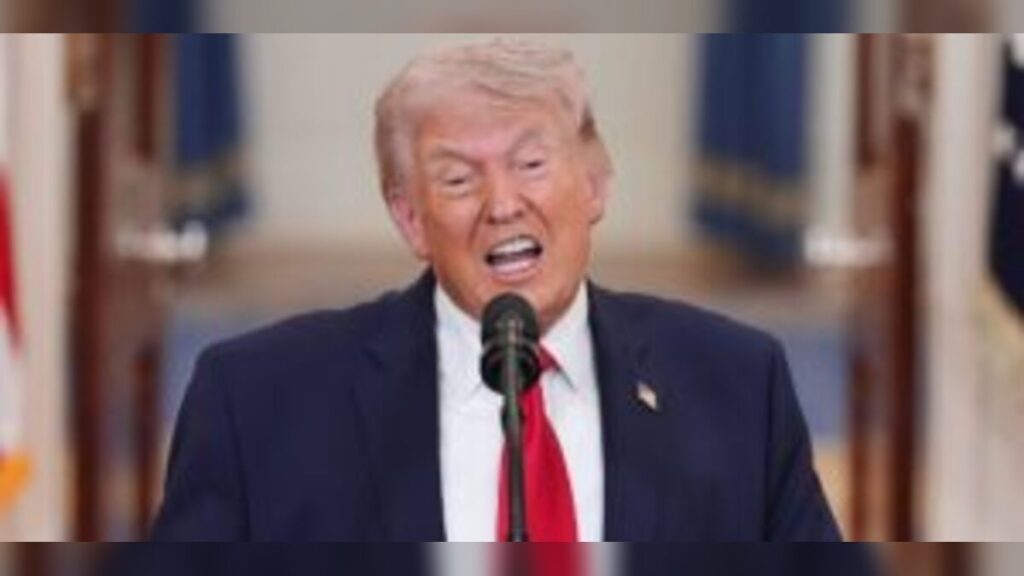
Across the globe, Donald Trump struck an equally aggressive tone.
In his first primetime address since launching military operations on February 28, he promised overwhelming force if Iran fails to back down.
Trump claimed that U.S. objectives are “nearing completion,” but stopped short of offering specifics—no clear timeline, no confirmation of ground troop deployment, and no detailed exit strategy.
Instead, he warned that the next two to three weeks could bring even harsher attacks, including strikes on Iran’s power grid and oil infrastructure.
His repeated claim that the U.S. holds “all the cards” hasn’t done much to reassure allies—or calm global markets.
Oil Prices Surge and Global Anxiety Grows
Almost immediately after Trump’s speech, oil markets reacted.
Prices jumped significantly, with Brent crude climbing above $100 per barrel.
The spike highlights how closely tied this conflict is to global energy stability.
A major concern is the Strait of Hormuz, a narrow but crucial waterway through which a large portion of the world’s oil supply flows.
Iran’s actions have effectively choked off traffic, leaving tankers stranded and economies on edge.
Trump, however, shifted responsibility to U.S. allies, suggesting that countries dependent on Gulf oil should take the lead in reopening the route—comments that have raised eyebrows in Europe and beyond.
Strikes, Counterstrikes, and Civilian Risk
On the ground, the situation is growing more dangerous by the day.
Israel claims it has carried out hundreds of strikes targeting Iran’s weapons infrastructure, including missile production facilities and defense systems in Tehran.



Meanwhile, Iran has responded with missile and drone attacks across the region.
Some were intercepted in the UAE, while others targeted Israel shortly after Trump’s speech ended.
In one of the most alarming developments, Kamal Kharazi was reportedly critically injured in a strike that also killed his wife.
The attack underscores how even high-profile political figures are no longer shielded from the violence.
Diplomatic Pressure Mounts
As the conflict intensifies, global powers are scrambling to prevent a full-scale regional war.
China has called for an immediate ceasefire, warning that military action alone cannot resolve the crisis.
Meanwhile, the UK is organizing a virtual summit involving dozens of nations to address the blockade of the Strait of Hormuz.
Led by Yvette Cooper, the talks aim to find diplomatic solutions and restore safe passage for oil shipments.
Still, the absence of the U.S. from these discussions has raised concerns about coordination among Western allies.
Backlash and Controversy
Trump’s rhetoric has also sparked backlash.
The Council on American-Islamic Relations strongly condemned his “Stone Ages” comment, calling it offensive and dangerous.
Critics argue that targeting civilian infrastructure could violate international law and further inflame tensions.
At the same time, Trump faces growing pressure at home, with falling approval ratings and increasing skepticism about the war’s direction.
Impact and Consequences
The ripple effects of this conflict are already being felt worldwide.
Rising oil prices are pushing up fuel costs, which could trigger inflation in multiple economies.
Shipping disruptions in the Gulf are threatening supply chains, while the risk of a broader regional war looms large.
Countries across Europe and Asia are bracing for economic shocks, and military alliances are being tested like never before.
Perhaps most worrying is the normalization of high-intensity conflict between major powers in the region—a scenario that could spiral quickly out of control.
What’s Next?
The coming weeks will be critical. Trump has made it clear that escalation is on the table if Iran refuses to negotiate, while Iran has shown no signs of backing down.
Diplomatic efforts may offer a narrow path forward, but with both sides doubling down, the risk of miscalculation is high.
Any major strike—especially on energy infrastructure—could dramatically widen the conflict.
For now, the world is watching and waiting, hoping that cooler heads prevail before the situation reaches a breaking point.
Summary
The conflict between Iran, the U.S., and Israel is entering a more dangerous phase.
Military strikes are intensifying, threats are becoming more explicit, and global markets are reacting nervously.
Despite claims that objectives are nearly complete, there is little clarity on how—or when—the war will end.
Meanwhile, diplomatic efforts continue, but their success remains uncertain.
Bulleted Takeaways
- Iran has warned of more destructive retaliation against the U.S. and Israel
- Donald Trump has threatened intensified strikes over the next few weeks
- Oil prices have surged due to instability and disruption in the Strait of Hormuz
- Israel claims hundreds of strikes on Iranian military infrastructure
- Kamal Kharazi was critically injured in a targeted attack
- Global leaders, including China and the UK, are pushing for a ceasefire
- The Council on American-Islamic Relations has condemned Trump’s rhetoric
- The risk of a wider regional war—and global economic fallout—is growing
- Iranian cluster munition fragments ignite multiple car fires in central Israel streets as emergency crews rush to scene
- Democratic Lawmakers Demand CFTC Warn Federal Employees About Insider Trading in US Prediction Markets
- Helen Worth reveals why she left Coronation Street after 50 years on UK soap screens
- UK Shoppers Face Soaring Easter Egg Prices as Supermarkets Raise Costs Across the Country
- Unruly passenger sparks panic as Frontier flight faces bomb threat in Atlanta
- Israeli forces eliminate Hezbollah deputy commander Hamza Rakin disrupting militant operations across Lebanon and Gaza
- Canada celebrates Inuit leadership as new marine protected areas safeguard Arctic waters in Nunavut
- UK Urges Nations to Submit Ambitious Climate Plans Ahead of COP31 in Global Talks
- Abdul El-Sayed tells campaign staff to avoid questions about Ayatollah Ali Khamenei in Dearborn Michigan to focus attacks on Donald Trump
- Prince Faisal and Anita Anand strengthen Saudi Arabia Canada ties in Riyadh with historic trade and security talks
- Dublin men Craig Doyle and Adam Aspel face charges after using drone to smuggle drugs into Cloverhill Prison
- San Francisco Police Department traps 85 reckless bicyclists on freeway offramp in San Francisco after dangerous riding spree

