
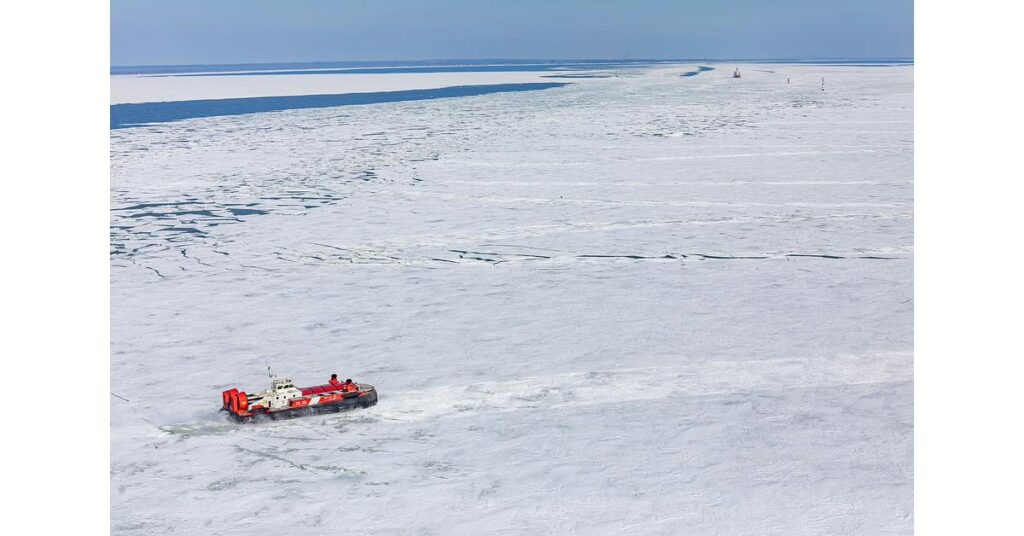
As winter begins to loosen its grip, the Canadian Coast Guard is preparing for its annual spring icebreaking operations along the St. Lawrence River, stretching between Montréal and Québec City.
The work is set to start on Saturday, February 21, 2026.
Residents and businesses are being urged to remove any equipment or materials currently on the ice to ensure both safety and the smooth progress of the operations.
The Importance of Icebreaking
Icebreaking isn’t just about clearing the river for ships; it’s a vital safety measure for communities along the St. Lawrence.
Each year, crews work to break large sheets of ice into smaller, more manageable pieces.
This prevents the ice from drifting into navigation channels, which could halt shipping traffic and pose risks to local residents.
In particular, areas near Lac-Saint-Pierre require careful attention because ice jams there could trigger flooding during the spring thaw.
Operations also extend to smaller rivers, streams, and river mouths across Quebec.
These areas are particularly vulnerable to blockages, and clearing them early helps prevent water from backing up and causing property damage or hazardous conditions.




How Icebreaking Is Carried Out
The Canadian Coast Guard uses a combination of hovercrafts, known as air cushion vehicles, and specialized icebreaking ships like the CCGS Mamilossa and CCGS Sipu Muin.
Hovercrafts, with their powerful engines, can be heard from a distance, producing loud, aircraft-like noises as they break through thick ice.
Residents in the area should be aware that these sounds are normal and a sign that the icebreaking work is underway.
Even after vessels have passed, ice movement can remain dangerous.
The Coast Guard strongly advises the public to stay off the ice near rivers and channels during operations.
The shifting ice can create hidden hazards that pose serious risks to anyone venturing onto the frozen river.
What’s Next
Icebreaking schedules are subject to change, especially if warmer weather arrives earlier than expected.
Rapid thawing along the shorelines can prompt crews to begin operations sooner than planned.
Beyond the main St. Lawrence River stretch, teams will continue clearing ice from rivers, streams, and river mouths throughout Quebec as the spring thaw progresses.
The goal is to ensure safe waterways for shipping and reduce the risk of flooding in communities along the river.
Summary
The Canadian Coast Guard’s spring icebreaking along the St. Lawrence River is a critical operation for both navigation and community safety.
Starting February 21, 2026, crews will work to break ice into smaller pieces using hovercrafts and icebreaking ships.
Residents are urged to move equipment off the ice and remain cautious near rivers, streams, and navigation channels.
Weather conditions may alter schedules, and icebreaking will continue throughout the spring to prevent dangerous ice jams and flooding.
