
The dramatic capture of Venezuelan President Nicolas Maduro and his wife, Cilia Flores, has left both the United States and Venezuela scrambling to understand what comes next.
US Secretary of State Marco Rubio appeared on NBC’s Meet the Press on Sunday to explain Washington’s top priorities following the operation.
According to Rubio, the focus is clear: safeguard US interests, stop drug trafficking, remove foreign terrorist influences, and regain control over Venezuela’s oil sector.
“The first steps are securing what’s in the national interest of the United States and also beneficial to the people of Venezuela. No more drug trafficking, no more Iran [and] Hezbollah presence there,” Rubio said.
The Alleged Threats Rubio Highlights
Rubio painted a picture of Venezuela as a hub for illegal activity and foreign interference. He reiterated US claims that Maduro leads the so-called Cartel de los Soles, allegedly flooding the US with narcotics.
“We’re also focused on making sure Venezuela’s oil industry isn’t used to enrich all our adversaries,” he added.
The secretary of state stressed concern over the presence of Hezbollah, the Iran-backed Lebanese political and militant group, which US officials say has gained influence in Venezuela.
The combination of drugs, terrorist links, and oil dealings with countries like China, Iran, and Russia has put the US on high alert.
Trump’s Plans for Venezuelan Oil
President Trump has repeatedly expressed interest in controlling Venezuela’s oil infrastructure. He told reporters that US oil companies could rebuild and profit from Venezuela’s crumbling oil sector.
“We’re going to have our very large US oil companies, the biggest anywhere in the world, go in, spend billions of dollars, fix the badly broken infrastructure, and start making money for the country,” he said.
Suggested Readings (News continues below)

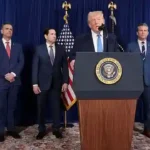
This comes just after US forces stormed Maduro’s Caracas compound, with airstrikes reportedly killing around 40 civilians and military personnel. Trump has claimed no American soldiers were lost in the raid.
The Legality Question: Can the US ‘Run’ Venezuela?
Despite Trump’s announcement that the US would “run” Venezuela with the cooperation of interim leader Vice President Delcy Rodriguez, experts have quickly shot down the idea. Rodriguez herself has publicly rejected foreign control, saying,
“Never again will we be a colony of any empire.”
Cardozo School of Law professor Rebecca Ingber told The New York Times that such an action would amount to an illegal occupation.
Northeastern University law professor Jeremy Paul added that it makes no legal sense to combine law enforcement with running a foreign country.
Extradition Concerns and International Law
Maduro’s transfer to New York has also raised red flags under international law. Article 2(4) of the United Nations Charter forbids the use of force in another nation without consent, unless acting in self-defense or under UN Security Council authorization.
“It is difficult to conceive of possible legal justifications for transporting Maduro to the US, or for the attacks,” said Cambridge professor Marc Weller.
“There is no UN Security Council mandate that might authorize force. Clearly, this was not an instance of US self-defense,” he added.
US Domestic Law Questions
Domestically, the operation may have also violated the National Security Act and the War Powers Act, which require notification of Congress for military action.
While presidents have historically launched limited operations without a formal war declaration, the Maduro raid raises questions about overreach. Rubio confirmed that Congress was not notified beforehand.
Will Trump Face International Consequences?
Legal experts say consequences from international courts are unlikely. The US is not a signatory to the International Criminal Court’s Rome Statute and holds veto power in the UN Security Council.
John Bellinger III, former NSC legal adviser, explained that the US intentionally avoided joining the ICC due to concerns about unchecked prosecutorial power.
Nevertheless, Syracuse University law professor David Crane argued that the raid has already caused serious political and diplomatic damage.
“Politically and diplomatically, it is a disaster for the US. What moral standing we had left is now gone. The US is moving towards a pariah state,” Crane said.
Public and Political Reactions Remain Unsettled
With Maduro behind bars in Brooklyn awaiting trial, critical details remain murky. Questions about the legality, morality, and long-term consequences of the operation continue to stir debate across the US, Venezuela, and the wider international community.
The unfolding situation underscores the precarious balance between national security objectives, international law, and geopolitical reality.
Share on Facebook «||» Share on Twitter «||» Share on Reddit «||» Share on LinkedIn
- British Wellness Seekers Are Flocking to Saunas Across the UK as Science, Social Connection and Nordic Traditions Drive a Nationwide Heat Revival
- Zohran Mamdani condemns Donald Trump for capturing Nicolás Maduro and his wife in New York City calling it an act of war and warning of risks to local Venezuelan communities
- Irish Police Close In as Daniel Kinahan Faces Growing Extradition Threat While Living in Luxury in Dubai
- Victoria Jones faces a tragic end at the Fairmont Hotel in San Francisco after months of legal trouble and personal struggles
- Andy Cohen Criticizes Outgoing New York City Mayor Eric Adams and Unleashes Tipsy Rant Live on CNN During Times Square New Year’s Eve Coverage
- Swiss investigators examine how a packed New Year’s Eve celebration at a basement nightclub in Crans-Montana turned into a deadly fire that killed dozens
- Britain’s Citizenship System Comes Under Fire in London as Record Numbers Are Approved Amid Growing Political and Public Backlash
- Russia Deploys Its Oreshnik Medium Range Missile System in Belarus to Strengthen Combat Readiness Near European Borders
- NCDMB Launches Nationwide Oil and Gas Field Readiness Training Program to Equip Over 10,000 Nigerians with High-Demand Skills for the Energy Sector
- Ashlee Buzzard Faces Murder Charges After Authorities Discover Daughter Melodee’s Body in Utah Desert Following Multi-State Road Trip