Once a bustling spot for local families to enjoy Sunday roasts and children’s menus, the Brasserie at the Copthorne Hotel in West Sussex now tells a very different story.
Overlooking a tranquil Japanese-style lake, the restaurant has long since stopped welcoming the public.
Instead, the Copthorne has become a government-run migrant hotel, housing hundreds of asylum seekers from around the world.
In 2021, the hotel first opened its doors to Afghan families.
Today, it accommodates more than a thousand men, women, and children from countries including Iraq, Iran, Palestine, Eritrea, and North Africa, many of whom arrived via small boats across the Channel.
Stepping Inside: A Journalist’s First Glimpse
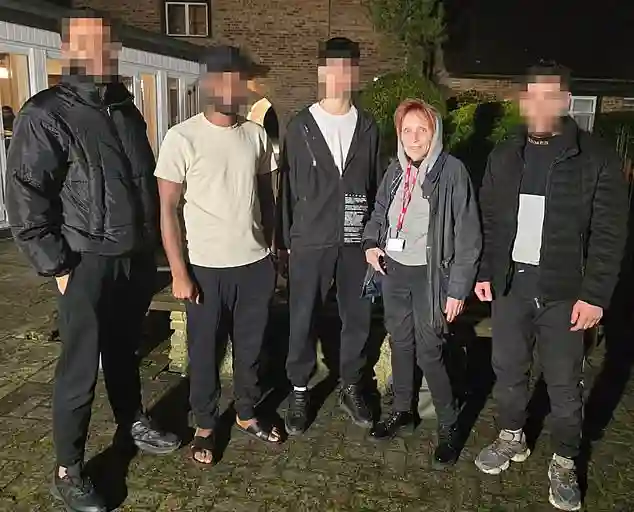
This Christmas, I became the first newspaper reporter to see inside the hotel.
Guided by migrants I had met earlier in Calais, I found a mixture of resilience, frustration, and adaptation.
Some residents have been waiting for years, unsure of their next steps in Britain’s overstretched asylum system.
Others have found ways to work informally, supplementing the small weekly stipend they receive on government-issued cash cards.
“It’s not a prison,” said a young North African man.
“We can come and go. Some take a short trip to visit friends.
Others never return—they join communities and work under the radar.”
Daily Life Behind Closed Doors
Despite the unusual circumstances, the Copthorne continues to operate like a functioning hotel.
Residents enjoy meals from the Brasserie, now staffed by Indian chefs, while housekeeping staff from Thailand maintain rooms and clean shared spaces.
Yet the luxury of years past has faded.


Frayed carpets, peeling paint, and worn-out furniture are constant reminders of the building’s transformation.
Children can still be seen running down corridors or peeking out from doors, while teenagers huddle over laptops.
Families coexist alongside single migrants navigating boredom, isolation, and uncertainty about their futures.
Navigating Rules, Work, and the Black Market
Migrant residents shared candid stories about life in the hotel.
E-bikes once allowed for quick trips to work, but these were removed, forcing residents to rely on others for transportation to jobs on construction sites or car washes.
Some openly discussed informal work, including drug dealing, as a means to survive in a system that restricts employment opportunities.
“I hate being trapped here,” said a Middle Eastern father, reflecting a common sentiment. “I want to work, provide for my family, live normally—but I can’t.”
The Cultural Landscape of the Hotel
Christmas was barely visible inside the hotel.
Two small trees stood in the lobby and Brasserie, yet most residents come from Islamic countries and had little interest in Western festivities.
Indian chefs prepared spicy meals that were familiar to some but foreign to others.
Posters and leaflets in multiple languages informed residents about Home Office processes and expected waiting times, highlighting the lengthy delays migrants often face.
Many have attempted to navigate the system by falsifying details of their nationality or journey.
Some Egyptians, Moroccans, and Tunisians claim to be Libyans to avoid deportation, while others fled Germany or France only to arrive in Britain hoping for a chance at protection.
Hopes, Frustrations, and a Glimmer of Faith
Throughout my visit, residents expressed a mix of hope and despair.
Eritreans spoke of fleeing conscription and oppressive regimes, while a Libyan man, waiting for a rejected asylum appeal, emphasized the desire for normal life—education, work, and independence.
Many relied on faith, uttering “Inshallah” as they pinned their hopes on divine intervention.
Yet the system itself is under strain.
Thousands more cross the Channel each year, joining tens of thousands already living in government accommodations.
With costs exceeding £5.7 million per day, public frustration grows as the Home Office grapples with arrivals, legal challenges, and claims of exploitation of the system.
Leaving the Copthorne
As I left, my hosts offered small gestures of kindness—a tangerine, a smile.
Though Christmas passed quietly inside the hotel, the human stories remain vivid: resilience, adaptation, and the quiet struggle of thousands navigating life in limbo.
In a building once devoted to leisure and family meals, a new reality continues to unfold, one shaped by hope, hardship, and the complex machinery of Britain’s asylum system.
-
Ashlee Buzzard Faces Murder Charges After Authorities Discover Daughter Melodee’s Body in Utah Desert Following Multi-State Road Trip
-
Department of Justice Releases Alleged Jeffrey Epstein Postcard to Larry Nassar Mentioning President Trump Amid Questions Over Authenticity
-
Russell Brand Faces Two New Rape and Sexual Assault Charges as Metropolitan Police Expand Investigation in London
-
Wiltshire Police Continue Nationwide Hunt for Seventh Suspect Linked to Alleged Sexual Abuse Case Involving Former Tory Councillor in Swindon
-
Department of Justice Releases Thousands of Jeffrey Epstein Files Revealing Disturbing Amazon Purchases and Prison Details in the United States