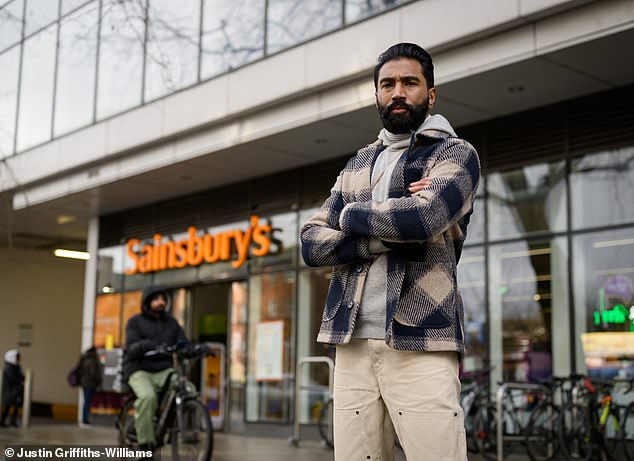

Warren Rajah never expected a routine grocery trip to turn into a public ordeal.
After shopping at his local Sainsbury’s for over a decade, he was suddenly escorted out of the Elephant and Castle branch in London, all because staff wrongly identified him as an offender using facial recognition software.
“I’ve been shopping there for 10 years,” Rajah later told reporters.
“Being led out like that, in front of people I know, was the most humiliating moment of my life.”
Technology Meant to Protect Backfires
The Sainsbury’s store in question is part of a trial using Facewatch, a facial recognition system installed in six London locations to combat rising theft and violence against staff.
According to Sainsbury’s, early results have been promising: theft, aggression, and antisocial behavior reportedly fell by 46%, and 92% of offenders identified by the system did not return.
Facewatch markets itself as highly accurate, claiming 99.98% precision.
Its system scans customer faces and compares them against a database of known offenders, alerting store managers if a match is suspected.
In theory, this allows staff to act before a crime occurs.
How the Mistake Happened
In Mr. Rajah’s case, the system worked as designed—but the human verification step failed.
After being approached by two staff members and a security guard, he was asked to show a “barcode.”




Confused, he presented his Nectar card, only to be told to leave immediately.
Rajah said the incident left him panicked and anxious.
To clear his name, he filed a subject access request with Facewatch, submitting a photo and passport copy to see what information had triggered the alert.
He described this as “a massive invasion of my privacy” and worried about potential effects on his reputation and career.
Facewatch later confirmed that Rajah was not in their database and directed him back to Sainsbury’s.
The supermarket subsequently called to apologize and offered him a £75 voucher.
Both Sainsbury’s and Facewatch emphasized that the error was human, not technological.
Corporate Responses and Apologies
A Sainsbury’s spokesperson stated: “We have sincerely apologized to Mr. Rajah.
This was not an issue with the facial recognition technology but a case of the wrong person being approached in store.”
Facewatch echoed the sentiment: “We understand why this would have been upsetting.
Our data protection team confirmed he was not on our database, and the incident arose from staff error, not the system.”
A Growing Concern Across Retail
Rajah’s experience is far from isolated.
Other shoppers have been caught in similar situations, wrongly accused by facial recognition systems.
For example, a B&M customer in Birmingham, Jenny, was barred from her local store after being falsely linked to a past theft.
Other victims include a 64-year-old woman accused of stealing a paracetamol from Home Bargains and Danielle Horan from Manchester, who was expelled from two shops after being wrongly accused of taking toilet paper.
These cases highlight the tension between new security technology and human oversight, raising concerns about privacy, accountability, and due process in retail.
The Bigger Question
While facial recognition aims to make stores safer, incidents like Rajah’s show how quickly technology combined with human error can turn everyday shopping into a humiliating ordeal.
As retailers expand these systems, the debate over privacy, accuracy, and safeguards is only going to intensify.
