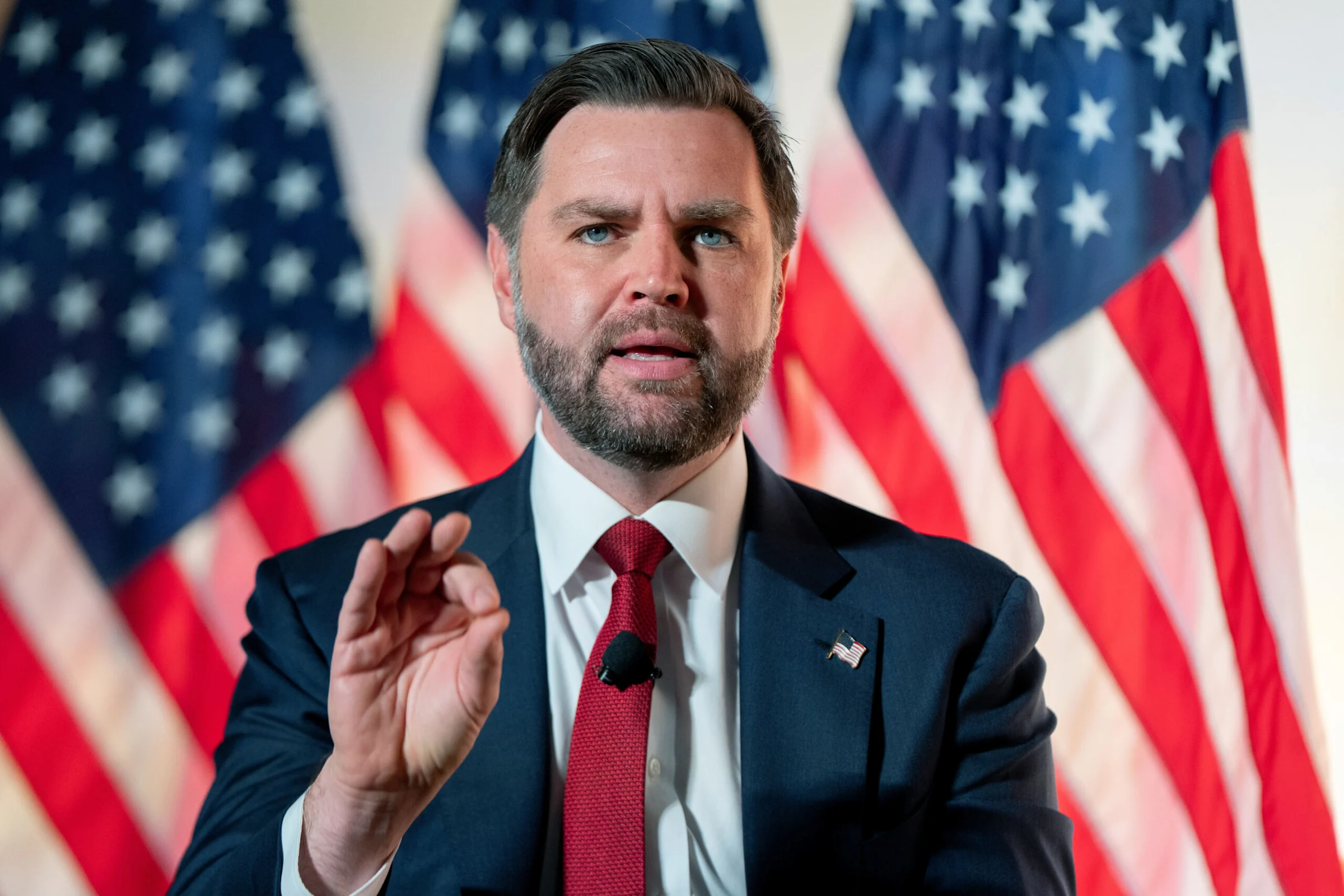

There’s been a lot of chatter online and in newsrooms about where U.S. Vice President JD Vance was when U.S. forces carried out their dramatic operation to capture Venezuelan leader Nicolás Maduro in early January.
Instead of the usual “who was in the room” debate, what Vance shared offers a new look into how decisions and communication worked at the highest levels of the Trump administration.
A Social Night Turns into a Strategic Moment
Vance recently spoke candidly with the Daily Mail, explaining that on the night of January 3, when U.S. special forces launched Operation Absolute Resolve in Caracas, he wasn’t seated beside President Donald Trump at Mar‑a‑Lago alongside other senior officials.
Instead, he was casually with friends — but not completely out of the loop.
He said that Secretary of State Marco Rubio called him around 10:30 p.m. to say that President Trump had given the final go‑ahead for the mission.
At that point, Vance was inside a van acting as a mobile command post about 20 miles from Mar‑a‑Lago, staying connected and briefed as events unfolded.
Why He Didn’t Join the Team at Mar‑a‑Lago
Photos from the White House Situation Room that night showed Trump surrounded by Rubio, Pentagon leadership, and the CIA director — and notably no sign of Vance.
That absence led to lots of speculation, but the Vice President pushed back on suggestions he was sidelined.


Vance explained that security concerns drove the decision.
Because he travels with a large Secret Service contingent, rushing to Mar‑a‑Lago minutes before the operation could have drawn attention and potentially compromised secrecy.
Instead, he watched the mission remotely and stayed in constant communication with Trump and others involved.
He even dismissed rumors that his absence angered the president, saying he was on the phone with the team for roughly six hours during the operation.
The Chain of Command — Dispersion, Not Disarray
One of the most interesting takeaways from Vance’s comments is how the command structure operated: it was not centralized in a single room, but spread across locations, all linked by secure communications.
In letting this detail slip, he inadvertently revealed a bit about how Trump’s inner circle managed such a high‑stakes mission — emphasizing coordination and discretion over optics.
Vance stressed that operational success depended on secrecy.
He argued that keeping a low profile — including his own physical distance — helped prevent leaks and ensured the element of surprise.
He said, “One of the critical reasons that mission was ultimately successful is because no one found out about it.”
A Mission With Global Ripples
Operation Absolute Resolve lasted about 150 minutes and ended with Maduro and his wife in U.S. custody.
They have since faced federal charges in New York related to narco‑terrorism, drug trafficking, and weapons offenses.
The raid — among the boldest U.S. military actions in the region in years — has sparked international reactions and debate over legality and geopolitical impact.
By giving an honest account of his own role, Vance unintentionally provided a behind‑the‑scenes look at how decisions and communication flowed during one of the Trump administration’s most consequential foreign operations — a story that, until now, had only been pieced together from official photos and speculation.
