
Footballers are increasingly finding themselves at the center of debates around personal beliefs and club-driven social campaigns.
One Premier League player recently expressed frustration to his club after feeling that being featured on their Rainbow Laces campaign cover for two consecutive seasons made him appear “gay,” according to The Athletic.
This incident highlights the tricky balancing act players face when clubs promote LGBTQ+ initiatives.
A Shift in the Premier League’s Approach to LGBTQ+ Allyship
The Premier League is now rolling out a new campaign called With Pride, running from February 6 to February 13.
Unlike the previous Rainbow Laces initiative, this campaign aims to place less pressure on individual players to visibly demonstrate support.
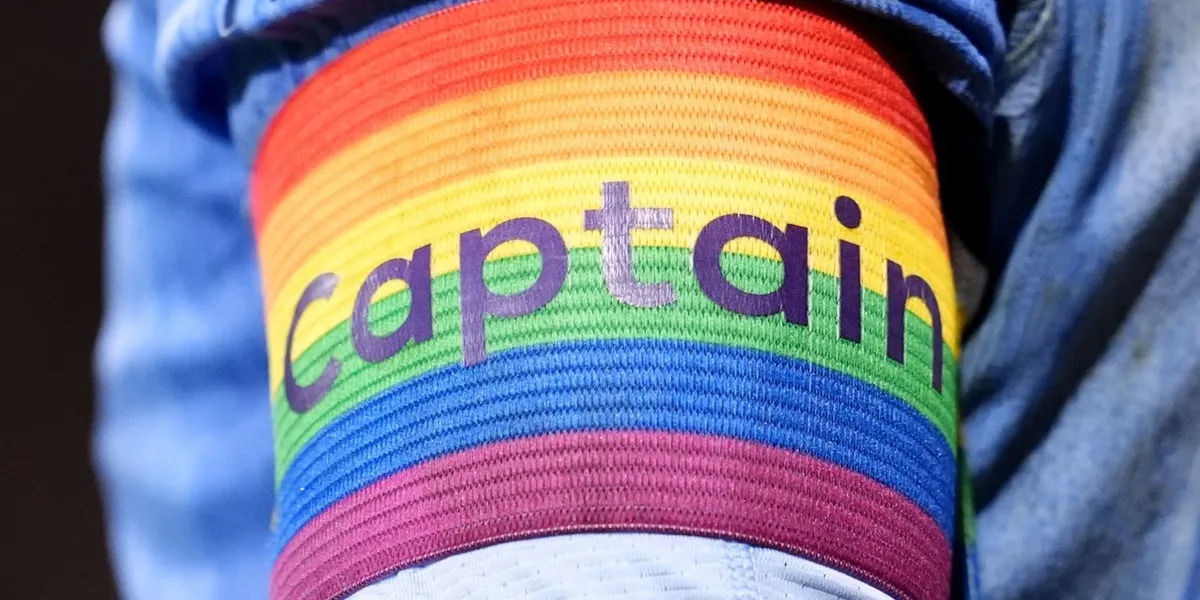
Captains won’t be required to wear rainbow armbands, and players won’t have to don pride-themed warm-up tops or lace up rainbow-colored boots.
These changes follow controversies from last season, where personal beliefs clashed with campaign expectations.
Ipswich captain Sam Morsy, a practicing Muslim, refused to wear the rainbow armband, while Crystal Palace’s Christian captain Marc Guehi wrote “I love Jesus” and “Jesus loves you” on his armband.
Similarly, Manchester United player Noussair Mazraoui, another Muslim, opted out of wearing a pride-themed warm-up jacket, causing tension within his team.




Pride Messages Without Player Pressure
The new campaign intends to focus on stadium-wide visibility rather than player participation.
Pride messaging will appear on advertising boards, stadium screens, pre-match handshake boards, and ball plinths.
The hope is that this approach will minimize conflicts with players’ personal beliefs while still promoting inclusivity.
Marc Guehi and the Controversy Over Religious Expression
Guehi, whose father is a church minister, drew attention when he scrawled messages about his faith on the rainbow armband.
He was reprimanded by the FA for violating regulations against political, religious, or personal statements on equipment, though the rules don’t apply to LGBTQ+ messages.
Speaking to Sky Sports, Guehi explained, “It was a message of love and truth…a message of inclusivity, so I think it speaks for itself.”
His father, John Guehi, defended him in the Daily Mail, arguing that his son’s words were not offensive.
“Jesus loved everyone, so by saying ‘I love Jesus,’ I don’t see what’s offensive,” he said.
He also criticized the way the debate tends to pit belief against belief, stressing that Marc accepted the armband and tried to respect the campaign without compromising his faith.
Muslim Players and Campaign Tensions
Similarly, Mazraoui’s decision not to wear the rainbow warm-up jacket before Manchester United’s 4-0 win over Everton sparked debate among his teammates.
His refusal, grounded in his religious beliefs, reportedly caused division in the locker room.
The examples of Guehi, Morsy, and Mazraoui illustrate the ongoing challenge for the Premier League: promoting social causes while respecting the diversity of personal and religious convictions among players.
The new With Pride campaign seeks to reduce this tension by shifting the focus from individual players to the broader stadium experience.
What Lies Ahead for Inclusivity in Football
As clubs and the league continue to navigate these complex issues, the line between promoting inclusivity and respecting personal beliefs remains delicate.
The hope is that campaigns like With Pride can celebrate diversity without putting players in difficult positions, though the debate over armbands, jackets, and messaging is far from over.
