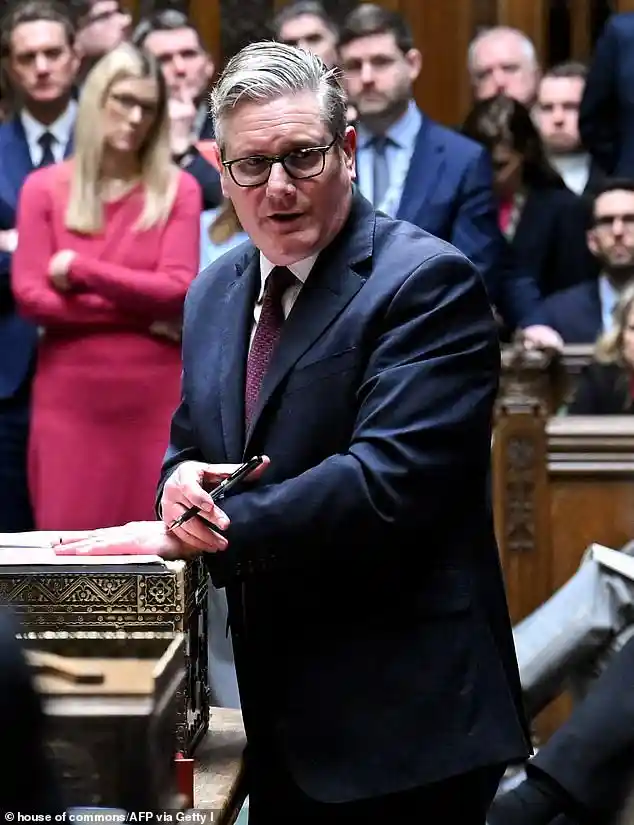

Senior Labour MPs were in uproar last night after Prime Minister Sir Keir Starmer admitted he knew about Peter Mandelson’s long-term friendship with convicted sex offender Jeffrey Epstein before appointing him as UK ambassador to the United States.
The revelation has plunged Starmer into one of the most serious political crises of his premiership, with calls for his resignation growing louder from both backbenchers and former ministers.
The Controversial Appointment
Starmer confirmed that he went ahead with Mandelson’s appointment despite being informed by officials that the former New Labour heavyweight had maintained ties with Epstein even after Epstein’s 2008 conviction.
Downing Street also revealed that Mandelson continued to visit Epstein’s residence while Epstein was in prison and following his release.
The decision shocked many within Labour, with one former minister describing it as “one of the worst days” of Starmer’s leadership.
Others suggested they might struggle to back him in a confidence vote, while even his closest allies admitted that defending the appointment was “very hard” and represented “yet another self-inflicted wound.”
Calls for Accountability
Questions didn’t stop at Starmer. MPs are also scrutinizing his chief aide, Morgan McSweeney, who reportedly played a key role in bringing Mandelson back into government.
Some described his position as “untenable” after losing confidence in his judgment during the appointment process.
At the time of Mandelson’s appointment in late 2024, Starmer reportedly received a two-page summary from the Cabinet Office ethics team outlining previous controversies and conflicts of interest.
According to one source, much of the briefing appeared “cut and pasted from Google,” including a 2019 internal JP Morgan report noting Mandelson’s close relationship with both Epstein and Prince Andrew.
Clash in the Commons
The Commons saw heated debates as MPs pressed Starmer on his decision.
Starmer insisted that he had been “lied to repeatedly” by Mandelson and maintained that the proper processes had been followed.



He claimed that once Mandelson was discovered to have advised Epstein to appeal his conviction, he acted swiftly to remove him from the ambassador role.
Kemi Badenoch, who forced the Prime Minister to confirm what he knew about Mandelson, described the decision as “absolutely shocking.”
She also used a rare parliamentary procedure to demand the release of key documents related to the appointment, arguing that the matter concerned Starmer’s judgment, not national security.
Divided Opinions Across the Party
Within Labour, opinions are sharply divided.
Dame Emily Thornberry criticized Starmer for not allowing MPs to interview Mandelson before the appointment, suggesting that proper scrutiny could have avoided the fiasco.
John McDonnell, former deputy to Jeremy Corbyn, said he had “lost confidence” in Starmer and called on him to resign.
Meanwhile, Starmer emphasized that the vetting process had flagged Mandelson’s Epstein connections, but the peer repeatedly misrepresented his relationship.
He said, “Time and time again, Mandelson completely misrepresented the extent of his relationship with Epstein and lied throughout the process.”
The Toxic Timeline
The timeline of Mandelson and Epstein’s association highlights decades of interactions:
-
1999–2002: Epstein meets Prince Andrew and begins connecting with influential UK figures, including Mandelson.
-
2003–2004: Emails and financial transactions indicate close ties between Mandelson and Epstein.
-
2008–2009: Epstein is jailed; Mandelson continues visiting his Manhattan apartment.
-
2010–2016: Correspondence and sensitive documents are allegedly shared between Mandelson and Epstein.
-
2019–2022: Epstein’s arrest and Maxwell’s conviction for sex trafficking.
-
2025: Starmer appoints Mandelson as ambassador; he is sacked later the same year.
This chronology underlines the long-standing nature of Mandelson’s relationship with Epstein, fueling the anger over Starmer’s decision to bring him back into government.
What Comes Next
Labour now faces a storm of scrutiny, both internally and in the press.
Questions over Starmer’s judgment, McSweeney’s role, and the effectiveness of vetting processes dominate headlines.
For the Prime Minister, navigating the fallout will be as politically treacherous as the decision to appoint Mandelson in the first place.
