
In a significant policy shift, the U.S. Commodity Futures Trading Commission (CFTC) has withdrawn a proposal from the Biden administration era that would have banned popular sports and political prediction markets. The move comes as these event-based contracts, which allow bets on everything from elections to sports outcomes, have grown into a mainstream feature of today’s derivatives markets.
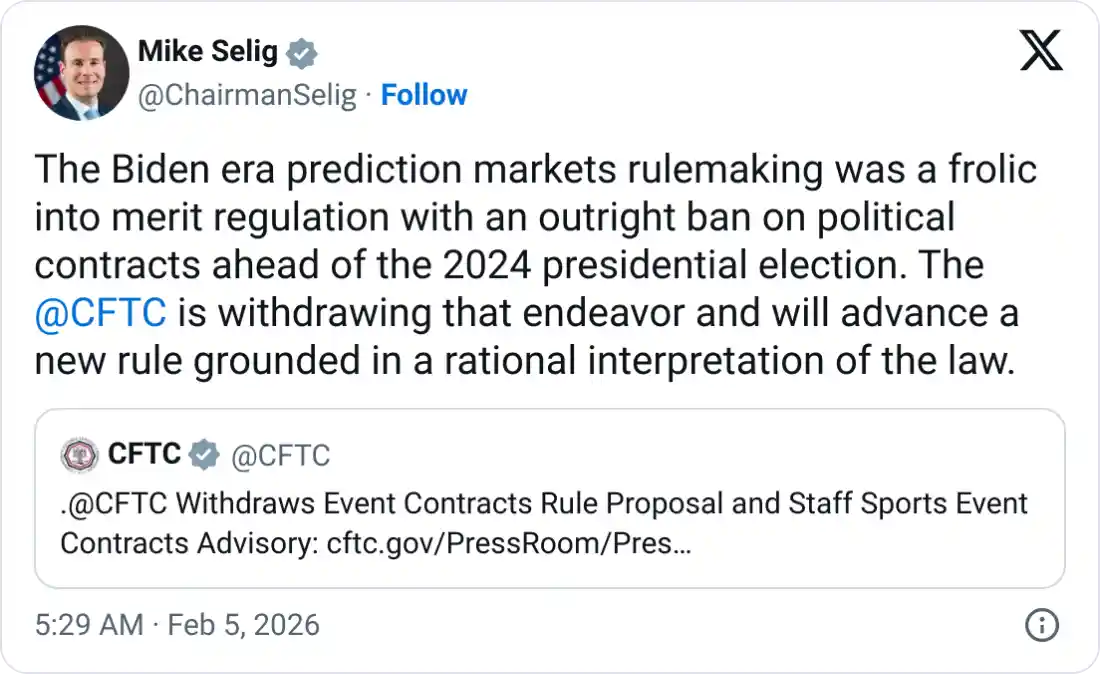
CFTC Chair Mike Selig, recently confirmed to lead the agency, made the announcement on Wednesday, describing the 2024 proposal as a “frolic into merit regulation” that unnecessarily targeted political event contracts ahead of the last presidential election.
Selig Promises Clearer, Market-Friendly Rules
Selig said the withdrawn notice of proposed rulemaking had labeled event contracts on sports, politics, and even war as “contrary to the public interest.” But now, the Commission is taking a different approach.
“The Commission is withdrawing that proposal and will advance a new rulemaking grounded in a rational and coherent interpretation of the Commodity Exchange Act,” Selig explained. “We aim to promote responsible innovation in our derivatives markets, in line with Congressional intent.”




In other words, the CFTC wants to provide guidance that encourages innovation while keeping markets fair and regulated—without sweeping bans.
What This Means for Platforms Like Polymarket and Kalshi
The decision is particularly relevant for platforms such as Polymarket and Kalshi, which have gained popularity for letting users trade contracts on political events, sports outcomes, and other real-world happenings. Coinbase and Crypto.com also offer similar products.
These platforms have faced pushback from several U.S. states, which argue they are unlicensed gambling operations. The companies, in turn, have defended themselves, noting that they operate under the CFTC’s regulatory oversight. Selig’s move signals a step toward federal clarity and could ease some of the legal uncertainty these platforms face.
Withdrawal of Staff Advisory Adds Certainty
Alongside the proposal, the CFTC also pulled a September 2024 staff letter that reminded regulated entities of their obligations when handling sports-related contracts. The letter, issued before a U.S. government shutdown, advised firms to prepare for litigation and regulatory scrutiny from states.
Selig acknowledged that while the letter aimed to highlight potential legal risks, it “inadvertently created confusion and uncertainty for our market participants.” He expressed optimism that a formal event contracts rulemaking would soon provide clearer guidance for the industry.
Looking Ahead for Prediction Markets
With the withdrawal of the 2024 proposal and staff advisory, the CFTC is signaling a shift toward a framework that balances innovation with investor protection. Platforms now have a clearer path forward, and users of prediction markets can expect more consistent rules rather than ad hoc legal challenges.
Selig concluded by saying he looks forward to collaborating with staff on a comprehensive event contracts rule, a move many industry observers hope will define the future of U.S. prediction markets.
