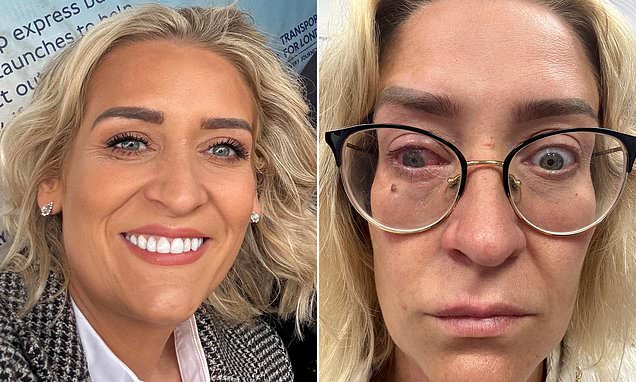

Katie Carrington, a 36-year-old mother of four from Romford, Essex, never imagined a small daily convenience could turn into a life-altering nightmare.
Working as a nurse, she spent her days caring for patients who had taken risks with their health—but she learned the hard way that no one is immune to mistakes.
The danger came in a form most people don’t think twice about: contact lenses.
What started as a minor shortcut—leaving her daily lenses in for days—spiraled into a terrifying medical emergency that left her blind in one eye, even if only temporarily.
The Habit That Put Her at Risk
Katie was first prescribed glasses at age 16 and switched to daily disposable lenses at 17.
Like many contact lens wearers, she began bending the rules for convenience.
Nights out turned into mornings where she forgot—or ignored—the need to remove her lenses.
Soon, what started as occasional lapses became weeks-long stints with the same lenses.
“Honestly, I was really stupid,” Katie admits.
“I’d wear them for a week or two at a time, waiting until my eyes were dry before changing them. I did it just because it was easier than waking up unable to see.”
She also developed a habit of fishing out lost lenses herself, further increasing the risk of infection.
The Night Everything Changed
One night in August 2025, Katie felt a sharp, pounding pain in her eyes while lying in bed.
“It felt like I was being stabbed in the eye,” she recalls.
Her eyes streamed constantly, but she assumed it would pass after removing her lenses.




By morning, however, she could barely see out of her right eye.
“The pain was worse than giving birth,” she says.
Terrified, she wrapped a scarf around her head and had her husband drive her to Moorfields Eye Hospital in London.
A Scary Diagnosis
Doctors at Moorfields were uncertain if her sight would return.
Tests revealed bacteria had entered her eyes, likely from the extended use of her contact lenses, causing a severe infection.
The procedure to scrape her eyes for samples was “traumatic,” Katie recalls.
She was made to wear an eyepatch and administer hourly eye drops around the clock for 48 hours.
Weekly hospital check-ups followed, while she took four weeks off work to recover.
Struggling to Regain Independence
Even with only one affected eye, Katie’s day-to-day life became a challenge.
Simple tasks like making bottles for her youngest child or chopping food in the kitchen turned into stressful exercises in caution.
Spills and mistakes left her feeling frustrated and guilty.
“Even though it was just one eye, I felt like all my independence had been taken away,” she says.
“I was constantly panicking about how I’d manage my family and work life.”
Relief and a New Perspective
After five weeks, Katie’s vision finally returned to normal.
Doctors confirmed the infection was caused by bacteria trapped behind her lenses.
While she could technically wear contacts again, Katie has decided it’s not worth the risk.
“If one person learns from my mistake, then I feel like I’ve made a difference,” she says.
“Thank the Lord I can see again, but I will never wear contacts again.”
Katie hopes her story will be a warning to others.
“I take full accountability. I didn’t understand the risks, and I thought it would never happen to me.
Now, I’m focused on looking after myself and spreading awareness about the dangers of overusing contact lenses.”
