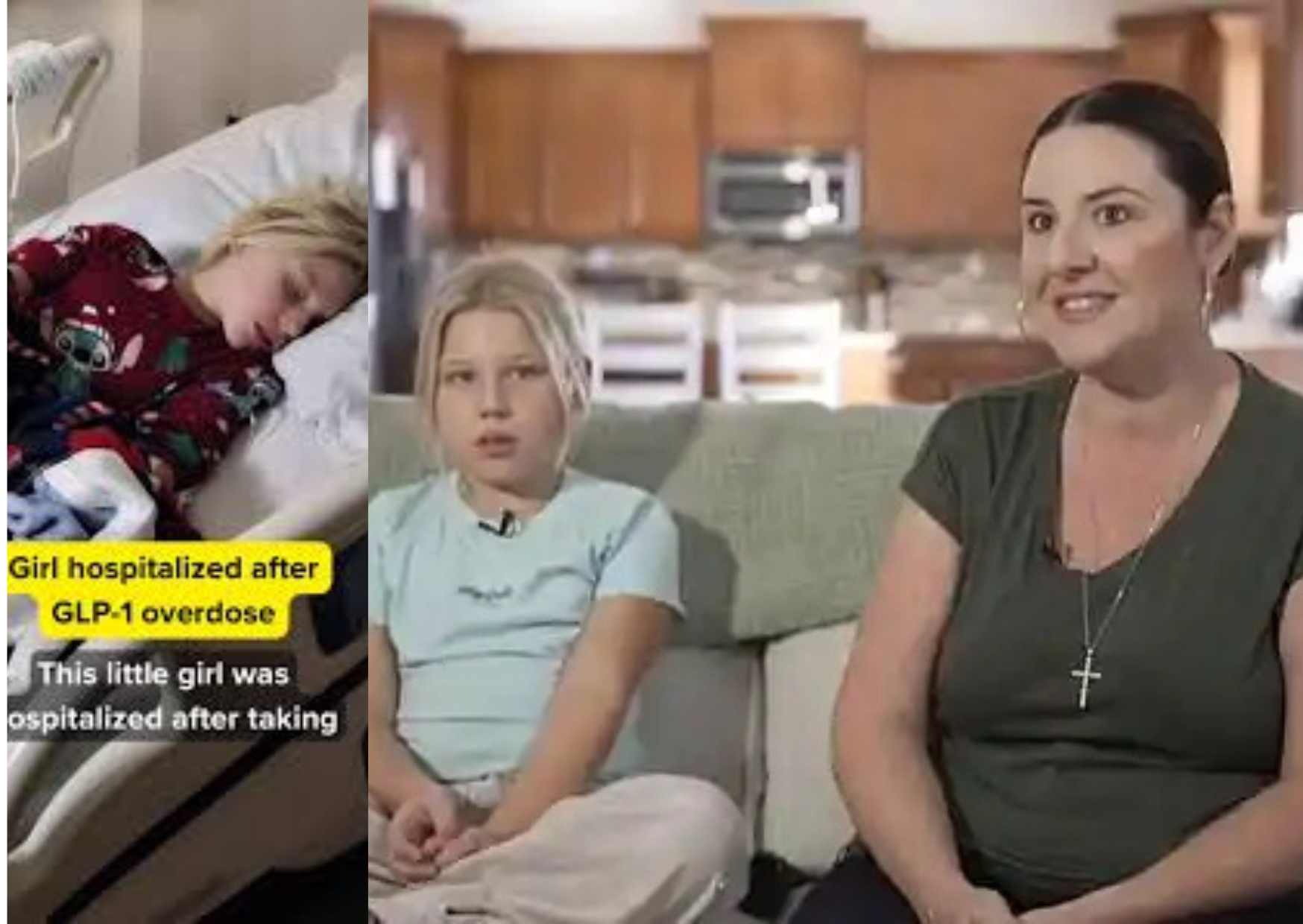

What began as an ordinary day inside an Indiana home quickly spiraled into every parent’s nightmare.
A curious child, a misunderstood medication, and a moment of access no one thought could be dangerous enough all collided, leaving a seven-year-old girl fighting through days of frightening symptoms in the hospital.
A Child’s Innocent Assumption With Serious Consequences
Jessa Milender, who has since turned eight, believed she was helping herself when she used her mother’s GLP-1 weight-loss injection back in December 2024.
From her point of view, the medication seemed harmless.
She later explained that she thought it was meant for stomach pain.
She had seen her mom use it and assumed it helped with tummy aches, not realizing the drug was powerful and never meant for children.
A Terrifying Discovery at Home
Jessa’s mother, Melissa, found her daughter collapsed on the floor and barely responsive.
Panic set in immediately.
After realizing Jessa had injected herself with a large portion of the pen — roughly 60 percent of it — Melissa called Poison Control right away.
The advice was limited. No one could clearly say what would happen next or how severe things might become.
Symptoms That Wouldn’t Let Up
Medical records later showed that Jessa began vomiting almost nonstop, sometimes every hour.
Her body swung between diarrhea and constipation, and she complained of intense abdominal pain.
When she arrived at the emergency room, her condition was visibly alarming — sunken eyes, ashy skin, and clear signs of dehydration.
Doctors hooked her up to an IV, but even hospital staff seemed unsure how to handle the situation.
Poison Control was consulted again, but there was still no concrete playbook for treating a child who had overdosed on a GLP-1 drug.




Sent Home Too Soon
Once Jessa’s symptoms eased slightly, she was discharged. But relief didn’t last long.
As soon as she returned home, the vomiting started all over again.
Melissa later said she felt deep regret about agreeing to take her daughter home.
She hadn’t realized just how severe the overdose would become, or how quickly things could worsen.
Weak, Dehydrated, and Fading Fast
Jessa’s strength vanished. She became so weak that her mother had to carry her to the bathroom.
Water was the only thing she wanted, but even that wouldn’t stay down.
Back at the hospital, doctors grew increasingly worried when Jessa stopped urinating altogether, raising fears about potential kidney damage.
She went nearly a full week without eating, her small body clearly struggling to cope.
Melissa described the experience as the most harrowing week their family had ever endured.
“I Thought I Was Losing Her”
The physical changes were devastating to watch.
Jessa lost noticeable weight in just days.
Her cheeks hollowed, her eyes sank, and exhaustion made walking impossible.
The pain was constant and severe.
Even light touch caused her to cry out, and she screamed in discomfort while sleeping.
Looking back, Melissa believes it’s nothing short of a miracle that her daughter didn’t suffer permanent damage.
A Medication Now Kept Under Lock and Key
Today, Melissa stores her GLP-1 medication locked inside a box, untouched since the day of the overdose.
She admits that she never imagined something like this could happen.
Once too much of the drug is injected, there’s no reversal, no antidote, and no easy fix.
The body simply has to endure the consequences.
Turning Fear Into a Warning for Other Parents
Melissa chose to speak publicly so other families don’t make the same mistake.
She says the most painful part was realizing no one — not even medical professionals — had clear answers on how to help her child in those critical moments.
She now believes that explicit warnings and strict storage are essential, especially with medications that look simple to use.
What seemed like an unthinkable scenario became reality, and she hopes sharing Jessa’s story will prevent another child from ever going through the same ordeal.
