Across Britain, criminals are finding new ways to turn everyday infrastructure into easy cash.
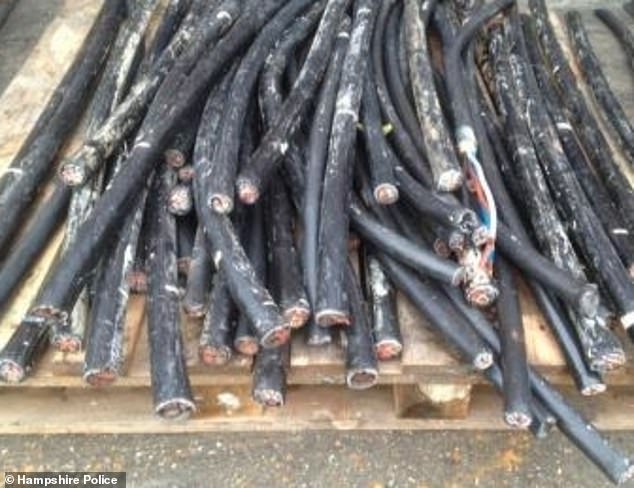
The latest trend? Posing as innocent workmen to steal copper broadband cables from underneath city streets.
Security experts warn that these crimes are no longer random acts of opportunism—they are organised, highly profitable operations.
In one recent incident, a man wearing a high-visibility jacket was filmed climbing out of a manhole just yards from a Birmingham police station.
He was allegedly attempting to steal broadband cables, a bold move that highlights just how audacious these gangs have become.
The High Stakes of Cable Theft
The spike in cable theft is linked to soaring metal prices.
Entire villages have been plunged into internet blackouts, rail services have been disrupted, and some gangs are making up to £10,000 a night by stripping copper from underground networks.
Once stolen, these cables are often sold to unscrupulous scrap metal dealers.
This is far from an isolated issue.
A Daily Mail investigation recently revealed gangs posing as roadworkers who were secretly diverting electricity to fuel Albanian-run cannabis farms worth £21 million.
Other reports show that EV charging points have become prime targets, with over 400 thefts reported since 2023.
Disguised for Deception
These gangs go to extreme lengths to avoid detection.
In one case, a gang leaving BT Openreach with a repair bill of around £1 million was caught with £54,000 in cash.
Another thief was found with a “dressing-up box” of workman’s clothing and a roadworks sign in the back of his van, ultimately apprehended thanks to a vigilant Virgin Media engineer.
Ryan Powell, managing director of First Response Group, told the Daily Mail: “Cable theft has become increasingly organised.
Rising copper prices are a huge motivator, and gangs now operate in plain sight using vans, high-visibility clothing, and fake IDs.”




Communities Left in the Dark
The human impact is significant.
Villages like Moulton Chapel in Lincolnshire have reported being cut off from phone and internet services, leaving 2,500 homes and businesses disconnected.
Rural Cambridgeshire has seen the Openreach network targeted eight times in a single month, forcing police to warn residents about criminals masquerading as legitimate contractors.
According to a 2024 MPs report, metal theft costs the UK economy around £500 million annually, with as many as 60 gangs involved.
Britain’s railways are particularly vulnerable, with cable theft responsible for an estimated 50 days of delays in 2022.
High-Profile Arrests and Convictions
There have been several notable cases.
In Reading, Romanian burglar Alexandru Parole stole over £2 million worth of copper wiring from Huawei’s vacant offices and was jailed.
In Essex, four men—including Billy Lee Junior and Levi Lee—cut cables over several miles, causing thousands of service outages.
Police recovered more than £50,000 in cash, and the gang pleaded guilty to conspiracy to steal, resulting in a combined 14-year sentence.
Even minor thefts often involve elaborate disguises.
In Wiltshire in 2020, two men were caught with a van full of workmen’s clothes and a roadworks sign while stealing broadband equipment.
One, Kevin Craig Mills, was jailed for 10 months, while his accomplice evaded capture at the time.
Why Copper Theft Keeps Rising
Experts say the lure of copper is too strong, especially given the low risk of being caught.
Robin Edwards, former British Transport Police officer, explains that about 80% of cable theft is linked to organised crime: “Many people assume someone in high-vis clothing is allowed to go anywhere.
Thieves exploit that trust, and once the cables are sold, they are almost impossible to trace.”
With metal prices climbing, the problem could expand to renewable energy infrastructure, including wind and solar farms.
Ryan Powell warns: “The impact goes beyond replacement costs.
It creates safety risks, reputational damage, and no infrastructure is safe—from railways and EV chargers to wind farms.”
Industry Response and Law Enforcement
Openreach has emphasized its commitment to fighting theft.
Engineers work around the clock to restore damaged networks, while security teams collaborate closely with police to prevent future attacks.
Their networks are monitored 24/7, and proactive measures aim to protect infrastructure and assist prosecutions.
Following a recent Birmingham incident, three men—Marian Agarlita, Sorin Condrache, and Aldafin Poenaru—have been charged with stealing £50,000 worth of Openreach cables and remain in custody ahead of a court hearing.
The Takeaway
Copper theft in Britain has evolved from petty crime into an organised, highly lucrative industry.
Communities face disrupted services, infrastructure costs soar, and law enforcement must adapt to increasingly brazen and well-disguised criminals.
As metal prices continue to rise, experts warn this trend is far from slowing down.
Share on Facebook «||» Share on Twitter «||» Share on Reddit «||» Share on LinkedIn