Under the shade of an almond tree on a tiny island off the Mozambique Channel, a group of young men reflects on their unusual predicament.
For all the danger of being stranded by people smugglers, they joke that it could be far worse.
Around them, the only sounds are waves lapping against the coral reefs and the occasional patter of rain on the jungle leaves.
A Dangerous Crossing for a Better Life
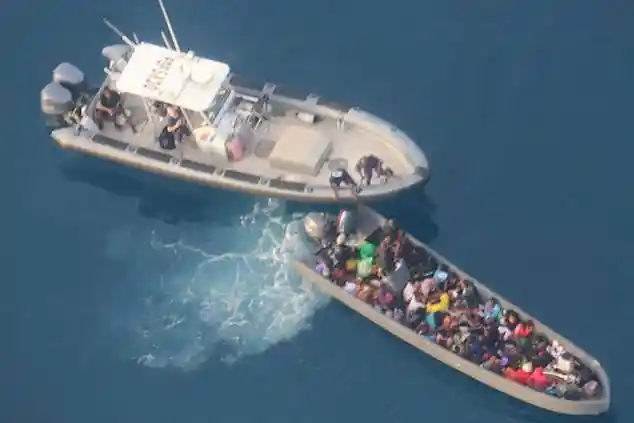
These nine men had traveled 40 miles in a small, overcrowded boat to reach Mtsamboro, hoping to eventually get to Mayotte, a few miles away.
“Mayotte is France, and that means Europe and a chance at a better life,” one explained.
Their journey mirrors the Channel migrant crisis familiar to Europe, but the waters here are warmer and the French authorities more determined.
The French Pursuit Is Relentless
Once ashore, the men face a constant game of cat and mouse with French police.
Drones sweep the skies, gendarmerie patrols the jungle, and the officers leave no stone unturned.
“Sometimes we lie in the vegetation and hear their boots just a few metres from where we hide,” another said.
Unlike in the English Channel, Mayotte authorities actively intercept boats and pursue migrants both at sea and on land.
High Stakes at Sea
Reports from last year tell of collisions, ramming of small fishing boats, and deadly pushbacks that left several people dead or severely injured.
Authorities estimate that 10,000 migrants have drowned trying to reach Mayotte since 1995.
Though police tactics have become less aggressive, their determination remains unwavering.
Helicopters, high-speed boats, and maritime radar track traffickers, and intercepted migrants are quickly processed or deported, sometimes the same day.




Life on Mtsamboro Island
For the migrants who evade capture, life is harsh but survivable.
They forage for bananas, coconuts, and fish, and rely on occasional help from passing boats.
Most are in their late teens or early twenties, with the youngest only 15.
They describe tense encounters with authorities, hiding from patrols for days at a time, and returning repeatedly despite deportations.
“I have been caught twice, but I will never give up. Poverty is behind me,” one said.
Mayotte’s Unique Status
Though a speck in the Indian Ocean, Mayotte is fully part of France, not just an overseas territory.
That means European laws apply, and the island is a magnet for migrants seeking work, education, and healthcare.
Almost half of Mayotte’s 350,000 residents are immigrants, mainly from nearby Comoros, and those who are caught are quickly sent back.
The Human and Political Cost
The enforcement is strict and costly. Last year alone, 21,409 people were deported from Mayotte, compared to 8,164 in the UK.
France invests heavily in policing and deportation logistics, often funding the operation under the guise of development aid.
Locals and politicians are divided: some call for more support and integration, while others fear rising crime and social unrest tied to the migrant influx.
A Prefect with an Iron Grip
Oversight comes from Francois-Xavier Bieuville, France’s representative on Mayotte, whose military and crisis-management background gives the island a reputation for “iron discipline.”
He enforces the law with rigor, yet declined to speak directly to reporters when contacted.
His previous posting in Dunkirk, where Channel crossings originate, contrasts sharply with his current tough approach.
Deportations and the Cycle of Return
The Mail on Sunday witnessed a regular deportation routine: migrants moved at speed from detention centers to the port, then ferried back to Comoros.
Many return within days, creating a continuous cycle.
“Someone expelled in the morning can be back by the afternoon,” said Senator Said Omar Oili.
Despite the strict enforcement, the draw of Europe and the promise of a better life keep the cycle going.
The Island’s Future
Authorities plan to build a pontoon on Mtsamboro’s beach in the coming months, a move that will disrupt the migrants’ temporary “Robinson Crusoe” existence and push them to make a final attempt to reach Mayotte.
Yet even the island’s poverty and social unrest have not deterred them.
“It can’t be worse than where we came from,” one young man said simply, summing up the desperation driving this perilous journey.
Share on Facebook «||» Share on Twitter «||» Share on Reddit «||» Share on LinkedIn