New satellite images are offering the clearest sign yet that Iran is back at work at nuclear facilities damaged during last year’s joint US and Israeli strikes.
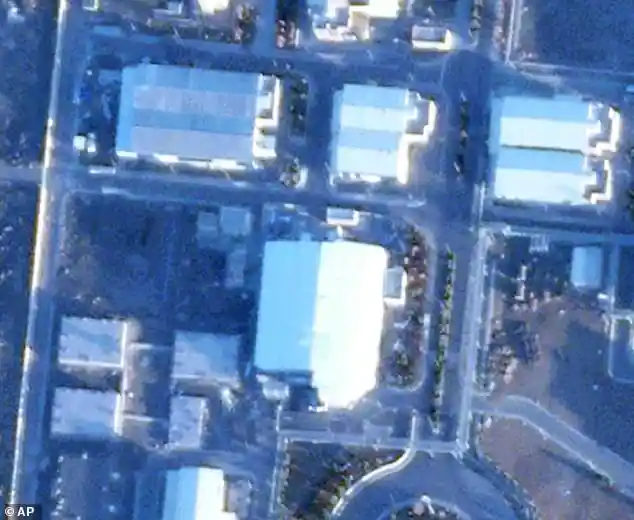
The photos, captured by Planet Labs PBC, show construction activity at two key sites — Natanz and Isfahan — both heavily bombed in June.
What stands out most is not rebuilding in the traditional sense, but concealment.
Fresh roofs have appeared over damaged structures, effectively shielding what’s happening on the ground from outside eyes.
Why the Roofs Matter More Than Repairs
Experts say the new construction is less about fixing what was destroyed and more about controlling what can be seen.
Satellite monitoring is currently the only way international watchdogs can observe these sites, since Iran has barred inspectors from returning after the strikes.
By covering the buildings, Tehran limits what the International Atomic Energy Agency can track — and that has raised red flags among analysts watching the region closely.
A Search for What Survived the Bombing
According to nuclear experts, the activity suggests Iran may be checking whether anything valuable survived the attacks, including highly enriched uranium or key equipment.
“They want access to anything recoverable without Israel or the United States seeing what made it through,” said Andrea Stricker of the Foundation for Defense of Democracies.
The strikes themselves were extensive. Israel launched the initial wave, followed by the US unleashing bunker-busting bombs and Tomahawk missiles.
Washington later said the campaign had significantly damaged Iran’s nuclear capabilities.
Natanz Shows Signs of Controlled Cleanup
Natanz, located roughly 135 miles south of Tehran, has long been the heart of Iran’s uranium enrichment program, with facilities both above and below ground.
Satellite images indicate Iran began roofing over damaged sections of the complex in December and completed the work by the end of the month.
The effort was never publicly acknowledged by Tehran, and signs suggest the site’s electrical infrastructure remains nonfunctional.




Nearby, analysts spotted growing piles of earth, believed to be linked to excavation work that may point to a new underground bunker.
Activity at Pickaxe Mountain, just south of Natanz, appears to be continuing after first beginning in 2023.
Isfahan Activity Raises Similar Questions
At Iran’s nuclear facility near Isfahan — primarily used to convert uranium into gas for enrichment — satellite images show a similar pattern.
A roof was completed over a structure in the site’s northeast corner earlier this month.
Sarah Burkhard, a senior researcher at the Institute for Science and International Security, said the move appears designed to allow recovery efforts without outside visibility.
“They’re trying to remove whatever remains without showing what’s being taken out,” she said.
The photos also show changes to tunnel entrances nearby.
Two appear to have been filled with dirt, a defensive move Iran used before last summer’s conflict.
A third tunnel seems to have been reopened, with new walls constructed at its entrance.
Experts Say Concealment Is the Real Goal
Analysts tracking the imagery believe Iran is prioritizing secrecy over restoration.
Sean O’Connor of the intelligence firm Janes said the work does not look like rebuilding for operational use.
“The objective is to obscure activity,” he explained, “not to bring facilities back online in the open.”
That assessment aligns with broader concerns that Tehran is trying to evaluate losses while avoiding further international scrutiny.
Trump Turns Up the Pressure on Tehran
The renewed activity comes as President Donald Trump has intensified his public pressure campaign on Iran, repeatedly urging the country to negotiate a new nuclear agreement.
Earlier this week, Trump issued a stark warning on Truth Social, claiming a “massive Armada” was heading toward Iran.
He described it as larger than previous deployments and said it was prepared to act “with speed and violence” if needed.
Trump reiterated his stance that Iran must abandon any pursuit of nuclear weapons and return to negotiations, calling last year’s strikes a devastating blow to the country’s capabilities.
Lingering Questions After the Strikes
Despite official US claims, uncertainty remains about the true impact of the bombings.
A leaked Defense Intelligence Agency assessment last year suggested Iran’s stockpile of enriched uranium may have survived, setting the program back only months.
The White House dismissed the report as incorrect, but the leak fueled ongoing debate among analysts — and added urgency to the latest satellite findings.
With inspectors still barred, roofs going up, and tunnels being reshaped, the world is once again watching Iran from space, trying to read between the shadows.
What Comes Next Remains Unclear
For now, Iran has not commented on the construction, nor has it allowed international inspectors back into the damaged sites.
Whether the activity leads to renewed diplomacy or deeper confrontation remains an open question — one that may soon be answered.
Share on Facebook «||» Share on Twitter «||» Share on Reddit «||» Share on LinkedIn