Pimple patches have exploded in popularity among Gen Z and celebrities alike, with stars like Cruz Beckham, Nicola Peltz, and Millie Bobby Brown showing off their spot-fighting stickers online.
What started as a clever way to shrink blemishes quickly has become a full-blown beauty trend—some even wearing them in public as a fashion statement.
The patches, often retailed at around £8.99, promise to reduce pimples in as little as six hours.
Made from hydrocolloid, a material typically used in wound care, the patches are advertised as vegan, cruelty-free, dermatologist-tested, and safe for sensitive skin.
According to the brand, the stickers work by absorbing bacteria and fluid, protecting spots from outside irritants, and discouraging picking, which can worsen scarring.
Social Media Users Report Painful Side Effects
Despite the hype, not everyone has had a smooth experience.
Many women have taken to social media to share the painful side effects of using the popular Starface patches.
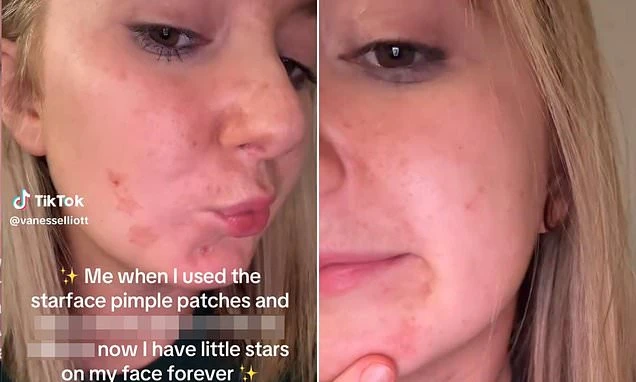
Vanessa Elliot, a UK-based user, posted footage showing star-shaped marks left behind after wearing the patches.
“Me when I used the Starface pimple patches, now I have little stars on my face forever,” she joked, though clearly frustrated.
Similar stories have emerged from other users worldwide.
TikTok user Sophie, from the US, shared her own experience with star-shaped marks, and countless others chimed in via comments: “I’m going through this right now, and it’s so itchy and raised,” wrote one.




Another added, “Same, never again,” while a third simply said, “Girl, I have the same problem.”
Even larger pimples weren’t immune, with users warning that the patches could leave more noticeable marks.
Kids and Teens Dive Into Complex Skincare Routines
It’s not just adults and celebrities caught up in elaborate skincare trends.
A new study by Northwestern University reveals that children as young as seven are creating complicated beauty routines, often using more than a dozen products every day.
The researchers monitored TikTok content by creating dummy accounts posing as 13-year-olds and collected over 100 videos from the “For You” page.
On average, girls aged seven to 18 used six different skincare products daily, with some using far more.
These routines can be surprisingly expensive, with an average cost of $168 (£124) per routine, and some reaching over $500 (£370).
Videos showing these routines often rack up hundreds of thousands or even millions of likes, highlighting how widespread and influential these trends have become.
Multi-Step Skincare Can Cause Serious Skin Issues
While these routines promise “glassy” or “glowy” skin, dermatologists warn that they can actually be harmful.
The Northwestern study found that the top-viewed TikTok routines contained an average of 11 potentially irritating ingredients.
Using multiple active ingredients simultaneously, like hydroxy acids, or unknowingly layering the same ingredient across several products, can trigger allergic reactions or chronic skin conditions such as contact dermatitis.
Dr. Molly Hales, a dermatologist involved in the study, explains: “That high risk of irritation came from both using multiple active ingredients at the same time and applying the same active ingredient repeatedly without realizing it.”
The consequences can be long-lasting, limiting the types of soaps and shampoos users can safely apply in the future.
Social Media Influence Overshadows Safety
Despite the potential risks, young users often seem unaware—or unconcerned—about the dangers.
One TikTok creator applied 10 different products in just six minutes, ultimately developing visible skin irritation.
Dr. Tara Lagu, a pharmacist and health services researcher at Northwestern, points out that videos like this show how social media influence can override caution: “As she applies the products, she expresses discomfort and burning, and by the end, she develops a visible skin reaction.”
The combination of celebrity endorsements, viral trends, and peer pressure on social media is driving more children and teens toward complex skincare routines, often without fully understanding the potential consequences.
Share on Facebook «||» Share on Twitter «||» Share on Reddit «||» Share on LinkedIn