Late on Wednesday, the mood around Iran shifted sharply.
Even as Tehran pushed for renewed dialogue, the United States was quietly ramping up military readiness, moving assets into position and watching Iran’s defences more closely than at any point in recent weeks.
The message from Washington looked deliberate: diplomacy may be on the table, but pressure is very much in play.
Eyes in the Sky and Ships on the Move
American surveillance activity picked up pace overnight.
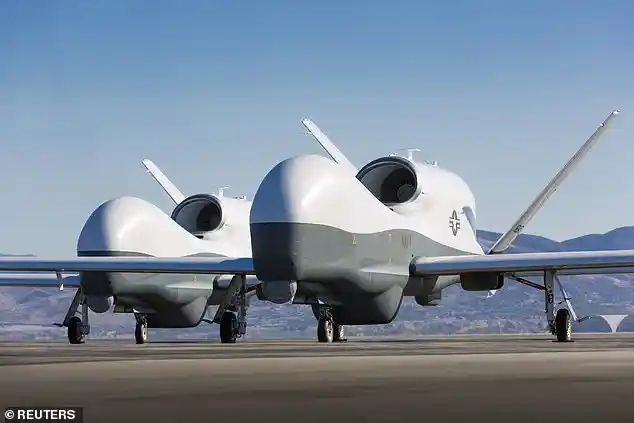
High-altitude drones were sent out to scan Iranian positions, while refuelling aircraft departed US bases bound for Europe, a classic sign of extended operations planning.
At sea, another US warship slipped into the region, adding to an already crowded naval presence in Middle Eastern waters.
Flight-tracking data showed a US Navy MQ-4C unmanned drone flying over the Gulf near Iran’s coastline after taking off from a base in Abu Dhabi.
It was later spotted near the Strait of Hormuz, one of the world’s most sensitive maritime choke points.
A P-8 Poseidon reconnaissance aircraft was also observed operating nearby.
A Growing American Naval Footprint
On the water, the buildup was just as noticeable.
The USS Delbert D Black was tracked passing through the Suez Canal on its way towards the Gulf, bringing the number of US warships in the region to at least ten.
Among them is the aircraft carrier USS Abraham Lincoln, capable of carrying up to 90 aircraft.




The carrier has remained out of public tracking systems after switching off its transponders, a move that tends to fuel speculation and underline the seriousness of the deployment rather than calm nerves.
Diplomacy Working Overtime
Alongside the military movements, diplomatic channels were buzzing.
Western officials stepped up efforts to persuade Iran to make concessions that could cool the situation.
Tehran, for its part, signalled that it wanted talks, with Iranian foreign minister Abbas Araghchi expected to meet Turkish President Recep Tayyip Erdogan in discussions aimed at stopping the crisis from spilling into a wider regional conflict.
Turkey’s involvement was seen as significant, given its position as a regional power with lines of communication open to both Tehran and Washington.
Trump’s Demands and a Blunt Warning
President Donald Trump has been clear about what he wants from Iran.
He has publicly called on the regime to give up its nuclear ambitions, scale back its ballistic missile programme and cut ties with armed groups such as Hamas and Hezbollah.
In characteristic fashion, Trump described the US naval deployment as a “beautiful armada” heading towards Iran, language that underscored both confidence and threat in equal measure.
Tehran Flexes Its Muscles
Iran responded by announcing live-fire military exercises in the Strait of Hormuz starting on February 1, a move that is likely to alarm shipping nations and energy markets alike.
The exercises appear designed to show that Iran is prepared to defend itself and disrupt traffic through the vital waterway if pushed.
At the same time, Tehran lashed out diplomatically, accusing the European Union of “fanning the flames” after it officially labelled Iran’s Revolutionary Guards a terrorist organisation.
The UK is expected to adopt a similar stance.
A Narrow Escape Just Weeks Ago
This is not the first time the situation has edged close to open conflict.
Only weeks ago, Trump was reportedly on the brink of authorising air strikes against Iranian targets.
That decision was paused after last-minute appeals from Saudi Arabia, highlighting how quickly events can swing between restraint and confrontation.
What Comes Next?
For now, the standoff sits in an uneasy balance.
Military preparations continue, diplomacy is being tested, and rhetoric on all sides remains sharp.
Whether the coming days bring meaningful talks or another escalation will depend on which message carries more weight: the call for negotiation, or the show of force waiting just offshore.
Share on Facebook «||» Share on Twitter «||» Share on Reddit «||» Share on LinkedIn