Roughly a year after a similar proposal stalled, a South Dakota lawmaker is back with a renewed push to let the state dip its toes into Bitcoin.
The earlier effort never made it into law, but its sponsor believes the timing — and the appetite — may now be different.
Lawmaker Reintroduces Bitcoin Reserve Bill
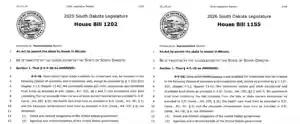
Representative Logan Manhart has formally introduced a new piece of legislation that would allow South Dakota to invest public funds in Bitcoin.
The bill, known as HB 1155, was filed Tuesday in the state legislature and closely mirrors legislation Manhart first proposed shortly after he took office in 2025.
What the Bill Actually Allows
At its core, the proposal would tweak South Dakota’s investment rules to give the State Investment Council permission to place up to 10 percent of public funds into Bitcoin.
Aside from minor technical edits, the language largely tracks the earlier bill that lawmakers chose to defer last year.
A Simple Message Behind the Push
Announcing the bill on X, Manhart summed up the thinking behind it in just three words: “Strong money.
Strong state.” The Republican lawmaker has positioned Bitcoin as a long-term hedge and a way for South Dakota to modernize how it manages public assets.
How South Dakota Compares to Other States
If the bill clears the legislature and is signed into law, South Dakota would join a very small club.




As of January, only Texas, Arizona, and New Hampshire have enacted laws that allow state governments to invest in Bitcoin or hold crypto assets seized through law enforcement actions.
Meanwhile, similar proposals are circulating in statehouses across the country.
Manhart’s Short Time in Office, Big Crypto Ambitions
Manhart was sworn into the South Dakota House of Representatives in January 2025 after winning election in the state’s 1st District.
Despite being relatively new to the legislature, he has made digital assets a signature issue, reintroducing the Bitcoin reserve concept after it failed to gain traction last year.
Federal Bitcoin Plans Still Face Hurdles
The state-level push comes as federal efforts to build a national Bitcoin reserve remain complicated.
President Donald Trump signed an executive order in March 2025 to establish a Strategic Bitcoin Reserve and a broader Digital Asset Stockpile.
But executive orders don’t carry the same legal weight as acts of Congress.
Legal Roadblocks Slow Federal Progress
Patrick Witt, director of the White House Crypto Council, said in a January interview that “obscure legal provisions” have slowed implementation of the federal order.
While the administration envisioned building a reserve using crypto seized in forfeiture cases, the order stopped short of explicitly authorizing direct Bitcoin purchases.
Can the US Government Buy Bitcoin at All?
Treasury Secretary Scott Bessent suggested in August that there are budget-neutral ways the federal government could acquire Bitcoin.
Still, without clear legislative backing, the idea remains more theoretical than practical at the national level.
A Broader Shift in Crypto Policy
The renewed effort in South Dakota reflects a wider trend of lawmakers reassessing how governments interact with digital assets.
As crypto regulations evolved rapidly throughout 2025, many policymakers are now looking ahead to how those rules — and state strategies — might change again in 2026.
What’s Next?
HB 1155 now heads into the legislative process, where it will face debate, amendments, and votes.
Whether this second attempt succeeds or meets the same fate as last year’s bill could signal how ready South Dakota — and other states watching closely — really are to treat Bitcoin as a public reserve asset.
Share on Facebook «||» Share on Twitter «||» Share on Reddit «||» Share on LinkedIn