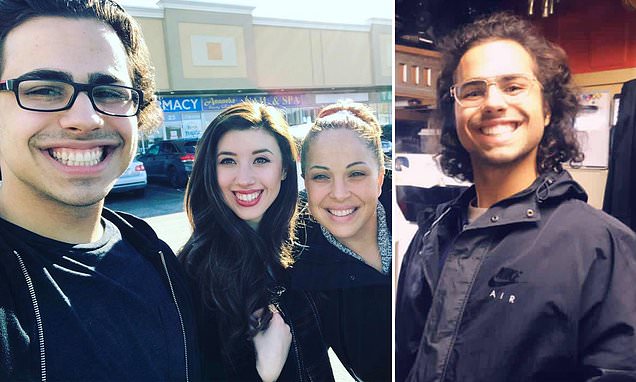
For one Canadian family, the end of 2025 didn’t bring reflection or celebration — it brought devastation.
A 26-year-old man who was living with blindness, type 1 diabetes, and mental health struggles died through physician-assisted suicide, leaving behind a mother who says the system failed her son when he needed care the most.
Margaret Marsilla is now speaking out after her son, Kiano Vafaeian, was euthanized under Canada’s Medical Assistance in Dying (MAiD) program on December 30, 2025.
She insists he was not terminally ill and believes his death should never have happened.
A Battle That Once Saved His Life
Marsilla had already fought this battle once — and won.
Back in 2022, she managed to stop her son from going through with MAiD after discovering he had secretly scheduled the procedure in Toronto.
At the time, Kiano was blind in one eye, dealing with serious complications from diabetes, and struggling mentally.
According to his mother, he was vulnerable and not in a place to make an irreversible decision.
She intervened, alerted a reporter, and the procedure was ultimately canceled.
“He was alive because people stepped in,” Marsilla later wrote.
“Not because the system protected him.”
How the Law Made His Death Possible
Canada legalized assisted dying in 2016, initially limiting eligibility to adults with terminal illnesses whose deaths were reasonably foreseeable.
That changed in 2021, when the law expanded to include people with chronic illnesses and disabilities — even if they weren’t dying.
Under current rules, patients only need to demonstrate that they are experiencing suffering they consider “intolerable” and that it cannot be relieved in a way they find acceptable.
That legal shift, Marsilla believes, sealed her son’s fate.
Canada’s Rising MAiD Numbers Raise New Questions
Canada now records one of the highest rates of medically assisted deaths globally.
In 2024 alone, 16,499 people died under MAiD — about 5.1 percent of all deaths nationwide.
One category in particular has alarmed critics: a vague classification labeled “other.”
This group doesn’t center on a single disease but includes complex cases involving disability, chronic pain, or multiple conditions.
Deaths in this category nearly doubled in 2023, reaching 4,255 cases — 28 percent of all MAiD deaths. Kiano’s case fell squarely into this group.
A Life Marked by Setbacks, Not a Terminal Diagnosis
Kiano’s struggles began early. At 17, he was involved in a serious car accident.
His life became unsettled afterward — no college, frequent moves between family members, and growing health challenges.
Everything worsened in April 2022 when he lost vision in one eye.
By September, he had already scheduled his first MAiD appointment.
That attempt ended when his mother accidentally found the confirmation email.

A Son Furious, a Mother Unapologetic
When Kiano learned his mother had intervened, he was enraged.
He accused her of violating his rights as an adult and insisted the decision was his alone.
But not everyone agreed.
University of Toronto law and bioethics professor Trudo Lemmens, who met Kiano in 2022, later said bluntly that Marsilla saved her son’s life.
“The medical community would have ended it,” he said.
“His mother had the courage to go public.”
A Fragile Rebuilding of Hope
Over time, Marsilla believed their relationship was healing.
In September 2025, she arranged a fully furnished condo near her Toronto office for Kiano, complete with a live-in caregiver.
She also committed to giving him $4,000 a month in financial support.
Kiano talked about moving in before winter. He even texted her that he was “looking forward to a new chapter.”
There were signs of optimism — gym memberships, personal training sessions, and dreams of traveling together.
Technology, Faith, and Flickers of Optimism
Kiano traveled alone to New York City to buy Meta Ray-Ban smart glasses, a new technology some believe could help people who are blind.
His mother worried, but he sent her photos and videos, proud of his independence.
At one point, he admitted he was scared the glasses wouldn’t help and that he might have wasted her money.
“God has sealed a great pair for you,” she reassured him.
“I know God protects me,” he replied.
When Everything Suddenly Changed
Then, without warning, Marsilla says something shifted.
Kiano abandoned his routines and checked into a luxury resort in Mexico in mid-December, only to leave after two nights and fly to Vancouver.
Days later, he sent a message that shattered his family.
“I’m Scheduled to Die Tomorrow”
Kiano texted his mother to say he had been approved for physician-assisted suicide the next day.
He told his sister Victoria that if the family wanted to be present, they should catch the last flight from Toronto.
The family panicked.
Marsilla confronted him, upset that he had dropped this bomb just days before Christmas.
Kiano warned that security would be present if they tried to intervene.
A Brief Delay, Then the Final Decision
When the procedure was postponed due to paperwork, Marsilla felt hope.
She begged him to come home, offering to buy his plane ticket and reminding him that Christmas gifts were waiting.
“No,” he replied.
“I’m staying here. I’m going to get euthanized.”
The Doctor Who Carried It Out
The procedure was performed by Dr. Ellen Wiebe, a Vancouver physician who devotes half her practice to MAiD and the other half to reproductive health and childbirth.
She has publicly stated that she has helped deliver over 1,000 babies and assisted more than 500 patients in dying — describing MAiD as the “best work” she has ever done.
For Marsilla, those words only deepen the pain.
A Final Message to the World
Before his death, Kiano signed his will at a Vancouver law firm and reportedly said he wanted the world to know his story.
He hoped to advocate for expanded MAiD access for young people living with blindness and chronic pain.
His death certificate lists blindness, severe peripheral neuropathy, and diabetes as the underlying reasons for his assisted suicide.
Remembered With Love, Not Labels
An online obituary describes Kiano as a cherished son and brother whose presence meant more than words could capture.
Instead of flowers, the family has asked for donations to organizations supporting diabetes care, vision loss, and mental health — causes they believe truly honor his life.
What Comes Next?
For Margaret Marsilla, grief has turned into resolve.
She has vowed to fight for other families who fear their vulnerable loved ones could be failed by the same system.
“No parent,” she says, “should ever have to bury their child because a doctor — and a law — chose death over care.”
Share on Facebook «||» Share on Twitter «||» Share on Reddit «||» Share on LinkedIn