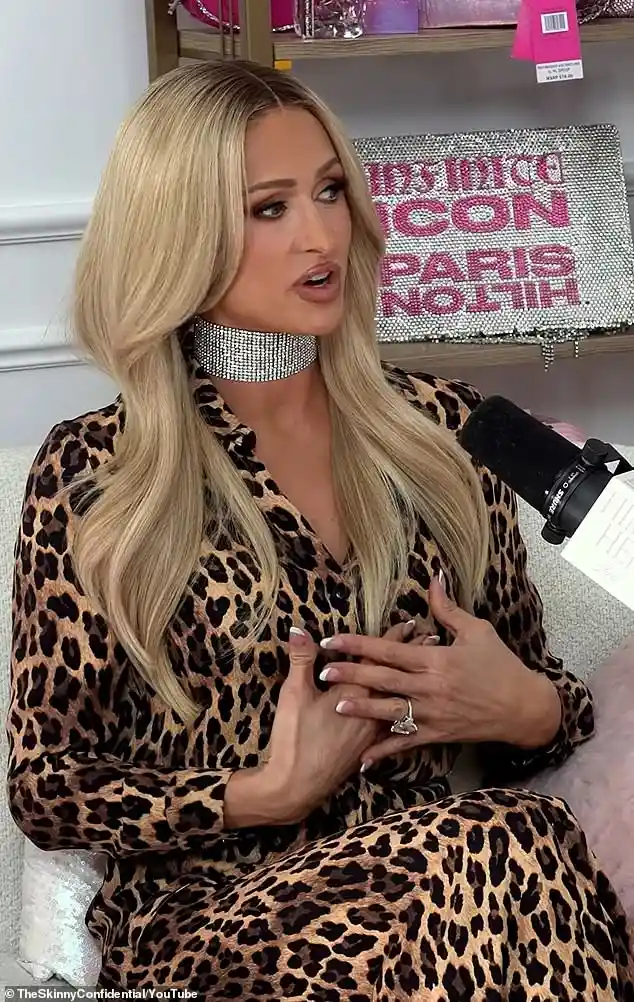
Paris Hilton is speaking candidly about a mental health struggle she describes as “a demon in your mind.”
The 44-year-old socialite recently shared her journey with rejection sensitivity dysphoria (RSD) on The Him & Her Show podcast, hosted by Lauryn and Michael Bosstick.
The episode, set to air Monday, dives into her experience navigating the emotional challenges linked to the condition.
From ADHD to RSD: A Journey of Discovery
Hilton explained that she was first diagnosed with ADHD in her late 20s, but it wasn’t until later that she learned RSD was part of the picture.
“It’s basically any thought that someone sees you negatively,” she said.
“If you think someone is being rude or judgmental, you feel it like physical pain. And it’s not even real.
It’s like this voice in your head constantly telling you negative things about yourself.”
Medical experts describe RSD as severe emotional pain triggered by perceived rejection or failure.
The Cleveland Clinic notes that it is linked to ADHD, likely due to differences in brain structure that make it harder to regulate these intense emotional responses.
Experiencing Emotions on a Deeper Level
Hilton shared that RSD can make everyday interactions feel overwhelming.
“You feel things on such a deep level,” she said.
“You have to learn to recognize that it’s the RSD kicking in.”
She also reflected on how her public life in the 2000s amplified these feelings.
Despite the challenges, Hilton said she is determined to reframe the condition as a superpower.
“I want people to know it doesn’t have to hold them back,” she said.




“It can actually push you to go for your dreams.”
ADHD Overlooked in Youth
Looking back, Hilton said ADHD went undiagnosed in her childhood because awareness was limited, especially for girls.
“Everyone said it was something little boys had,” she recalled.
“And they always focused on the negative parts.”
She said struggling in school was a direct result, describing years of confusion, failing tests, and disciplinary trouble.
Now, Hilton says she has learned to adapt and channel her energy productively.
“I see this as my superpower,” she said.
“It gave me the drive to be the entrepreneur I am today, even though it was overwhelming at times.”
Advocating Against AI Deepfakes
Hilton has also been active outside of mental health advocacy.
Last Thursday, she joined lawmakers and other survivors in Washington, D.C., supporting the DEFIANCE Act, a bipartisan bill that would allow victims of nonconsensual AI deepfakes to sue those who produce or distribute the content.
She recounted her own experience with online abuse, referencing the release of her 2004 sex tape at age 19.
“A private intimate video of me was shared with the world without my consent,” Hilton said.
She described the public reaction as cruel and dismissive.
“They called it a scandal. It wasn’t. It was abuse.
They sold my pain for clicks and told me to move on.”
Hilton concluded with a broader message about power and technology: “This isn’t just about tech.
It’s about someone using another person’s likeness to humiliate and silence them.”
Understanding RSD
The Cleveland Clinic explains that while RSD is not officially recognized as a medical condition, it can be serious when linked to anxiety, depression, or self-harm.
Experts note that awareness is limited, and healthcare providers may misdiagnose it.
Those with ADHD are particularly vulnerable because their brains process rejection-related emotions more intensely.
Turning Struggle Into Strength
For Hilton, sharing her story is both personal and purposeful.
“I want to help people see that what seems like a weakness can actually become your strength,” she said.
“It’s about learning to work with your mind, not against it, and using that energy to achieve your goals.”
Share on Facebook «||» Share on Twitter «||» Share on Reddit «||» Share on LinkedIn