Weather forecasters across the United States are urging people to take this weekend seriously as a massive winter storm barrels across the country.
Meteorologists are already calling it a once-in-a-lifetime event, warning that its size, intensity, and reach could overwhelm communities that are simply not built for prolonged cold and ice.
One Corridor Faces the Greatest Risk
Among all the areas in the storm’s path, one stretch of the country stands out as especially vulnerable.
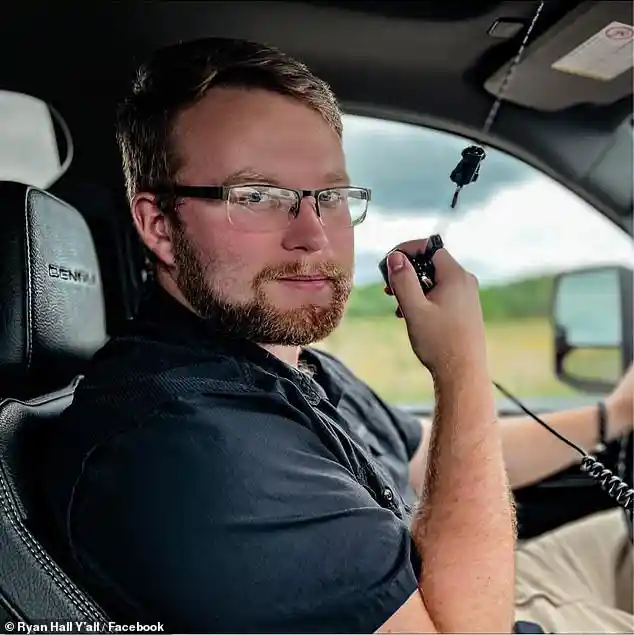
Meteorologist Ryan Hall, widely known online as The Internet’s Weather Man, says his biggest concern lies along a 500-mile corridor stretching from Nashville, Tennessee, down to Shreveport, Louisiana.
According to Hall, this region could see ice accumulation not witnessed in decades — and in some places, possibly never before.
He explained that the amount of ice forecast rivals what parts of the region experienced in 1994, a storm many still remember for its devastation.
Ice Storm Could Leave Areas Unlivable for Days
The Delta region, including southeast Arkansas and large parts of Mississippi, may face the harshest conditions.
Hall warned that extreme ice buildup could snap power lines, topple trees, and leave entire communities without electricity or heating for up to two weeks.
Cities such as Oxford, Greenville, and Tupelo in Mississippi are also expected to endure an intense cold snap once the storm passes.
Temperatures could remain well below freezing for several days, making recovery slow and dangerous.
Losing Power in the Deep South Is a Serious Threat
Hall stressed that extended power outages in states like Mississippi and Louisiana pose a unique danger.
Many residents are not accustomed to sustained cold, and homes are often not designed to handle freezing temperatures without electricity.
He explained that if people are waking up to 10-degree mornings with no power or heat, staying indoors may no longer be safe.
In those cases, he said, communities must help residents find alternative heating options or move them into shelters.
Bigger Than the Historic 1993 Superstorm
Hall believes this storm could eclipse the infamous 1993 “Storm of the Century,” which killed more than 270 people across 13 states.
Unlike that system, which was relatively compact, this storm is expected to stretch roughly 2,000 miles wide and impact more than 200 million people.
He noted that while the 1993 storm affected many Americans, it didn’t come close to covering as much ground or reaching as many people as this one is expected to.



Forecasters Agree This Could Be Historic
The National Weather Service has described the storm using words like “crippling” and “potentially historic,” language that meteorologists rarely use lightly.
So far, experts across the country appear largely united in their concern.
This dramatic shift comes after a mild start to 2026.
The return of a powerful polar vortex has pushed frigid air south from Canada and Greenland, forcing forecasters to rapidly revise their outlook for the rest of the month.
A Perfect Storm of Cold and Moisture
That deep freeze is now colliding with moisture streaming in from the Pacific Ocean and the Gulf of America, forming a powerful low-pressure system.
The result is a dangerous mix of snow, ice, freezing rain, and extreme cold expected to impact around 30 states.
The contrast is striking.
While parts of Florida may enjoy temperatures in the 70s and 80s, areas of the Midwest and Northern Plains could be more than 100 degrees colder.
In Minnesota, temperatures are expected to plunge below minus 20 degrees.
States Declare Emergencies as Snow and Ice Pile Up
More than ten states have already declared states of emergency.
Forecasts predict one to two feet of snow in some areas, along with ice accumulation exceeding an inch between Friday and Monday.
AccuWeather’s chief meteorologist, Jonathan Porter, warned that hundreds of thousands of people could lose electricity and heating as ice storms tear down power lines from Texas through the Southeast and into Virginia.
Ice This Heavy Can Break Infrastructure
Storm chaser Jaden Pappenheim explained that ice of this magnitude can easily snap trees and collapse power lines, leading to outages that last far longer than a typical winter storm.
Former NOAA meteorologist Ryan Maue added perspective, explaining that every quarter-inch of ice adds roughly 500 pounds of weight to electrical wires.
That kind of load can quickly overwhelm utility systems.
Worst Winter Weather Many Have Ever Seen
Maue said younger Americans may be facing the harshest winter weather of their lifetimes over the next one to two weeks, depending on where they live.
While winter storms do hit the South, cold usually fades quickly — making this prolonged freeze especially dangerous.
Hall’s forecast of sustained low temperatures through the following week raises fears of hypothermia, frozen pipes, and deadly living conditions for thousands across Tennessee, Mississippi, and Louisiana.
Emergency Officials Urge Neighbors to Look Out for Each Other
Local authorities are already preparing for the worst. Ben McMinn, chief of emergency services in Mississippi’s DeSoto County, urged residents to help protect one another during the storm.
He encouraged people to remember the “Three P’s”: check on vulnerable people like elderly neighbors, make sure pets have warm shelter, and prevent pipes from freezing and bursting.
How Forecasts Shifted — and Why Misinformation Spread
Hall acknowledged that early forecasts showed a smaller, less severe storm.
Those predictions were based on less detailed weather models and were never meant to be taken literally.
As more data became available, the picture changed dramatically.
Because the storm threatens around 200 million people, it attracted enormous attention online — along with misleading information shared by unreliable sources.
A Final Warning From Meteorologists
With updated models now aligning, experts say the threat is very real.
Hall admitted he hopes the forecast turns out to be wrong, but warned that if it doesn’t, the consequences could be severe.
For millions of Americans, the next several days may test infrastructure, emergency services, and community resilience in ways not seen for decades.
Share on Facebook «||» Share on Twitter «||» Share on Reddit «||» Share on LinkedIn