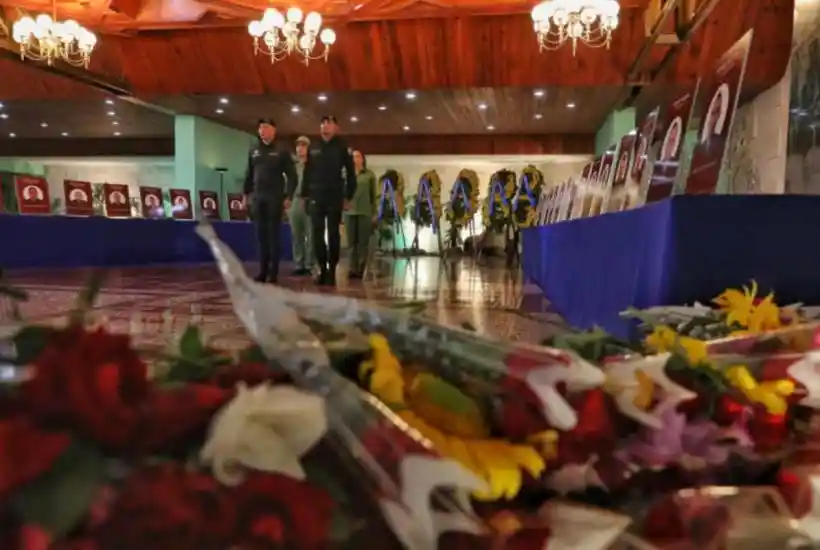
A man who lived through the deadly U.S. raid in Caracas that resulted in Venezuelan President Nicolás Maduro’s capture has finally broken his silence.
Yohandris Varona Torres — a Cuban veteran with more than two decades in the military — shared his version of what happened that night, painting a vivid picture of chaos, surprise and overwhelming force.
His account has drawn global attention as tensions continue to ripple through Latin America.
Midnight at the Presidential Grounds
Varona, a longtime member of Maduro’s presidential security detail, was on duty when it all unfolded.
He told journalists that around 2 a.m., just as he was settling into a six‑hour shift, he saw strange aircraft approaching targets around the Venezuelan capital.
According to him, the helicopters were part of a U.S. operation — later confirmed by multiple sources — aimed at snatching Maduro from his residence.
A Moment That Changed Everything
Realising something was wrong, Varona left his guard post and opened fire toward the incoming helicopters.
He says that in hindsight, that split‑second choice may have saved his life — his original post was hit with a barrage of bullets moments later.
He described the attackers as heavily armed and well prepared, with precise knowledge of where to strike first.
Outgunned and Outnumbered
Varona didn’t hold back when it came to comparing forces.
He said his unit fought hard, but U.S. troops had clear firepower advantages — from heavier weapons to tactical planning.
“They had much more firepower than we did,” he said, noting that the attackers seemed to know the layout of the area.
That familiarity allowed them to strike Cuban and Venezuelan positions swiftly and with devastating effect.
Belief in Resistance
Even though the U.S. accounts have largely downplayed any casualties on their side, Varona insists Cuban defenders inflicted more damage than has been publicly acknowledged.
He described fierce firefights where his comrades fought until they ran out of ammunition, convinced they could still hold ground.
After the Smoke Cleared
In his retelling, the hours after the gunfire were equally haunting.
Surrounded by fallen colleagues — many of whom he knew personally — survivors carried their bodies into a damaged building that offered a small measure of shelter.
He said the burden of holding his friends’ memories is something he carries with him, even amid the heartbreak of failing to stop the attack.
Casualty Figures and Government Reactions
Official figures show the raid on January 3, 2026, was bloody.
Cuba confirmed that 32 of its citizens — military personnel serving with Maduro’s security detail — were killed during the operation, prompting the island nation to declare days of national mourning.
Other reporting estimates the broader death toll — including Venezuelan soldiers and civilians — could be higher, with more than 80 casualties reported in some accounts.
A Bold Mission With Global Fallout
That night, U.S. forces launched a coordinated strike involving airpower and special operations units to capture Maduro and his wife, Cilia Flores.
They were flown out of Venezuela and have since appeared in a U.S. courtroom facing charges related to drug trafficking and narcoterrorism.
Washington has defended the mission as lawful and necessary; critics around the world have condemned it as a serious breach of international norms.
What Comes Next
Varona’s testimony adds a raw, personal dimension to a story that has already reshaped geopolitics across the Americas.
With Maduro’s ouster, Cuba’s military losses and ongoing debate over the legality of the raid, the repercussions of this dramatic event are still unfolding.
As diplomatic tension continues to simmer, many are left wondering how this chapter will influence relations between the United States and its neighbours in the months ahead
Share on Facebook «||» Share on Twitter «||» Share on Reddit «||» Share on LinkedIn