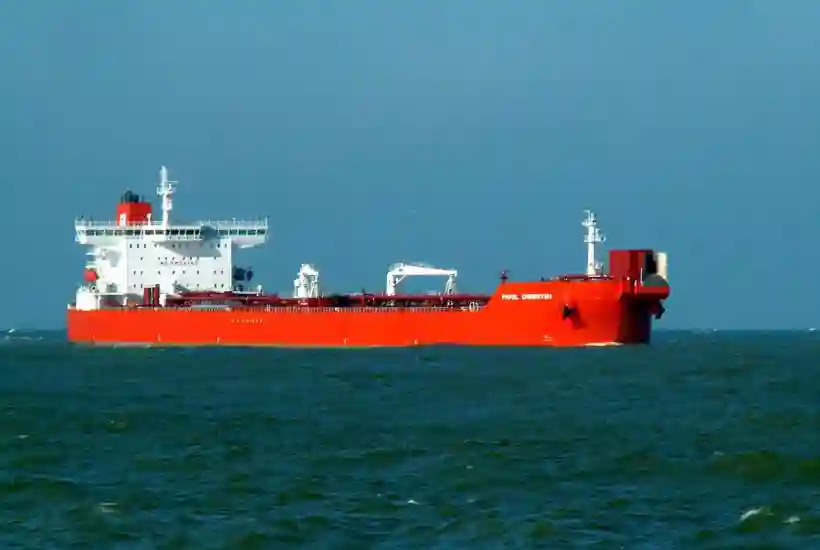
Ships hauling Russian oil through the Baltic Sea are suddenly drawing extra attention, and not just because of what they’re carrying.
Swedish naval officials say armed individuals have been spotted onboard several tankers making the journey out of Russian ports, adding a new layer of tension to an already closely watched stretch of water.
The sighting was confirmed by Marco Petkovic, head of operations for the Swedish Navy, who spoke to reporters as monitoring activity in the region continues to ramp up.
Who Are the Armed Men on Deck?
According to Petkovic, the men seen aboard the tankers were dressed in camouflage and carrying weapons.
The most likely explanation, he said, is that they are private security contractors hired to protect the ships rather than military personnel.
He was careful to play down alarm, stressing that armed guards on commercial vessels are not unusual in themselves.
“Their presence alone isn’t a reason to panic,” he noted, even as he acknowledged that the navy is keeping a close watch on developments.
A Baltic Sea Under Constant Watch
The broader backdrop is a noticeable increase in Russian military activity across the Baltic Sea and the Gulf of Finland.
Swedish naval assessments suggest Russian warships are now a near-constant presence along routes frequently used by oil tankers leaving Russian harbors.
While Swedish forces don’t currently see the armed guards as an immediate danger, Petkovic said round-the-clock observation has become the norm.
The goal, he explained, is to maintain a clear picture of what’s happening and prevent misunderstandings in a region where tensions can escalate quickly.
Europe’s Tougher Talk on Russian Oil
The timing of the sightings is hard to ignore.
In recent months, European leaders have openly discussed tougher measures against Russia’s maritime oil exports.
Back in October, French President Emmanuel Macron floated the idea of detaining Russian oil tankers at sea for extended periods.
Macron argued that such a move, especially if coordinated with NATO partners, could seriously disrupt Russia’s oil revenues and strain Moscow’s finances.
A Real-World Test of Those Ideas
Those proposals were followed by action.
Not long after Macron’s comments, the French Navy stopped and boarded the tanker Boracay, which was sailing under a Benin flag.
French troops conducted inspections amid suspicions the vessel was part of what Western officials call Russia’s “shadow fleet.”
During the operation, two crew members were detained, underlining how theoretical discussions were quickly turning into real-world interventions.
A Confrontation That Nearly Turned Ugly
This wasn’t the first close call. On May 14, Estonian naval vessels, backed by Polish aircraft, attempted to intercept the tanker Jaguar in international waters.
The ship, flying the flag of Gabon and heading toward a Russian port, was urged to divert into Estonian territorial waters.
When the crew refused, the situation escalated.
Estonian forces reportedly warned they might ram the tanker and even tried to deploy troops by helicopter.
The standoff only ended when a Russian Su-35 fighter jet appeared overhead, prompting the pursuing ships and aircraft to pull back.
Later, Estonia claimed the Russian jet briefly crossed into its airspace, an allegation Moscow neither confirmed nor accepted.
Moscow Pushes Back
From the Kremlin’s perspective, these incidents point to a worrying trend.
Dmitry Peskov, President Vladimir Putin’s spokesman, accused Western countries of taking provocative steps that threaten freedom of navigation.
He warned that actions in regions like the Baltic Sea could fuel further tension and ripple out into global trade and energy markets, far beyond the immediate standoffs at sea.
What’s Next?
With armed guards now visible on tankers, warships shadowing commercial routes, and political leaders openly debating detentions at sea, the Baltic is fast becoming a pressure point between Russia and NATO.
For now, navies insist they’re watching, not escalating.
But as energy shipments, maritime law, and military posturing continue to collide, the question isn’t whether the situation will change — it’s how quickly, and in which direction.
Share on Facebook «||» Share on Twitter «||» Share on Reddit «||» Share on LinkedIn