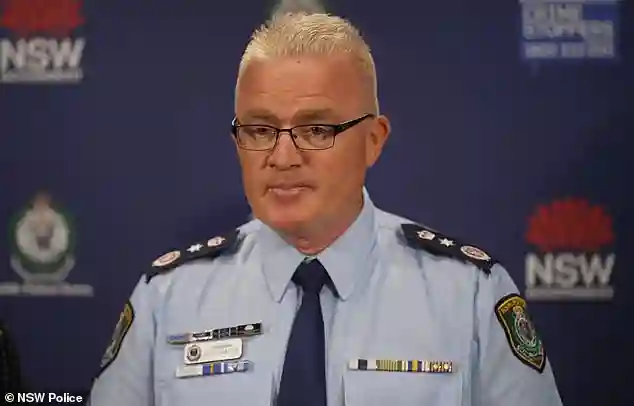
New details have emerged about how one of the men behind the Bondi Beach massacre was able to legally obtain the firearm used in the attack. NSW Police Commissioner Mal Lanyon confirmed the gunman satisfied the requirements for a firearms licence, raising fresh questions about the adequacy of existing gun laws.
Speaking on Monday afternoon, Commissioner Lanyon said the 50-year-old shooter, Sajid Akram, had held a recreational hunting licence for nearly a decade. Police shot Akram dead at the scene after the attack unfolded.
That licence, issued in 2015, allowed him to own the type of long-arm firearm used in Sunday’s violence.
A licensed gun owner with multiple firearms
Authorities revealed Akram was not only licensed but also a registered member of a gun club. In total, six firearms were legally registered in his name. Police have not yet disclosed which club he belonged to.
Commissioner Lanyon explained that recreational hunting licences cover both property-based hunting and participation through gun clubs. Akram’s Category A and B licence gave him legal access to rifles and shotguns.
The scale of the tragedy has intensified scrutiny of how someone with multiple firearms could carry out such an attack in a densely populated area.
A deadly attack that shocked the nation
The Bondi Beach shooting has claimed at least 15 lives, with dozens more injured. The attack has left Sydney reeling and reignited a national debate over gun ownership and public safety.
Akram’s 24-year-old son, Naveed Akram, who was also involved, remains in hospital under police guard. Investigators have indicated criminal charges are likely once his medical condition stabilises.
Police have acknowledged that, at this stage, much remains unknown about the father-son pair and their motivations.
Government moves quickly toward gun reform
Within hours of the shooting, Prime Minister Anthony Albanese convened the national cabinet, where federal and state leaders agreed to pursue tougher firearm regulations.
The proposed reforms would represent the most significant changes to gun laws since the aftermath of the 1996 Port Arthur massacre.
Among the measures under discussion are limits on the number of firearms a single person can own, more frequent licence reviews, tighter controls on gun modifications, and restrictions on non-citizens holding gun permits.
Public pressure builds for stricter controls
Public reaction has been swift and emotional. Many Australians have voiced support for stronger gun laws, questioning why civilians need access to multiple firearms.
Some argued that limiting the number of guns may not go far enough, pointing out that a single weapon is enough to cause devastation. Others suggested urban licence holders should only be allowed to access firearms through secure facilities rather than storing them privately.
The mood across social media and talkback radio reflects a growing sense that the current system no longer matches modern public safety expectations.
Revisiting Australia’s gun law legacy
On Monday, Albanese referenced former prime minister John Howard’s response to the Port Arthur massacre, which led to the National Firearms Agreement.
That landmark reform introduced bans on automatic and semi-automatic weapons, a nationwide gun buyback, a central firearms registry, and mandatory waiting periods for purchases.
Nearly 30 years later, leaders are once again looking to that moment as a benchmark for decisive action.
Intelligence questions and past investigations
Adding another layer of complexity, it has emerged that Australia’s domestic intelligence agency, ASIO, had previously monitored Akram’s son.
According to sources familiar with counter-terrorism operations, Naveed Akram came to the attention of authorities in 2019 following the arrest of a Sydney-based Islamic State figure.
When asked whether such intelligence had been shared with the NSW Firearms Registry, Commissioner Lanyon said the issue is still under investigation and stressed that all available intelligence is considered when assessing licence eligibility.
Plans for a national gun register
State and territory leaders also agreed to accelerate work on a long-awaited national firearms register. The system is intended to allow police to track weapons across jurisdictions more effectively.
The register is not expected to be operational until mid-2028, a timeline that has drawn criticism in light of the latest tragedy.
Additional proposals include cracking down on illegal gun imports and the growing threat posed by 3D-printed weapons.
NSW government signals legislative action
NSW Premier Chris Minns said it was too early to assign blame to federal agencies but made clear that legislative change is coming.
He indicated the government intends to make it significantly harder for civilians to access high-powered firearms, particularly in non-agricultural settings.
Minns said while details are still being finalised, the aim is to introduce laws that materially reduce the risk of similar attacks in the future.
A state awash with firearms
Currently, more than 258,000 people hold firearms licences in NSW, with registered guns exceeding 1.1 million.
Licences can be held indefinitely, a system that critics argue lacks sufficient oversight.
As the death toll from Sunday’s attack continues to weigh heavily on the nation, pressure is mounting for reforms that move beyond incremental change.
Share on Facebook «||» Share on Twitter «||» Share on Reddit «||» Share on LinkedIn