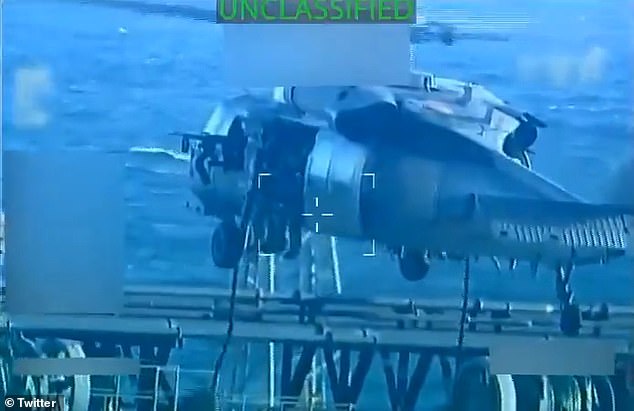
People across the region were still trying to make sense of it on Wednesday when dramatic footage began circulating—clips showing U.S. commandos swooping down from helicopters onto a Venezuelan oil tanker.
In the videos, troops slide down ropes, sprint across decks, and rush the bridge with weapons drawn as they take control of the ship just off Venezuela’s coastline.
It was the kind of scene that instantly raised the temperature of already-tense U.S.–Venezuelan relations.
Washington Explains the Operation
Not long after the footage dropped, Attorney General Pam Bondi took to X with a formal statement, confirming that the FBI, Homeland Security Investigations, and the U.S. Coast Guard carried out the seizure with help from the Department of War.
She said the tanker had been on Washington’s radar for years due to its role in transporting sanctioned oil tied to networks that support terrorist organizations.
The Trump administration framed the mission as part of a larger effort to cut off money flowing into hostile regimes.
Trump’s Stark Warning and Market Jolt
President Trump didn’t hold back when asked about the tanker.
He called it “the largest one ever seized” and hinted that more operations were in motion.
That vague warning sent global markets spinning, and oil prices jumped in response—Brent crude climbed more than one percent, landing at $62.69 a barrel.
Analysts said traders were bracing for the possibility that the standoff could disrupt major supply routes.
Why This Tanker Matters
The tanker wasn’t just any vessel—it’s part of a key supply chain for Venezuela, which exports the majority of its oil to China and other allies.
With sanctions tightening and the U.S. escalating its pressure campaign, analysts told Bloomberg the seizure signaled “a serious escalation,” especially after Trump once again demanded that Nicolás Maduro step down.
Asked what the U.S. planned to do with the seized oil, the president simply replied, “We keep it.”
Venezuela Scrambles as Its Oil Lifeline Wobbles
For Venezuela, the move landed like a gut punch.
The country’s economic survival depends overwhelmingly on selling oil abroad.
Just last month, Maduro’s government managed to export over 900,000 barrels of oil per day.
The sudden U.S. operation has thrown that system into uncertainty, raising questions about what could be targeted next.
A Wider Crackdown on the Seas
Even before the tanker seizure, tensions were rising.
Trump has repeatedly ordered strikes on boats the administration says are part of drug-running operations leaving Venezuela.
Those attacks have turned deadly—more than 80 people have been killed in the Caribbean and eastern Pacific as U.S. forces expanded their anti-narcotics campaign.
And Trump has hinted that he wants the military to go even further.
At a recent Cabinet meeting, he said ground operations could begin soon because, as he put it, “the land is much easier.”
Threats That Spill Beyond Venezuela
The ripple effects aren’t stopping at Venezuela’s borders.
Trump also delivered a harsh new warning to Colombia’s president—whom he has labeled a “drug dealer.”
He said Colombia could be “next” if it doesn’t crack down harder on narcotics trafficking.
The president has also refused to rule out strikes inside Mexico or Colombia, pointing to fentanyl and cocaine as justification for expanding U.S. operations.
A Military Decision Under Fire
Meanwhile, Secretary of War Pete Hegseth is facing intense backlash over a separate incident that continues to haunt the administration.
The controversy centers on a deadly two-stage strike against a suspected drug-smuggling vessel back in September.
After a missile disabled the boat and killed most on board, two survivors were spotted clinging to debris.
Critics argue that ordering a second strike—one that killed those last two men—crossed a moral line.
Pentagon officials maintain that the decision was made because the survivors were believed to still pose an active threat.
Share on Facebook «||» Share on Twitter «||» Share on Reddit «||» Share on LinkedIn