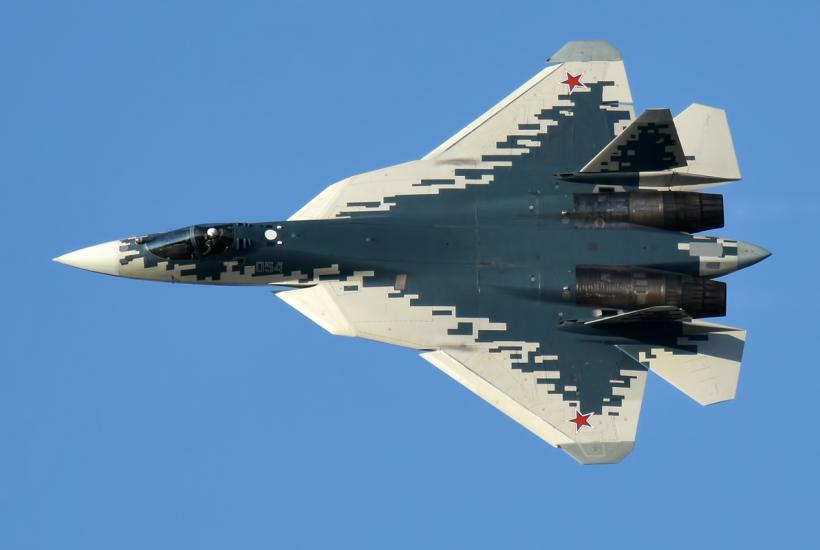
Russia has put forward an intriguing proposition for India: the chance to take part in producing its Su-57 fifth-generation fighter jets locally.
The offer, disclosed by Rostec CEO Sergey Chemezov in a Channel One interview, highlights Moscow’s push to strengthen its defense ties with New Delhi amid shifting global alliances.
The proposal goes beyond mere purchase—it could allow India to assemble, upgrade, and even eventually manufacture the jets on its own soil.
High-Level Industrial Cooperation on the Table
Chemezov explained that the offer includes substantial industrial localization, meaning India wouldn’t just be buying aircraft but could play a hands-on role in building them.
“We have sent our proposals (…) regarding the Su-57.
Including the possibility of producing it here, with localization,” he said.
India’s response so far has been measured. While officials have pledged to study the plan, New Delhi remains cautious.
The country has ambitious aerospace goals but is mindful of the costs and complexities involved in cutting-edge fighter development, especially after previous programs faced setbacks.
Modernizing the Indian Air Force
The Su-57 opportunity comes at a time when India is keen to modernize its air force.
Analysts have pointed out that the stealth fighter could help New Delhi maintain an edge in a region where China is deploying advanced fighters and Pakistan continues to deepen its security ties with Beijing.
Local production would not only provide cutting-edge technology but also give India a rare level of self-sufficiency in fifth-generation fighter manufacturing.
Defense expert Peter Suciu noted in The National Interest that India’s historical ties with Russia, combined with its need for next-generation capabilities, make the Su-57 an appealing option despite closer defense cooperation with the United States.
Continuous Upgrades Give the Su-57 an Edge
Part of the jet’s allure is Russia’s approach to constant refinement.
Military publications emphasize that the Su-57 benefits from lessons learned in real-world operations, which allows rapid upgrades in areas like electronic warfare and strike capability.
This dynamic development model contrasts with some Western fighters, which tend to follow slower, more static upgrade cycles.
For India, this could mean access to a platform that evolves over time, offering a long-term solution rather than a one-off purchase.
For Russia, partnering with India would bring both economic gain and geopolitical prestige, as few countries have the industrial capacity to contribute meaningfully to stealth aircraft production.
Strategic Implications for Indo-Russian Relations
If India decides to move forward, this partnership could redefine defense collaboration between the two nations, potentially rivaling the success of the BrahMos missile program.
The decision carries weight beyond technology—it would signal New Delhi’s willingness to balance ties between Moscow, Washington, and other global powers while securing a technological advantage for its air force.
For now, India is proceeding with caution, weighing costs, capabilities, and long-term strategy.
But the Su-57 offer gives New Delhi a rare opportunity to access sensitive technology and strengthen its position on the regional and global stage.
Share on Facebook «||» Share on Twitter «||» Share on Reddit «||» Share on LinkedIn