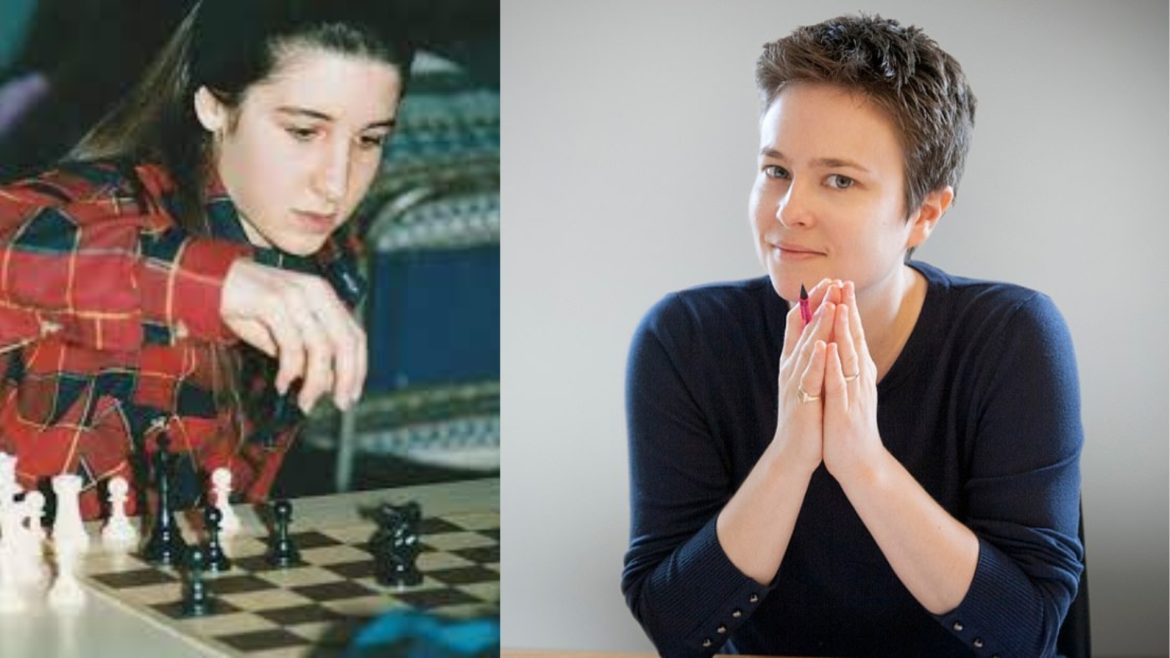
Public conversations often drift into unexpected corners, and this time, the focus has turned from budgets and policies to something far more surprising: a decades-old junior chess title.
What began as a small detail in Rachel Reeves’ personal story has grown into a headline-grabbing debate about who truly held a national chess crown back in the early ’90s.
Questions Surrounding the Childhood Championship
For years, the Chancellor has talked openly about her love for chess, recalling how she supposedly clinched the British girls’ under-14 title in 1993.
It’s a detail she has used to paint a picture of discipline, strategy, and determination.
But that version of events is now being challenged by someone who was actually making major moves on the chess scene at that time.
Introducing the Real Junior Star
According to those familiar with the tournaments of that era, the true under-14 girls’ champion was none other than Emily Howard—a young talent who later reinvented herself as a renowned composer.
Now 46, Howard has kept a dignified silence throughout the commotion, leaving others to point out that she was the top female performer in the British U-14 mixed championship that same year.
Silence From the Champion’s Corner
A family source suggested that Howard has no intention of diving into the controversy.
When asked whether she was indeed the young chess prodigy now at the center of the debate, the response was simple: “Indeed.”
They noted she has been inundated with attention, saying various media outlets have been trying to reach her.
How the Dispute Came to Light
The whole conversation was reignited when critics accused Reeves of embellishing parts of her CV and overstating her achievements.
In a 2023 interview, she described herself as a self-professed “geek” who had proudly earned the British girls’ under-14 championship.
Photos even showed her posing with a chessboard before the budget announcement, tying the sport to her political persona.
A Professor Steps In With Evidence
That narrative drew a sharp rebuttal from Alex Edmans, a London Business School professor who represented England and Britain in junior chess.
After digging through the BritBase archives, he noted that Reeves finished joint 26th out of 34 players in the mixed U-14 British championship—while Howard placed significantly higher, making her the clear top girl in that specific competition.
A Different Tournament With a Different Title
To be fair, Reeves did win a title that year—but it came from a separate girls-only competition run by the British Women’s Chess Association (BWCA).
Despite the achievement, Edmans argued that this particular win didn’t justify the much broader claim of being the “British Girls U-14 champion.”
Why the Claim Matters Politically
Edmans suggested that the embellished chess story helped shape a flattering image of Reeves as a strategist who thinks several steps ahead—mirroring the qualities of a strong chancellor.
Traits such as long-term planning, good judgement, and measured decision-making were all reinforced by the idea of her being a top chess champion.
Political Rivals Join the Conversation
Unsurprisingly, the row spilled into Westminster.
During Prime Minister’s Questions, Kemi Badenoch seized on the moment, accusing Reeves of creating a pattern of exaggeration and mocking her for allegedly fabricating everything from economic warnings to childhood accomplishments.
According to Badenoch, “She belongs in la la land.”
A Look at Emily Howard’s Journey
Meanwhile, Howard’s life took a very different path after her chess successes between 1990 and 1996.
Born in Liverpool, she studied mathematics and computer science at Oxford before pursuing composition at both the Royal Northern College of Music and the University of Manchester.
Her works—often inspired by mathematical concepts—have earned her commissions, critical acclaim, and a reputation as one of Britain’s most inventive contemporary composers.
Celebrated Work Beyond the Chessboard
One of her standout pieces, Magnetite, was commissioned in 2008 for Liverpool’s year as a European Capital of Culture and went on to win praise and awards.
As the first UBS Composer in Residence with the London Symphony Orchestra’s Bridge Academy, she later wrote Solar, a widely acclaimed work described as evoking “galactic power.”
Her achievements have earned her recognition at the British Composer Awards and even an Ivor Novello Award nomination in 2023.
Reeves’ Camp Pushes Back
Despite the criticism, those close to Reeves are rejecting the accusations outright, calling the narrative “utter nonsense.”
They maintain that her BWCA win was real and fairly claimed—and insist she never misrepresented her accomplishments.
Share on Facebook «||» Share on Twitter «||» Share on Reddit «||» Share on LinkedIn