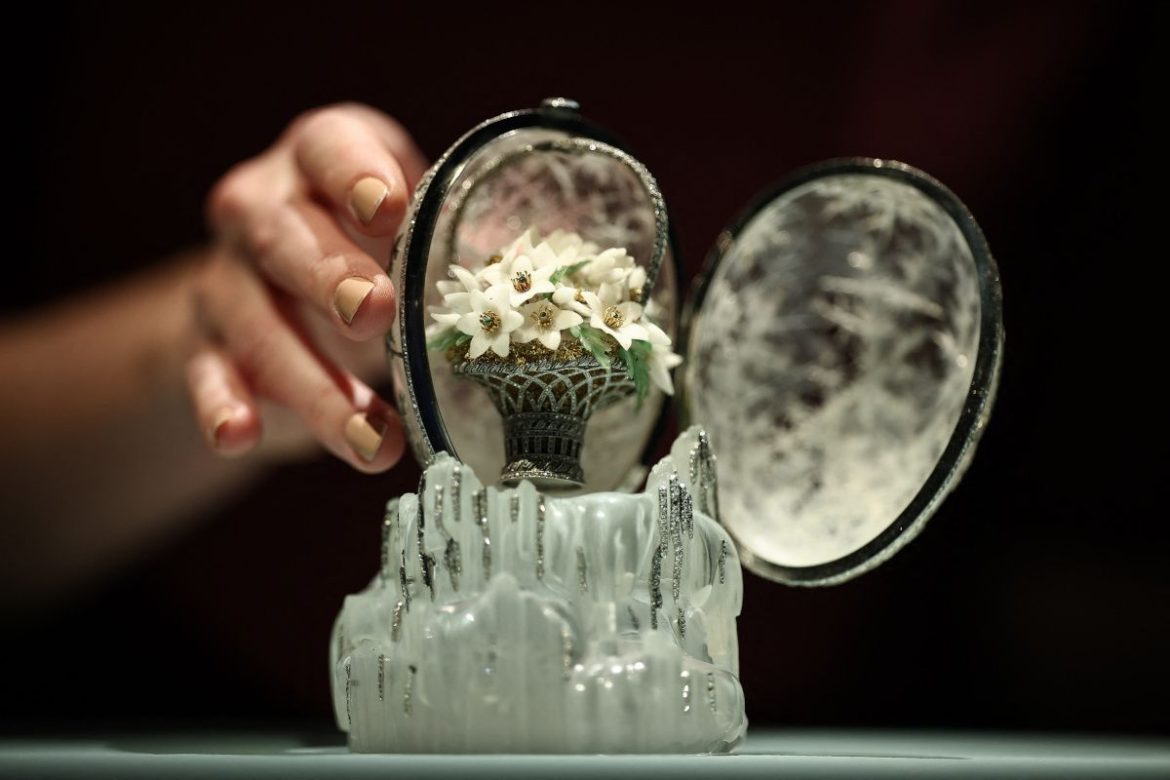
When the gavel fell at Christie’s in London on Tuesday, the room let out the kind of breath everyone unknowingly holds during a once-in-a-lifetime sale.
Fabergé’s famed Winter Egg—long regarded as one of his most breathtaking masterpieces—found a new owner for an astonishing £22.9 million, or about R518 million.
That figure didn’t just break a record. It shattered it.
A Jewel With a History of Making Headlines
This wasn’t the egg’s first time causing a stir. In fact, it has now set the world auction record for a Fabergé piece three separate times, each moment seemingly more dramatic than the last.
Christie’s specialists had predicted strong interest, but the final result soared beyond even their already hefty £20 million estimate.
The Buyer Who Didn’t Blink
While the new owner prefers anonymity, what is clear is that international collectors had been circling this piece for weeks.
When the decisive bid came through, Christie’s described it as a resounding reaffirmation of the egg’s enduring magic.
As specialist Margo Oganesian put it, the sale honored both the rarity and the dazzling craftsmanship that make the Winter Egg a standout even among Fabergé’s legendary works.
A Legacy Carved in Crystal and Diamonds
Commissioned by Tsar Nicholas II as a 1913 Easter gift for his mother, the Winter Egg stands only 14 centimeters tall, but its impact is enormous.
Sculpted from rock crystal and set with roughly 4,500 rose-cut diamonds, it carries a delicate frost-like shimmer that feels almost otherworldly.
Inside, a surprise awaits: a tiny bouquet of white quartz anemones held together by fine gold wire and settled gently in a platinum basket.
Fabergé’s Rare Creations and Their Enduring Allure
The Winter Egg is one of 50 Imperial Easter Eggs Fabergé crafted during a 31-year partnership with the Russian Imperial family.
Only 43 are known to exist today, which explains why collectors—especially wealthy Russian buyers—continue to seek them out as pieces of personal history.
For decades, these eggs have been symbols of extravagance, the last glittering echoes of the Romanov era before it came crashing down during the 1917 Revolution.
A Journey Through Tumultuous Times
Like many treasures belonging to the imperial household, the Winter Egg didn’t escape the upheaval of revolution.
It was moved from Saint Petersburg to Moscow in 1920 and later sold by the Soviet government to raise much-needed foreign currency.
That sale brought it into the hands of London jeweller Wartski, beginning a long journey through British collections.
Then it vanished.
From 1975 to the mid-90s, specialists had no idea where it was.
Rediscovery and Reinvention
Its rediscovery in 1994 caused a sensation. Christie’s brought it to auction in Geneva, and from that point forward, the Winter Egg returned to the spotlight.
It changed hands again in 2002, selling for a then-record $9.6 million—a number that now seems modest in hindsight.
Why This Egg Still Captivates
Beyond the diamonds, platinum, and meticulous artistry, what continues to draw people to the Winter Egg is the mystery and resilience woven into its history.
It’s an object that has seen empires fall, collectors rise, markets shift, and fascination endure.
And with this week’s record-breaking sale, the Winter Egg has once again proven that some pieces don’t just survive history—they define it.
Share on Facebook «||» Share on Twitter «||» Share on Reddit «||» Share on LinkedIn